
First-Mover Advantage: Benefits for First Generic Manufacturers
 Jun, 4 2026
Imagine you are the first person to open a coffee shop on a busy street corner. Even if three other shops open next door later that year, most people stick with yours. Why? Because they already know where it is, they like your cups, and changing habits takes effort. This is exactly what happens in the pharmaceutical industry when a company becomes the first generic manufacturer. The concept of first-mover advantage is the substantial and persistent market share dominance achieved by manufacturers who successfully bring the first generic version of a brand-name drug to market is not just a business theory; it is a legally protected economic reality that can define a company's success for years.
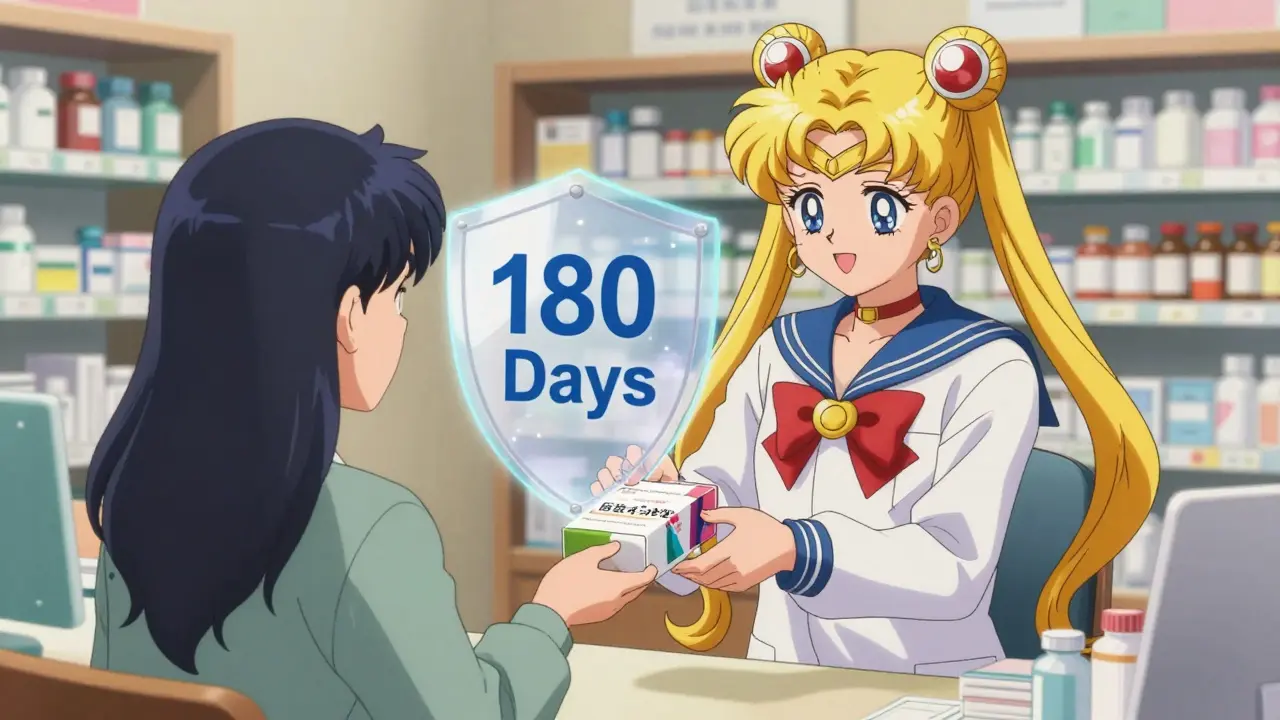
This advantage didn't appear overnight. It was formally established through the Drug Price Competition and Patent Term Restoration Act of 1984, commonly known as the Hatch-Waxman Act. This legislation created a framework that balances generic competition with incentives for brand-name innovation. The critical provision here is the 180 days of marketing exclusivity granted to the first generic applicant who successfully challenges a brand drug's patent. Since 1984, the generic drug market has grown from representing just 19% of prescriptions to over 90% today. In 2020 alone, this shift saved the U.S. healthcare system more than $338 billion.
The Power of the 180-Day Exclusivity Window
The core benefit for the first generic filer is the statutory 180-day period of exclusivity. During this window, no other generic competitor can enter the market. This creates a temporary duopoly between the brand-name drug and the first generic. While 180 days might sound short, it is long enough to establish deep roots in the healthcare ecosystem.
Research by Alvarez and Marsal (2022) reveals that the true economic value extends well beyond this regulatory window. The first entrant obtains premium pricing that shares some of the market power of the branded originator drug. Prices only decline toward marginal costs after additional generics enter the market. The magnitude of this advantage varies significantly. McKinsey & Company's analysis (2023) shows that first-to-market players average a 6 percentage point market-share advantage over later entrants. However, this can range from negligible to over 13 points depending on specific conditions.
The key driver here is "path dependency." Established prescriber habits, pharmacy stocking preferences, and patient loyalty create high switching costs. Once a doctor writes a prescription for Generic A, and the pharmacy stocks Generic A, patients take Generic A. Changing this routine requires active effort from all parties, which rarely happens without a compelling reason.
Why Market Share Sticks: The Mechanics of Stickiness
Data from DrugPatentWatch (2023) demonstrates that first movers achieve market share advantages of up to 90% over later entrants. This lead can persist for years due to the "stickiness" embedded in the healthcare system's operational routines. But why does this stickiness exist?
- Prescriber Habits: Doctors often write prescriptions for a specific generic name they trust. Switching requires relearning and reassessing efficacy, even if bioequivalence is proven.
- Pharmacy Inventory: Pharmacists typically stock only one generic version per molecule to minimize inventory costs. As documented by Yu and Gupta (2014), this creates a significant hurdle for later entrants. If Pharmacy X stocks Generic A, they are unlikely to add Generic B unless there is a shortage or a massive price difference.
- Patient Loyalty: Patients with chronic diseases take medications for long periods. Dr. David Ridley from Duke University noted that these patients "are not going to switch unless there's a powerful reason to do so."
Even small time advantages compound through these habits. DrugPatentWatch’s 2023 analysis found that a lead time of more than one month over competitors significantly amplifies the first-mover effect. If you are the first to arrive, you set the standard. Later entrants must fight against inertia.
Factors That Amplify or Diminish the Advantage
Not all first-mover advantages are created equal. Several factors determine whether a company will dominate its market or merely participate in it.
| Factor | Impact on Advantage | Details |
|---|---|---|
| Therapeutic Area | Stronger in Specialty Care | Specialty areas have fewer prescribers and patients, making habits harder to break compared to primary care. |
| Drug Formulation | Injectables > Oral | Injectable drugs exhibit stronger first-mover effects, with market share advantages differing by 8-10 percentage points. |
| Company Size | Large Pharma Leads | Large pharma first movers gain >10 market-share points. Non-large pharma often perform worse than fair share. |
| Lead Time Gap | Critical Threshold | A gap of 3+ years offers substantial advantage. A gap of 1 year or less renders the effect virtually meaningless. |
| Manufacturing Origin | Domestic Preferred | Domestic first generics achieve ~22% higher market saturation rates than overseas manufacturers. |
Competitive dynamics also play a critical role. In "two-horse races" between the first generic and the brand, the first mover generally secures a dominant position. However, in crowded markets with more than five generic players, the advantage diminishes significantly. Later entrants can capture up to 40% of market share within two years in these scenarios.
The Threat of Authorized Generics
One of the biggest risks to the first-mover advantage is the launch of an Authorized Generic (AG), which is a version of the brand drug sold as a generic by the originator company. These AGs are launched during the 180-day exclusivity period, transforming the expected duopoly into a three-player market: the brand, the first-filer, and the AG.
The Federal Trade Commission's analysis, cited by DrugPatentWatch (2023), found that AGs reduce first-filer revenue through 4-8% lower retail prices and 7-14% lower wholesale prices. This erosion of profit margins can be devastating if not anticipated. Successful first-mover strategies require contingency planning for AG entry. Leading generic manufacturers maintain relationships with multiple API suppliers to secure favorable terms, averaging 12-15% cost reductions compared to later entrants, as reported by Alvarez and Marsal (2022).
Companies without therapeutic area experience achieve only half the first-to-market advantage of experienced competitors. This makes pre-launch investment in therapeutic expertise critical. You cannot rely solely on being first; you must be prepared to defend your position against sophisticated brand-name tactics.

Strategic Implementation: Securing the Lead
Securing first-mover status involves complex strategic gambits requiring meticulous planning, legal acumen, and operational excellence. Companies must navigate patent challenges while simultaneously preparing manufacturing capacity. The average time from patent challenge filing to market entry ranges from 18-36 months according to industry benchmarks.
To maximize the advantage, consider these steps:
- Accelerate Regulatory Approval: Leverage FDA pathways efficiently. The FDA's 2022 Generic Drug User Fee Amendments (GDUFA III) aim to reduce review times but increase application complexity, potentially favoring larger manufacturers with greater regulatory resources.
- Expand Indications Early: McKinsey analysts (2023) identified that first movers who expand indications faster than later entrants within the first five years achieve the strongest effect-13 percentage points above fair market share.
- Secure Supply Chain Resilience: Ensure robust API sourcing to avoid shortages that could force pharmacies to switch to competitors.
- Monitor FTC Actions: The FTC's 2023 enforcement actions against "pay-for-delay" agreements have increased legal risks for such arrangements, potentially accelerating first generic launches by 6-9 months on average.
The rise of complex generics, including inhalers and injectables, presents new opportunities. These products face fewer potential challengers, with first-mover advantages averaging 15-20 percentage points above fair share compared to 6-8 points for small molecule generics, as reported by McKinsey (2023).
Market Context and Future Outlook
The economic stakes are enormous. With generic drugs now accounting for over 90% of U.S. prescriptions but only 23% of total drug spending, the first generic launch represents a pivotal moment. Brand revenue typically declines by 70-90% within the first year of generic entry, as documented by the Generic Pharmaceutical Association (2022). The first generic typically captures 70-80% of the generic market during the exclusivity period.
After the second generic enters, market share declines to 50-60%. After multiple entrants, it stabilizes at 30-40%, according to DrugPatentWatch's longitudinal analysis (2023). Despite consolidation among generic manufacturers-with the top 10 companies controlling approximately 65% of the first generic market as of 2023-the fundamental drivers of first-mover advantage remain strong.
Looking forward, industry analysts project that first-mover advantage will remain significant but may diminish in certain therapeutic areas due to increased FDA guidance documents that standardize complex generic development. However, projections indicate that first generics will continue capturing 30-40% market share even after multiple entrants have entered, compared to 10-15% for second entrants and progressively less for subsequent players, according to Evaluate Pharma's 2023 market forecast.
What is the 180-day exclusivity period?
The 180-day exclusivity period is a statutory window granted under the Hatch-Waxman Act to the first generic applicant who successfully challenges a brand drug's patent. During this time, no other generic competitors can enter the market, allowing the first mover to capture significant market share and establish prescriber and pharmacy loyalty.
How much market share does the first generic typically capture?
During the 180-day exclusivity period, the first generic typically captures 70-80% of the generic market. After the second generic enters, this share declines to 50-60%, and stabilizes at 30-40% after multiple entrants. However, the first mover often maintains a significant lead over later entrants due to path dependency and switching costs.
What is an Authorized Generic (AG)?
An Authorized Generic is a version of the brand-name drug sold as a generic by the original brand company. AGs are often launched during the 180-day exclusivity period to compete directly with the first generic filer. They can reduce the first filer's revenue through lower retail and wholesale prices, transforming the market from a duopoly to a three-player competition.
Why is the first-mover advantage stronger in specialty drugs?
Specialty therapeutic areas have smaller numbers of prescribers and patients, making established habits harder to break. Additionally, injectable drugs and complex generics face fewer potential challengers and higher barriers to entry, resulting in first-mover advantages that are 8-10 percentage points stronger than those for oral preparations.
Does company size matter for first-mover success?
Yes, company size significantly influences outcomes. Large pharmaceutical companies gain a substantial advantage worth greater than ten market-share points when they are the first mover. In contrast, non-large pharma first movers often perform worse than fair market share due to limited resources for promotion, supply chain management, and regulatory navigation.
How long does the first-mover advantage last?
While the statutory exclusivity lasts 180 days, the economic advantage can persist for years. Research indicates that first movers maintain a market share lead due to agent inertia in the healthcare system. However, in highly competitive classes with more than five generic entrants, market share equalization may occur within 18-24 months.
What is the impact of domestic vs. overseas manufacturing?
Domestic manufacturers demonstrate increased generic penetration compared to overseas manufacturers. Studies show that domestic first generics achieve approximately 22% higher market saturation rates. This preference may stem from supply chain reliability, regulatory familiarity, and prescriber confidence in local production standards.
How do pay-for-delay agreements affect first-mover advantage?
Pay-for-delay agreements involve brand companies compensating generic manufacturers to delay market entry. The FTC's 2023 enforcement actions against these practices have increased legal risks, potentially accelerating first generic launches by 6-9 months. This acceleration can enhance the first-mover advantage by extending the period of limited competition.