
Gender-Affirming Hormone Therapy: Drug Interactions and Side Effects Guide
 Jun, 5 2026
Hormone Therapy Interaction Checker
⚕️ Select Your Medications
*Disclaimer: This tool is for educational purposes only and does not constitute medical advice. Always consult your doctor before changing medication dosages.
Starting gender-affirming hormone therapy is a life-changing step for many people. It aligns your physical traits with your gender identity. But if you take other medications, things get complicated. Your new hormones might not work as well. Or they could cause unexpected side effects. This isn't just about feeling better or worse. It's about safety.
You need to know how these drugs talk to each other in your body. A recent review by clinicians from the University of California, San Francisco, and Harvard Medical School looked at 47 studies. They found that serious issues are rare when doctors monitor you closely. But "rare" doesn't mean "impossible." If you take meds for HIV, mental health, or even birth control, you have to watch out for specific clashes. Let’s break down what happens inside your body so you can stay safe.
How Your Body Processes These Hormones
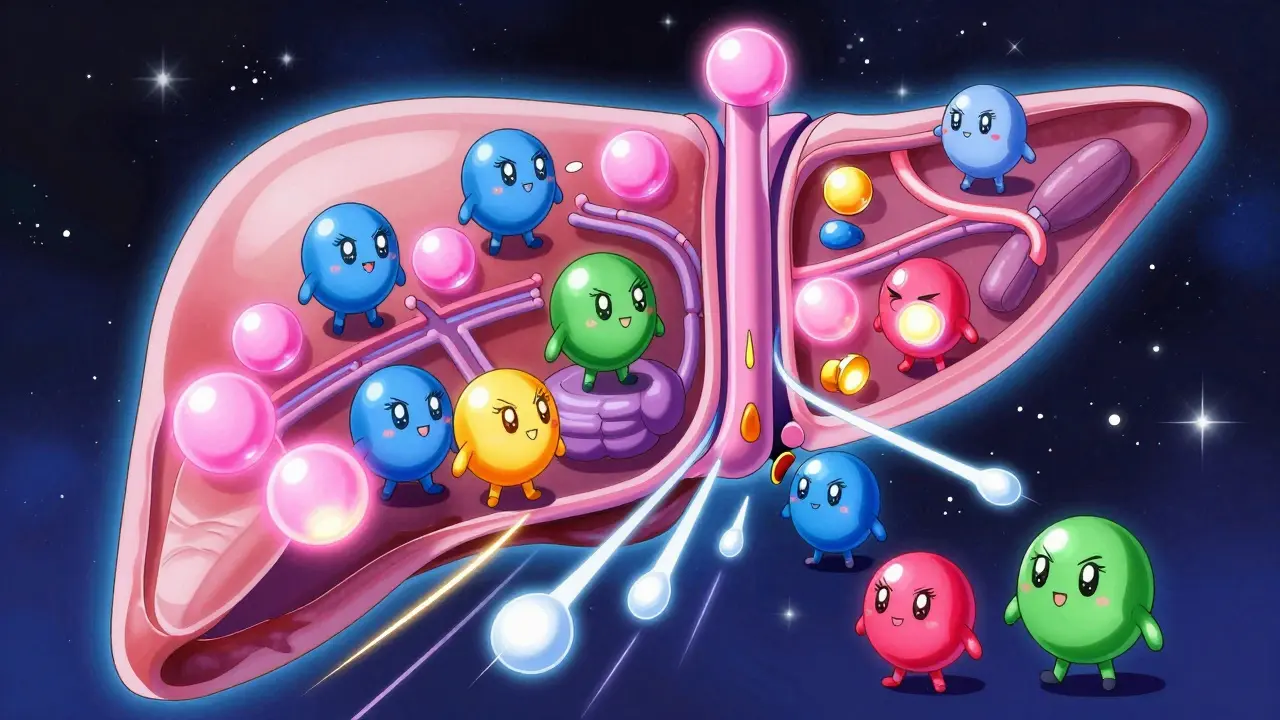
To understand the risks, you first need to know how your liver handles these drugs. Think of your liver as a busy factory. It uses enzymes to break down medicines. The most important enzyme here is called CYP3A4. It processes many common drugs, including estrogen and some antidepressants.
If you are on feminizing therapy, you likely take estradiol. This comes in patches, gels, or pills. Estradiol relies heavily on CYP3A4 to leave your system. If you take another drug that blocks this enzyme, estradiol builds up in your blood. Too much estrogen increases the risk of blood clots. On the flip side, if you take a drug that speeds up CYP3A4, your body clears the estrogen too fast. You won’t get the feminizing effects you want.
For masculinizing therapy, you usually take testosterone. Testosterone breaks down differently. It uses enzymes like 5-alpha reductase and aromatase. While it still interacts with some drugs, the pathways are slightly different than estrogen. Knowing which path your medication takes helps your doctor predict problems before they start.
HIV Medications and PrEP: What You Need to Know
Transgender people face higher rates of HIV infection compared to cisgender populations. So, many patients take antiretroviral therapy (ART) or pre-exposure prophylaxis (PrEP). These drugs interact strongly with hormones.
Some HIV meds act like accelerators for your liver enzymes. For example, efavirenz can lower estrogen levels by 30% to 50%. If you take this, your feminizing therapy might stop working. You might feel less like yourself physically because the hormone dose is effectively too low.
Other HIV meds act like brakes. Drugs boosted with cobicistat, such as darunavir/cobicistat, can raise estrogen levels by 40% to 60%. This spikes your clotting risk. Dr. Tessa Senneker, a clinical pharmacist, notes that concentrations can jump within two weeks. She advises checking blood levels frequently when starting these combos.
Good news exists too. A major study presented at the 2022 Conference on Retroviruses and Opportunistic Infections (CROI) followed 172 transgender participants. They found no meaningful clash between tenofovir disoproxil fumarate/emtricitabine (TDF/FTC) PrEP and hormone therapy. Hormone levels changed by less than 5%. This means most people can safely use standard PrEP alongside their GAHT without dose changes.
| Medication Class | Example Drug | Effect on Estrogen | Action Required |
|---|---|---|---|
| Non-Nucleoside Reverse Transcriptase Inhibitors (NNRTIs) | Efavirenz | Decreases by 30-50% | Monitor levels; may need higher estrogen dose |
| Protease Inhibitors (Boosted) | Darunavir/Cobicistat | Increases by 40-60% | Reduce estrogen dose; check for clots |
| Integrase Strand Transfer Inhibitors (INSTIs) | Dolutegravir | Slight increase (25-35%) | Usually no change needed |
| Nucleoside Reverse Transcriptase Inhibitors (NRTIs) | Tenofovir/Emtricitabine (PrEP) | No significant change (<5%) | Standard dosing is safe |
Mental Health Medications and Hormones
Mental health care often goes hand-in-hand with transition. Many people take antidepressants or mood stabilizers. These drugs also ride the CYP enzyme highway.
Selective serotonin reuptake inhibitors (SSRIs) like fluoxetine can block the enzyme CYP2D6. This might slow down estrogen breakdown, raising its levels in your blood. You could experience more side effects like nausea or breast tenderness.
Mood stabilizers are trickier. carbamazepine speeds up CYP3A4. This burns through your hormones faster. A UCSF/Harvard review noted cases where testosterone became less effective after starting certain psych meds. Patients sometimes needed a 25% to 50% dose increase to feel stable again.
Dr. Joshua Safer from Mount Sinai warns us not to assume everything is fine. Only 3% of clinical trials for common antidepressants included transgender participants. We simply don't have enough data. The Endocrine Society suggests keeping your current psychiatric doses but watching closely for changes in mood or energy.
Anti-Androgens and Blood Pressure Meds
If you are taking anti-androgens like spironolactone, you already have a drug that affects potassium and blood pressure. Spironolactone is a diuretic. It makes you pee more to lower androgen levels.
Combining spironolactone with other blood pressure meds or potassium-sparing drugs can be dangerous. It can lead to high potassium levels (hyperkalemia), which hurts your heart. Always tell your doctor if you take lisinopril, ACE inhibitors, or NSAIDs like ibuprofen regularly. These combinations require regular blood tests to keep your kidneys and heart safe.

Puberty Blockers and Other Drugs
GnRH agonists like leuprolide acetate suppress natural hormone production. They are often used as puberty blockers. Research shows these drugs do not interact significantly with antiretrovirals or most psychiatric meds. They work by blocking signals from the brain, not by fighting for liver enzymes. This makes them safer to combine with other treatments, though bone density monitoring remains essential long-term.
What Should You Do Next?
Knowledge is power. Before starting any new medication, bring your full list to your endocrinologist. Ask specifically about CYP3A4 interactions. If you are on HIV meds, ask if an INSTI-based regimen is possible to minimize clashes. Keep a symptom diary. Note any sudden changes in mood, energy, or physical traits. These clues help your doctor adjust doses precisely. Don't guess. Get tested. Regular blood work is your best friend in this journey.
Can I take birth control pills with testosterone?
Generally, no. Testosterone can reduce the effectiveness of combined oral contraceptives. If you are assigned female at birth and need contraception while on testosterone, use non-hormonal methods like copper IUDs or barrier methods. Consult your doctor for personalized advice.
Does PrEP affect my hormone levels?
Current research shows that standard oral PrEP (TDF/FTC) has no clinically significant effect on estradiol or testosterone levels. You can safely take both together without adjusting doses.
Which antidepressants interact with estrogen?
SSRIs like fluoxetine may inhibit enzymes that break down estrogen, potentially raising its levels. Mood stabilizers like carbamazepine may speed up hormone metabolism, lowering efficacy. Monitor your symptoms and blood levels closely.
Is spironolactone safe with ibuprofen?
Long-term use of NSAIDs like ibuprofen with spironolactone can increase kidney strain and potassium levels. Occasional use is usually fine, but avoid daily combination. Check with your provider for safer pain relief options.
Do GnRH agonists interact with other drugs?
GnRH agonists like leuprolide have very few known drug interactions. They do not rely heavily on liver enzymes for metabolism, making them compatible with most HIV and psychiatric medications.