
Generic Drug Prices: US vs Europe and Why They Differ
 Aug, 14 2026
You might expect that the United States, with its massive economy and advanced healthcare system, would pay lower prices for medications than other developed nations. It’s a common assumption. But when it comes to generic drugs-the off-patent versions of medicines like lisinopril or metformin-the reality is surprisingly upside down. Americans actually pay significantly less for these everyday medications compared to patients in many European countries.
This creates a confusing paradox. The US pays some of the highest prices in the world for brand-name, patented drugs, yet enjoys rock-bottom prices for generics. To understand why this happens, we have to look past the pharmacy shelf price and examine the complex machinery of how drugs are bought, sold, and regulated on both sides of the Atlantic.
The Generic Price Paradox
Let’s start with the numbers, because they tell a stark story. According to a 2022 analysis by the U.S. Department of Health and Human Services' Office of the Assistant Secretary for Planning and Evaluation (ASPE), unbranded generic drugs in the US cost about 67 percent of what they do in 33 comparable OECD countries. In plain English, if you buy a bottle of generic blood pressure medication in Germany or France, you are likely paying roughly one-third more than an American buying the same drug.
Why does this happen? The primary driver is competition volume. In the United States, generic drugs account for approximately 90 percent of all prescription volumes. This massive scale creates a hyper-competitive market where manufacturers fight fiercely for market share. Companies like Teva and Mylan often achieve 80-90% market share for specific off-patent drugs by driving prices down aggressively. Sometimes, these prices drop so low that they approach manufacturing costs, which can occasionally lead to shortages when producers exit the market due to thin margins.
In contrast, the European market structure is different. Only about 41 percent of prescription volume in Europe consists of unbranded generics. With less volume dedicated to generics, there is less competitive pressure to slash prices. European systems often prioritize supply chain stability and manufacturer viability over the aggressive price wars seen in the US. As a result, while Europeans pay less for expensive new drugs, they pay more for the older, established ones.
How the US System Lowers Generic Costs
The US pharmaceutical landscape is fragmented, involving private insurers, government programs like Medicare, and powerful intermediaries known as Pharmacy Benefit Managers (PBMs). While this complexity is often criticized for inflating brand-name drug prices, it works differently for generics.
PBMs act as bulk buyers. They negotiate hard with pharmacies and manufacturers to get the lowest possible acquisition costs for generic medications. Because the US has large consolidated pharmacy chains and PBMs, they leverage their immense purchasing power to drive down prices. When you pick up a generic script at a major US pharmacy chain, you are often benefiting from these negotiated discounts.
Additionally, US law encourages generic substitution. In 49 states, pharmacists are allowed or required to automatically switch a brand-name prescription to its generic equivalent unless the doctor specifies otherwise. This automatic switching ensures that the vast majority of patients end up using the cheaper generic version, sustaining the high volume that keeps prices low.
The European Approach: Centralized Negotiation
Europe does not have a single unified market for drug pricing; each country negotiates separately. However, most European nations use centralized price negotiation or reference pricing systems. Government agencies directly negotiate with pharmaceutical manufacturers to set prices based on therapeutic value and budget impact, rather than letting the free market dictate them entirely.
Countries like France and Japan generally have the lowest drug prices among OECD countries across all categories. They implement strict controls that keep both brand and generic prices low. On the other hand, countries like Germany and the United Kingdom tend to have higher prices for certain subsets of drugs, including generics, compared to their southern European neighbors.
The UK uses the National Institute for Health and Care Excellence (NICE) to evaluate whether a drug provides good value for money before approving reimbursement. This rigorous evaluation helps control spending but doesn't necessarily drive generic prices as low as the US competitive model does. In fact, a 2025 study published in JAMA Health Forum noted that average generic drug prices in the US were still higher than in Germany when measured by a specific price index, though this comparison often excludes the substantial hidden rebates that lower net costs in the US system.
| Feature | United States | Europe (General) |
|---|---|---|
| Generic Prescription Volume | ~90% | ~41% |
| Generic Price Level | Lower (approx. 67% of OECD avg) | Higher |
| Brand Name Price Level | Significantly Higher (422% of OECD avg) | Lower |
| Pricing Mechanism | Market-driven, PBM negotiations | Government negotiation, Reference pricing |
| Primary Goal | Cost containment via competition | Budget predictability, Access equity |
The Brand-Name Trade-Off
To fully understand the generic price advantage, you must look at the flip side: brand-name drugs. The US pays a premium for innovation. According to ASPE data, US prices for brand-name medications are 422 percent of prices in comparison countries. Even after adjusting for rebates, US prices remain roughly three times higher.
Experts argue that this premium subsidizes global pharmaceutical research and development (R&D). Dana Goldman, a professor at the University of Southern California and member of the National Academy of Medicine, explains that "Americans do quite well in the generic market" because the competitive structure works effectively. However, he notes that once a drug is developed, Europe negotiates prices as low as possible without regard to the initial cost of innovation. In this sense, other countries are "free riding" on the US market, which generates the revenues necessary to fund the high-risk process of discovering new medicines.
A 2024 RAND Corporation study confirmed that the average price of prescription medicines excluding generics was 4.22 times higher in the US than in most OECD countries. This suggests that the US system is designed to extract maximum value from new, patented drugs to fund future innovation, while allowing the mature generic market to operate on pure efficiency and volume.

Real-World Impact on Patients
What does this mean for you, the patient? If you are in the US with insurance, your out-of-pocket cost for a generic drug is often negligible-frequently between $0 and $10 per month. This is due to the combination of low wholesale prices and insurance copay structures. In Europe, patients often face fixed co-pays regardless of the drug type, meaning a generic might cost you €10-€15 per month, even if the wholesale price isn't drastically different from the US.
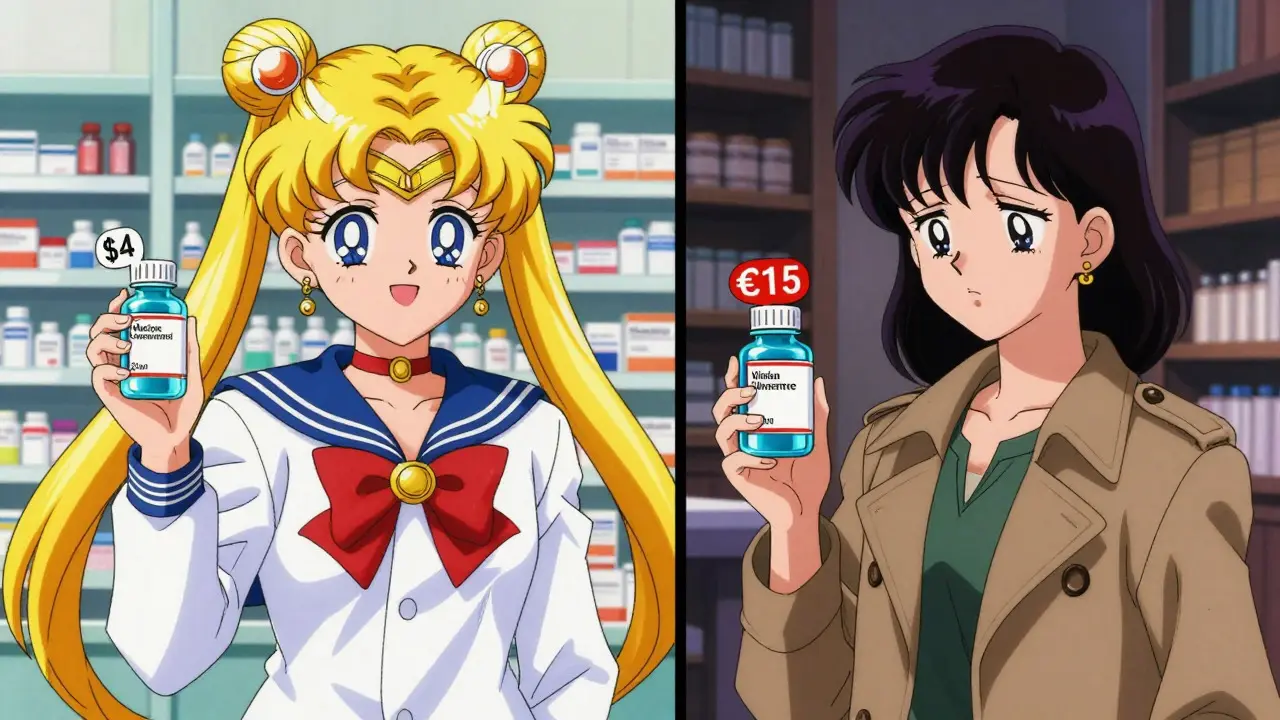
User experiences highlight this disconnect. Americans traveling to Europe are frequently surprised by the higher prices of generic medications at local pharmacies. Conversely, Europeans visiting the US are shocked by the sticker price of brand-name drugs. For example, a user on Reddit noted paying €15 for a month's supply of generic lisinopril in Germany, whereas the same drug costs around $4 at Walmart in the US.
However, this advantage disappears if you need a newer, patented medication. An American patient needing a specialty drug like Jardiance or Stelara will face costs that are multiples of what a patient in the UK or France would pay. The US system essentially asks consumers to accept higher prices for new treatments in exchange for lower prices for old ones.
Future Trends and Policy Shifts
The status quo is beginning to shift. The Inflation Reduction Act introduced Medicare drug price negotiations, allowing the federal government to negotiate prices for certain high-cost brand-name drugs. Early results show significant reductions, with negotiated prices still being higher than international averages but lower than previous US list prices. For instance, Medicare's negotiated price for Jardiance was $204, compared to an international average of $52, but this represents a step toward narrowing the gap.
Furthermore, political pressure continues to mount. Former President Trump proposed a "most favored nation" pricing policy, which would align US drug prices with the lowest prices paid by other developed countries. While controversial, such policies highlight the growing tension between maintaining high R&D funding and controlling healthcare costs. Alexander Natz of the European Confederation of Pharmaceutical Entrepreneurs warned that such measures could force companies to raise prices overseas to maintain profitability, potentially destabilizing the current balance.
As the US moves toward more centralized negotiation models for brand-name drugs, the unique dynamic of cheap generics and expensive brands may evolve. However, as long as the US maintains its high-volume, competitive generic market, Americans will likely continue to enjoy lower prices for off-patent medications compared to their European counterparts.
Are generic drugs cheaper in the US than in Europe?
Yes, generally speaking. Data from the U.S. Department of Health and Human Services indicates that Americans pay roughly 67 percent of the price for generic drugs compared to the average in 33 OECD countries. This means US consumers typically pay about one-third less for off-patent medications like statins or blood pressure drugs.
Why are brand-name drugs more expensive in the US?
Brand-name drugs are more expensive in the US because the market allows for higher prices to fund pharmaceutical research and development. The US accounts for a disproportionate share of global pharmaceutical revenue, which incentivizes companies to launch new drugs here first. European countries use centralized negotiations to cap these prices, resulting in lower costs for patients but less revenue for innovators.
Do Pharmacy Benefit Managers (PBMs) lower drug prices?
PBMs play a complex role. For generic drugs, they help lower prices through bulk purchasing and competition among pharmacy chains. For brand-name drugs, they negotiate rebates that can be 35-40 percent off list prices, though these savings are often retained by insurers and PBMs rather than passed directly to consumers. Their influence contributes to the low cost of generics in the US.
Which European countries have the lowest drug prices?
France and Japan consistently report the lowest drug prices among OECD countries for both generic and brand-name medications. They employ strict government pricing controls. Countries like Germany and the UK tend to have higher prices for certain drug categories compared to France, though still generally lower than the US for brand-name drugs.
Will US drug prices decrease in the future?
Prices for brand-name drugs may decrease due to new policies like Medicare price negotiations under the Inflation Reduction Act. However, generic drug prices are already low due to market competition. Any further reduction in brand-name prices could impact global R&D funding, potentially leading to slower innovation or higher prices in other regions.
Jw George John Warren
August 16, 2026 AT 02:01Oh please, spare me the 'free market efficiency' fairy tale. 🙄 The US system isn't efficient; it's just brutally optimized for shareholder value while pretending to care about patients. We pay more for brand names because we're treated like ATMs with pulses. And don't get me started on PBMs. They are the vampires of healthcare, sucking the life out of both manufacturers and insurers while passing zero savings to the actual human beings trying not to die. It’s a rigged casino where the house always wins, and we’re just lucky if we get a free drink (or in this case, cheap generic lisinopril) before they kick us out. 😤
Rachel Robinson Interiors
August 16, 2026 AT 22:11This is a fascinating perspective that really highlights the complexity of global pharmaceutical markets. While the article focuses heavily on the price differences, it is also important to consider the accessibility and insurance structures that support these costs. In many European countries, the lower wholesale prices for generics are balanced by fixed co-pays, which can sometimes feel inconsistent compared to the variable but often negligible copays in the United States. It is encouraging to see data that shows Americans benefit from competitive pricing in specific categories, even if the broader system has its flaws.
olatunde oluranti
August 17, 2026 AT 05:38It's all a lie. The government knows exactly what they are doing. They keep generic prices low to keep us docile and dependent on the system. Meanwhile, the big pharma companies are cooking the books. I bet the 'shortages' mentioned in the article are manufactured to drive up demand later. Don't believe the OECD stats. They are bought and paid for. Wake up sheeple. The real reason Europe pays more is because they are being taxed into submission while we are being bled dry through hidden fees. It's a global conspiracy to control our biology. 🤡
teresa baldini
August 18, 2026 AT 13:56One must question the validity of such sweeping generalizations! Are we truly to believe that the entire European continent operates under a single, monolithic pricing structure? This is absurdity! Furthermore, the notion that the US system is 'efficient' is laughable when one considers the administrative bloat. However, I suppose if you ignore the fact that millions are uninsured, the math might look pretty on paper. But does it work for the little guy? Probably not! The data is cherry-picked, as usual! 🙄
sonia rockett
August 20, 2026 AT 01:52Let's stop beating around the bush! The US system is broken for brand names, yes, but let's give credit where it's due: generics are cheap here because competition actually works. Europe is cozying up to pharma companies to ensure supply stability, and guess who pays for that comfort? You do! Higher prices for old drugs because they don't want to rock the boat. We should be proud that our market forces keep basic meds affordable. Stop whining and start appreciating the free market magic! 💪
Ella Mentry
August 21, 2026 AT 13:45I literally cannot believe people are still defending the US healthcare system based on generic drug prices. That is so shallow. What about the mental toll of worrying about your deductible? What about the stress of navigating PBM formularies? I had to switch my antidepressant three times last year because my insurance decided another generic was 'preferred.' Do you know how destabilizing that is for someone with anxiety? It's emotional torture. You think €15 for blood pressure meds is bad? Try spending four hours on hold with customer service just to find out why your prescription was denied. It ruins relationships. It ruins marriages. It ruins lives. 🥀
Saher Ghattas
August 21, 2026 AT 21:41The disparity in generic pricing is merely a symptom of deeper structural inefficiencies inherent in the American pharmaceutical distribution model. The reliance on Pharmacy Benefit Managers creates a principal-agent problem where the incentives for cost containment are misaligned with patient outcomes. Furthermore, the lack of centralized negotiation power allows for market fragmentation, leading to suboptimal price discovery mechanisms. It is not 'competition'; it is oligopolistic maneuvering disguised as market freedom. The European model, while imperfect, prioritizes therapeutic access over marginal cost savings in high-volume commodities.
Ankit Sinha
August 21, 2026 AT 21:56You guys are missing the moral point entirely. Just because something is cheaper doesn't mean it's better or fairer. The US system is morally bankrupt because it treats health as a commodity rather than a right. Yes, generics are cheap, but only if you have insurance. If you're poor and uninsured, those 'cheap' generics are still out of reach. Meanwhile, in India, we have generic manufacturing hubs that supply the world at even lower costs because we prioritize public health over profit margins. The West is obsessed with R&D funding, but at what cost? Human suffering. It's disgusting. 🤢
Jesse Barlau
August 22, 2026 AT 01:26It is interesting to observe how different nations approach the balance between innovation incentives and cost containment. While the United States leverages its large market size to drive down generic prices through intense competition, European nations often prioritize budget predictability and equitable access through centralized negotiations. This divergence suggests that there is no one-size-fits-all solution to pharmaceutical pricing. Each system has its trade-offs, and understanding these nuances is crucial for informed policy discussions. Perhaps a hybrid model could offer the best of both worlds, ensuring affordability without stifling future medical advancements.
Daniel Cook
August 23, 2026 AT 01:15I just picked up my metformin yesterday. $4 at Walmart. Went to the pharmacy in London last month for a friend and they wanted £8 for the same thing. Makes sense honestly. Competition drives prices down. Simple as that. Not gonna fix the whole healthcare system but hey, small wins. 🤷♂️
Michael Smith
August 24, 2026 AT 09:49sure the generics are cheap but have you seen the price of insulin lately lol. oh wait thats brand name so it doesnt count in this narrative. great job americans keeping your diabetes expensive while your cholesterol meds are on sale. totally worth it. 🙃
Eunice Chen
August 25, 2026 AT 11:52i mean yeah its weird but i guess it works for some ppl. my mom pays like $10 for her heart meds and shes happy about it. europe sounds stressful with all the gov rules tho. maybe its better to just keep it simple?
Usha Ranji
August 26, 2026 AT 08:22As someone who works in pharmaceutical logistics, I can confirm that the volume difference is staggering. The US market absorbs such a massive portion of generic production that economies of scale are undeniable. However, the fragility of this system is evident during shortages. When margins are razor-thin, any disruption in raw material supply causes immediate panic. European systems, with their slightly higher margins, tend to have more resilient supply chains. It is a trade-off between lowest possible price and consistent availability. Both have merit depending on what you value more.
Darcy Galway
August 27, 2026 AT 22:31In Canada, we sit somewhere in the middle. Our generics are reasonably priced, but not as cheap as the US. Our brand names are cheaper than the US, but not as cheap as France. It feels like a compromise. Sometimes I wish we had the US competition for generics, but then I remember the horror stories of brand name prices and am glad we don't. Balance is key, I think. Or maybe we are just boring. Who knows. 🇨🇦