
Generics vs Brand Biologics: Real Cost Differences and Savings Guide
 Jul, 23 2026
Imagine you are prescribed a life-saving medication. The price tag on the original brand-name drug is $80,000 a year. Now imagine there is a version that works exactly the same way but costs a fraction of that price. For millions of patients dealing with chronic conditions like rheumatoid arthritis, Crohn’s disease, or cancer, this isn’t just a hypothetical scenario-it is the reality of the shift from brand biologics to their cheaper alternatives.
If you have been navigating the complex world of prescription drugs, you might have heard terms like 'generics' and 'biosimilars' thrown around interchangeably. But here is the catch: they are not the same thing. Understanding the difference between traditional generics and biosimilars is crucial because it directly impacts your wallet, your treatment options, and the overall sustainability of the healthcare system. As we move through 2026, the gap in pricing and availability continues to widen, creating both opportunities for savings and significant hurdles for access.
The Fundamental Difference: Chemistry vs. Biology
To understand why prices differ so drastically, you first need to understand what these drugs actually are. Traditional small-molecule drugs, like aspirin or statins, are made through chemical synthesis. They are simple structures. When the patent expires, other companies can make an exact copy-this is a generic. It is chemically identical to the brand name.
Biologics, however, are different. They are large, complex molecules produced by living cells-think bacteria or yeast. Because they are made by living organisms, no two batches are ever 100% identical at the molecular level. You cannot simply 'copy' them like a chemical formula. Instead, manufacturers create biosimilars. A biosimilar is highly similar to the original reference biologic, with no clinically meaningful differences in safety, purity, or potency.
This complexity is why developing a biosimilar takes longer and costs more than developing a generic. According to the Biotechnology Innovation Organization (BIO), development costs range from $100 million to $250 million per product. Despite these high upfront costs, the competition drives prices down significantly once multiple players enter the market.
The Stark Reality of Price Differences
Let’s talk numbers, because the savings are undeniable. In the first half of 2025, data from Brown & Brown showed that the average cost for a 30-day prescription of a brand reference biologic was $2,104. In contrast, the average cost for a biosimilar biologic was just $919. That is a 56.3% reduction in cost right off the bat.
But it gets better for patients. The Community Specialty Pharmacy (CSRxP) reported in 2025 that out-of-pocket costs for patients using biosimilars are 23% lower than those for reference biologics. This matters because while insurance covers a lot, deductibles and copays still hit hard when drug prices are astronomical.
| Metric | Brand Reference Biologic | Biosimilar Alternative |
|---|---|---|
| Average 30-Day Cost | $2,104 | $919 |
| Patient Out-of-Pocket Reduction | Baseline | 23% Lower |
| Launch Discount | N/A | 40-50% Below Brand |
| Impact on Brand Price | Drops 25-33% after entry | N/A |
The Association for Accessible Medicines (AAM) notes that biosimilars typically launch at a discount of more than 40% compared to the brand. DrugPatentWatch’s 2025 analysis puts the average discount even higher, at approximately 50%. This isn't just about saving money on one prescription; it’s about systemic change. When biosimilars enter the market, the price of the original brand often drops too, as companies try to retain market share. The AAM reports that reference biologics see an average price reduction of 33% following biosimilar entry.

The Humira Effect: A Case Study in Savings
Nothing illustrates the power of biosimilar competition better than the story of Humira (adalimumab). For years, AbbVie’s Humira was the best-selling drug in the world, generating $21.2 billion in global sales in 2022 alone. The U.S. list price hovered around $80,000 per patient annually.
When patents expired in 2023, the floodgates opened. Biosimilars didn’t just nibble at the edges; they took over. By mid-2025, biosimilars had captured approximately 65% of the market share. Sandoz’s Hyrimoz alone held 14% of that share. More importantly, these alternatives were priced at an average discount of 80% compared to Humira’s original list price. This single case study demonstrates how quickly the market can correct itself when legal barriers are removed, leading to massive savings for insurers and patients alike.
Why Aren’t Everyone Switching? The Hidden Barriers
If biosimilars are safer, equally effective, and much cheaper, why do only 76 biosimilars exist among the roughly 600 biologics on the U.S. market? And why does their market share remain below 20%, far lower than the near-universal adoption of small-molecule generics?
The answer lies in a combination of legal maneuvering and structural incentives. Brand pharmaceutical companies don’t go quietly. The CSRxP fact sheet describes how innovators deploy 'patent thickets'-a dense web of secondary patents covering everything from manufacturing processes to dosage forms-to delay biosimilar approval. This strategy, known as the 'innovator’s playbook,' has been fully adapted for biologics.
Then there are Pharmacy Benefit Managers (PBMs). These intermediaries often create 'rebate walls.' Because PBMs profit from rebates tied to high drug prices, they sometimes incentivize doctors and pharmacies to stick with expensive brand-name biologics rather than switch to cheaper biosimilars. This misalignment of incentives keeps patients paying more than necessary.
Furthermore, there is a lingering perception issue. Some physicians and patients worry about switching therapies, fearing potential loss of efficacy or new side effects. However, Dr. Sarah Y. Vinson, Director of the FDA's Office of Therapeutic Biologics and Biosimilars, clarified in September 2025 that 'FDA-approved biosimilars are as safe and effective as the branded drugs.' The FDA is actively working to simplify approval pathways to accelerate development, recognizing that slow adoption represents a missed opportunity for hundreds of billions in savings.
The Big Picture: Cumulative Healthcare Savings
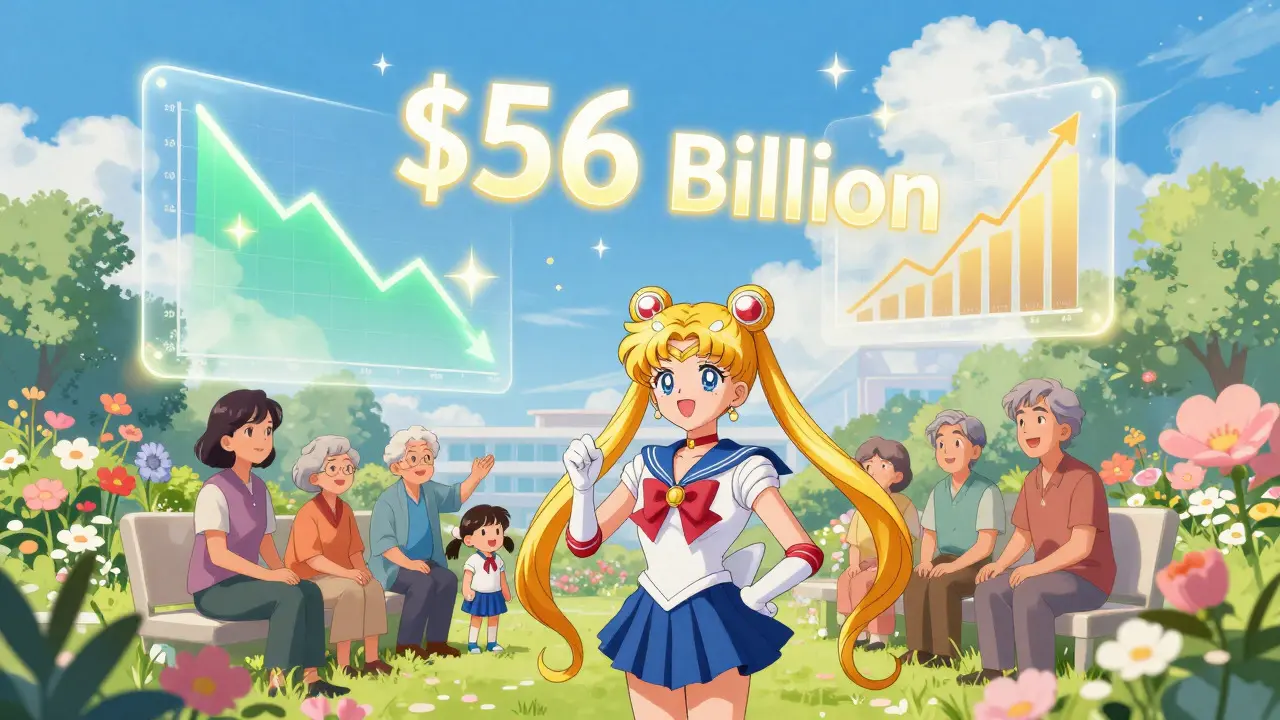
The impact of biosimilars extends beyond individual prescriptions. Since 2015, biosimilars have generated substantial savings across the U.S. healthcare system. The U.S. Department of Health and Human Services (HHS) reported in November 2025 that total savings reached $56 billion, with $20 billion saved in 2024 alone. Even conservative estimates from DrugPatentWatch place the figure at $36 billion since 2015.
When you combine biosimilars with traditional generics, the picture is even more striking. The AAM’s 2024 report states that generic and biosimilar medicines together generated $445 billion in savings in 2023. Despite accounting for 90% of all prescriptions written, they represented only 13% of total pharmaceutical spending. This efficiency is vital, especially since biologics now account for 51% of total drug spending despite being only 5% of prescriptions.
Looking ahead, the potential is enormous. The HHS projects that properly aligning incentives could save an additional $42.9 billion in medical costs by 2027. Industry analysts at Evaluate Pharma predict biosimilar market penetration will rise from 15-20% today to 35-40% by 2030, potentially unlocking another $125 billion in annual savings.
What This Means for You
As a patient or caregiver, you have agency in this equation. If you are prescribed a biologic, ask your doctor if a biosimilar is available. Ask your pharmacist about out-of-pocket costs for both options. With regulatory reforms underway and the Biden administration’s 'Biosimilars Action Plan' addressing market access barriers, the landscape is shifting in favor of affordability.
The science is clear: biosimilars work. The economics are clear: they save money. The only remaining hurdle is overcoming the inertia of a system designed to protect old profits. By understanding these dynamics, you can make informed decisions that benefit your health and your finances.
Are biosimilars exactly the same as brand biologics?
No, they are not chemically identical because biologics are complex molecules made by living cells. However, biosimilars are 'highly similar' with no clinically meaningful differences in safety, purity, or potency. The FDA rigorously tests them to ensure they perform just like the reference product.
How much can I save by switching to a biosimilar?
On average, biosimilars launch at a 40-50% discount compared to brand biologics. Patient out-of-pocket costs are typically 23% lower. In competitive markets, like with Humira, discounts can reach up to 80%.
Why are there fewer biosimilars than generics?
Why are there fewer biosimilars than generics?
Biologics are harder and more expensive to develop ($100-250 million per product). Additionally, brand companies use 'patent thickets' to delay approval, and PBMs may discourage switching due to rebate structures. Only about 10% of biologics losing patent protection in the next decade currently have a biosimilar in development.
Is it safe to switch from a brand biologic to a biosimilar?
Yes. The FDA confirms that approved biosimilars are as safe and effective as branded drugs. While some patients worry about switching, clinical data supports their equivalence. Always consult your doctor to manage any concerns about transitioning therapies.
What is the future outlook for biosimilar adoption?
Adoption is expected to grow significantly. Analysts project market penetration will rise from 15-20% to 35-40% by 2030. Regulatory reforms and government action plans aim to remove barriers, potentially generating an additional $125 billion in annual savings.
Padraic Cepek
July 24, 2026 AT 23:47Typical American greed. We let these pharma giants bleed us dry while they buy off our politicians. It’s disgusting that we’re still paying $80k for something that should be a basic right.
Mildred Fierce
July 25, 2026 AT 16:11You people are so lazy you can't even read the fine print on your own insurance policies. The system is complex because you refuse to engage with it properly. Stop whining about prices and start understanding how PBMs actually function in this economy. It is not just 'greed' as you simplistic minds would have it, but a structural inevitability of market dynamics that you are too intellectually bankrupt to comprehend.
Trey Newkerk
July 26, 2026 AT 13:10Oh, look at you Mildred, acting like you understand economics because you read one article. You're an emotional vampire sucking the life out of this thread with your pretentious nonsense. The real issue isn't complexity, it's corruption! They want us confused so we don't notice they're stealing from us. Wake up!
Charles PINSON
July 27, 2026 AT 19:08The average reader here lacks the cognitive capacity to grasp the nuance of biologic manufacturing versus small-molecule synthesis. It is pathetic really. While you lot scream about 'greed', the elite know that quality control costs money. Biosimilars are a compromise, not a solution. Do not mistake cost-cutting for progress.
John Anderson
July 28, 2026 AT 12:32Ask your doctor. That is all you need to do. Simple.
Patrick Plummer
July 30, 2026 AT 03:59But wait!!! Is it really safe??? I mean... think about it!! The FDA is run by the same people who approve pesticides!!! Are they sure??? I am not sure!!!
Kieran Healy
July 30, 2026 AT 19:01I feel like everyone is missing the point here :) It is great that there is more choice now. My cousin switched to a biosimilar for Crohn's and she said her out-of-pocket was much lower. She felt relieved honestly. It is nice to see options opening up for people who are struggling financially :)
Kevin Burke
August 1, 2026 AT 03:57The philosophical underpinning of healthcare is broken when profit dictates survival. We are witnessing the commodification of life itself. Yet, here we argue over percentages. The true moral failing is allowing any entity to hold a monopoly on health. Biosimilars are merely a band-aid on a gaping wound of systemic injustice. We must question the very nature of ownership in medicine.
neal vince
August 2, 2026 AT 16:07Your analysis is superficial. The data clearly shows that patent thickets are the primary barrier, not some abstract moral failing. Read the HHS report. The numbers do not lie. Ignorance is bliss for some, but for those of us who study the mechanisms of regulatory capture, the path forward is clear: legislative reform, not philosophical musing.
Sinead Doyle
August 4, 2026 AT 07:47they r lying abt the savings. big pharma owns the fda. its all a cover up for their chemtrail drugs. wake up sheeple. the biosimilars r just slightly different poisons designed to keep u dependent on the system. dont trust the gov stats. #resist
Samuel Friday
August 4, 2026 AT 21:02Sinead, your lack of literacy is almost as impressive as your delusion. Samuel Friday here, and I find your jargon-free ramblings amusingly quaint. The reality is that the PBM rebate system is rigged against the patient, yes, but blaming 'chemtrails' is beneath even the lowest common denominator of discourse. Educate yourself or perish.
Emily Schor
August 6, 2026 AT 20:37I agree with Kieran that having options is good. I have seen friends struggle with high copays. If biosimilars can help reduce that burden without sacrificing efficacy, then it seems like a win-win situation. Let's hope adoption increases as predicted.
Arun Krishnan
August 7, 2026 AT 23:32This is a very helpful guide. Thank you for sharing the details on the Humira case study. It gives hope that competition can work. For anyone feeling overwhelmed, remember to take it one step at a time. Talk to your healthcare provider and ask simple questions. You are not alone in this journey.
Bobby Christiansen
August 9, 2026 AT 04:50Ugh, why does everything have to be so complicated?! I just want my meds to work and not go bankrupt! It is so unfair that we have to fight for every penny. These companies are evil monsters who don't care about us poor people. Make it stop! 😭😡