
Hand Hygiene: Evidence-Based Infection Prevention at Home
 Sep, 1 2026
You probably wash your hands. You likely do it after using the bathroom or before eating. But are you actually stopping germs, or just going through the motions? The difference between a quick rinse and proper hand hygiene is massive when it comes to keeping your family out of the doctor's office. It’s not just about feeling clean; it’s about breaking the chain of transmission for viruses and bacteria that thrive in our homes.
Think back to 1847. Ignaz Semmelweis, a Hungarian physician, noticed something shocking at the Vienna General Hospital. Women giving birth in wards staffed by doctors had a maternal mortality rate from puerperal fever of 18%. Wards staffed by midwives? Only 2%. Why? Doctors were moving straight from autopsies to delivering babies without washing their hands. Semmelweis introduced chlorine handwashing. Mortality dropped to 1% within months. That single act of cleaning hands saved thousands of lives then, and it remains the most cost-effective defense we have today. Yet, despite this history, many of us are still doing it wrong.
The Real Numbers Behind Your Hands
Let’s look at the data. According to the CDC’s 2022 National Health Interview Survey, proper hand hygiene can cut respiratory illnesses by 16-21% and gastrointestinal issues by 31% in household settings. That’s huge. We’re talking about fewer colds, less stomach flu, and significantly lower healthcare costs. In fact, Dr. Philip Tierno from NYU Langone Medical Center testified that the annual cost per person for basic soap and water protocols is about $1.27, yielding roughly $16 in healthcare savings. That’s a return on investment you won’t find in many other areas of life.
But why does it work? Pathogens like influenza, norovirus, and SARS-CoV-2 spread through contact. The CDC reports a household secondary attack rate for SARS-CoV-2 at 10.1%, meaning if one person brings it home, there’s a decent chance others will catch it. Norovirus is even stickier, with rates between 16-28%. Washing your hands interrupts these fecal-oral and contact routes. It’s simple physics and biology working together to keep pathogens off your face, where they can enter your body.
Soap vs. Sanitizer: When to Use Which
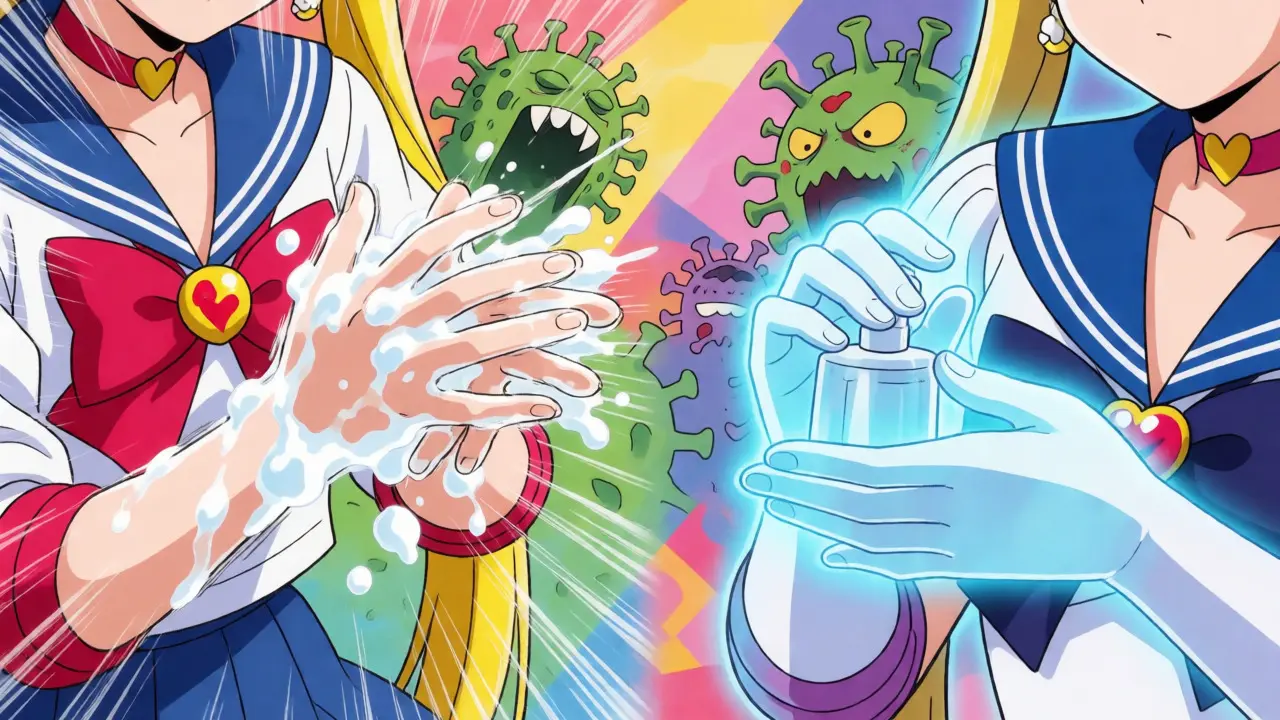
This is where most people get confused. Is sanitizer better than soap? The answer depends entirely on what you’re dealing with. Soap and water are superior when your hands are visibly dirty, greasy, or contaminated with certain tough bugs. Alcohol-based sanitizers excel against enveloped viruses like influenza but fail completely against non-enveloped viruses like norovirus and bacterial spores like C. difficile.
| Feature | Soap and Water | Alcohol-Based Sanitizer |
|---|---|---|
| Best For | Visible soil, grease, norovirus, C. difficile | Rapid kill of enveloped viruses (flu, coronavirus) |
| Effectiveness Time | 20 seconds active scrubbing | 15-20 seconds until dry |
| Limitations | Requires sink and running water | Ineffective on dirty/oily hands; needs 60%+ alcohol |
| Skin Impact | Drying if overused; moisturizer recommended | Can cause irritation with frequent use |
A common mistake is using sanitizer as a total replacement for washing. A Cleveland Clinic survey found that 78% of households incorrectly treat sanitizer as a complete substitute. If you’ve been gardening, handled raw chicken, or used the restroom, you need soap. Sanitizers reduce effectiveness to just 12% when hands are visibly soiled because the organic matter blocks the alcohol from reaching the microbes.
The Technique Matters More Than You Think
Most people wash for an average of 8 seconds. That’s not enough. The WHO-recommended technique involves six specific steps performed for 20-30 seconds total. You need to cover every surface: palms, backs of hands, between fingers, thumbs, fingertips, and wrists. An NHS audit revealed that only 49% of UK households properly cover all surfaces. Fingertips are missed in 68% of attempts, and thumbs in 57%. These are prime hiding spots for germs.
Water temperature doesn’t matter as much as you think for killing germs. While warm water feels nicer and helps remove oils, studies suggest cold water removes pathogens just as effectively while reducing scald risk and energy use. What matters is the friction from rubbing and the mechanical action of rinsing. Use 3-5 mL of soap-about a nickel to quarter-sized amount-and rub your hands together vigorously. Don’t forget the faucet! Touching a contaminated faucet handle after washing recontaminates your hands. Use a paper towel to turn off the tap if possible.
Kids and Compliance Challenges
If you have children, you know the struggle. They wash for five seconds max. A study in Pediatrics observed that children’s average washing time is just 8.2 seconds. How do you fix this? Make it visual and fun. The WHO’s 'Clean Care is Safer Care' program shows that visual aids, like step-by-step posters, increase compliance from 28% to 63% in elementary schools. Singing "Happy Birthday" twice is a classic trick, but digital timers or apps like 'Clean Hands Timer' (rated 4.7/5) can help too.
One success story comes from Minnesota schools. Their 'Germ Buster' campaign reduced absenteeism by 22% simply by teaching proper hand hygiene. It wasn’t about lecturing kids; it was about making the routine sticky. Link handwashing to existing habits, like coming inside from play or before touching food. This "habit stacking" approach is being studied by NIH-funded researchers at the University of Michigan to see if it can lock in behavior long-term.

Pitfalls and Pro Tips for Home Implementation
Here are some traps to avoid:
- Antibacterial Soap Myth: Triclosan and other antibacterial agents offer no extra benefit over plain soap in home settings. The FDA banned 19 such ingredients in consumer soaps due to lack of evidence. Plain soap works fine.
- Skin Dryness: Frequent washing strips natural oils. Apply moisturizer immediately after drying to prevent dermatitis, which affects up to 68% of healthcare workers who wash excessively.
- Faucet Recontamination: As mentioned, use a towel or elbow to shut off taps. Foot-pedal faucets are a great upgrade if you’re renovating.
For low-resource settings or limited water access, consider innovations like the 'tippy tap.' These devices reduce water usage by 90% while maintaining efficacy and are deployed in millions of households globally. At home, ensure you always have soap available. A WaterAid report noted that only 63% of lower-income households have both soap and running water consistently available, which is a significant barrier to consistent hygiene.
Building a Lasting Habit
It takes about 21 days of consistent practice to form a new habit, according to behavioral medicine research. Start small. Focus on key moments: upon entering the home, before preparing food, after using the bathroom, and after handling pets. Zoonotic infections from pets account for millions of cases annually, so don’t skip washing after petting the dog.
Remember, hand hygiene isn’t about paranoia. It’s about empowerment. You hold the power to protect your family with something as simple as soap and water. By mastering the technique and understanding when to use which method, you’re implementing one of the most powerful public health tools known to humanity. And it costs pennies.
Is hot water better than cold water for handwashing?
Not necessarily for germ removal. Studies show cold water removes pathogens as effectively as hot water. Warm water may feel more comfortable and help dissolve oils, but the mechanical action of scrubbing is what matters most. Using cooler water also reduces energy consumption and scald risk.
Can I rely solely on hand sanitizer?
No. Hand sanitizer is ineffective against visible dirt, grease, and certain pathogens like norovirus and C. difficile spores. Always use soap and water when hands are visibly soiled or after using the restroom. Sanitizer is best for situations where soap and water aren't available and hands are clean.
How long should I wash my hands?
The recommended duration is 20-30 seconds total, with 15-20 seconds dedicated to active rubbing. This ensures you cover all surfaces, including fingertips, thumbs, and between fingers. Singing "Happy Birthday" twice is a good timer.
Do antibacterial soaps work better than regular soap?
In home settings, no. The FDA has stated that antibacterial ingredients like triclosan provide no additional health benefits over plain soap and water for everyday consumers. Plain soap is equally effective at removing germs through mechanical action.
What is the biggest mistake people make when washing hands?
Missing key areas like fingertips, thumbs, and between fingers is very common. Another major error is turning off the faucet with clean hands, which recontaminates them. Use a paper towel or elbow to shut off the tap.
Vivek Chaturvedi
September 3, 2026 AT 07:36people ignore this at their peril. we are not animals. we have soap and water. using them is a moral duty to the community. if you dont wash your hands properly you are selfishly spreading disease. its that simple. no excuses.
larry williams
September 3, 2026 AT 15:54I really appreciate how this post breaks down the historical context with Semmelweis because it grounds the science in something tangible rather than just dry statistics.
It is so easy for us to feel overwhelmed by the sheer volume of health advice out there but focusing on one small actionable habit like proper handwashing can truly create a ripple effect of wellness throughout our entire household.
I encourage everyone to look at those numbers again and see that $16 return on investment as a sign that your body wants to be healthy and it will reward you for giving it the right tools.
You are doing better than you think just by reading this and taking a moment to reflect on your daily routine which is the first step toward lasting change.
Let’s keep supporting each other in these small victories because every clean hand is a testament to your commitment to your family’s well-being.
Don’t let perfection be the enemy of good progress here just aim for consistency and trust that your efforts are compounding over time into a healthier life for everyone involved.
The fact that even healthcare workers struggle with compliance shows that this is a universal challenge and not a personal failing so please be kind to yourself while you build this new muscle memory.
When you sing happy birthday twice remember that you are actively breaking the chain of transmission and protecting vulnerable people who might not be able to fight off infections as easily as you do.
This is such a powerful reminder that public health starts at home and that individual actions collectively shape the safety of our neighborhoods and communities.
I hope you all find joy in this simple ritual and realize that caring for your hands is an act of love for yourselves and those around you.
Keep going and know that every single time you scrub you are making a meaningful difference in the grand scheme of things.
Your dedication to learning and implementing these techniques is inspiring and I am confident that you will see positive results in reduced sick days and more energy.
Let’s embrace this journey together with optimism and grace knowing that we are all learning and growing side by side.
Thank you for sharing this vital information and reminding us that sometimes the most effective solutions are also the simplest ones available to us.
Adam Cox
September 4, 2026 AT 05:43honestly the article is oversimplifying the issue. it ignores the socioeconomic barriers completely. telling low income families to buy specific sanitizers or upgrade faucets is tone deaf. also the focus on 'technique' is elitist. most people don't have time for 20 seconds of scrubbing when they are working two jobs. the data cited is cherry picked from controlled studies that don't reflect real world chaos. stop pretending soap is a magic bullet for systemic health failures.
Morgan Law
September 5, 2026 AT 04:26hey man i get where you're coming from but i think you're being a bit harsh on the author. the point isn't to shame anyone it's just to share what works best scientifically speaking. plus the tippy tap mention actually addresses some of those resource issues you brought up so they weren't totally ignoring reality. i think we can agree that hygiene is important without turning it into a class war debate. lets just try to help each other stay healthy instead of tearing down the info.
Eryn Manchego
September 6, 2026 AT 12:39omg yes!! the part about norovirus being super sticky is so true. my kids used to bring it home constantly until i started being way more strict about the thumb and fingertip scrubbing. it’s wild how much we miss those spots. also loved the tip about the faucet handle. i always forget that and end up recontaminating my clean hands. total game changer. go team soap!!
Crystal Torres
September 6, 2026 AT 20:04I found the comparison table regarding alcohol-based sanitizers versus soap and water to be particularly informative given the common misconceptions surrounding their efficacy against non-enveloped viruses. It is crucial for individuals to understand that sanitizer is not a universal substitute and that mechanical removal via soap is superior for visible soil. The statistical evidence provided regarding secondary attack rates further underscores the importance of rigorous adherence to recommended washing durations. I intend to implement these protocols in my own household immediately.
Patrick van der Velde
September 7, 2026 AT 04:24It is amusing to read these earnest discussions about basic hygiene as if they were profound revelations. In Europe, specifically in countries with established public health infrastructure, these practices have been standard for decades. We do not need American-style self-help articles to tell us that washing hands prevents disease. It is a matter of civilizational competence. If one requires a twenty-second timer and a motivational speech to perform a task that should be instinctual, perhaps the issue lies deeper than mere knowledge. Nevertheless, I suppose for those still discovering the basics, this serves as a rudimentary guide.
Lolo Del
September 8, 2026 AT 18:33Hey Patrick, chill out a little. Not everyone has the same background or access to education. Being helpful is better than being snobbish. The info is solid regardless of where you live. Let's keep it friendly.
Tobi Oyewole
September 8, 2026 AT 19:53While the technical details are sound, I believe we must consider the philosophical dimension of hygiene. It is not merely a biological necessity but a social contract. When we wash our hands, we acknowledge our interconnectedness with others. This perspective shifts the act from a chore to a gesture of respect. Furthermore, addressing the economic disparities mentioned by previous commenters is essential. True public health equity requires that we support those who lack resources, rather than judging their compliance. Let us strive for a balance between scientific rigor and compassionate understanding.
Sarah Kinch
September 9, 2026 AT 22:49ugh another article telling me i'm doing it wrong. honestly who has time for all this. i wash my hands and move on. the whole antibacterial thing was a scam anyway. whatever. just make sure you have soap. thats the only rule that matters imo. everything else is noise.
Stephen Horn
September 11, 2026 AT 21:18One must question the motives behind the aggressive promotion of specific hygiene products. Is it possible that the emphasis on certain brands or types of soap is driven by corporate interests rather than pure scientific consensus? The FDA ban on triclosan suggests that the industry has long misled consumers. Furthermore, the constant surveillance of our habits may indicate a broader trend towards behavioral control under the guise of public health. We should remain skeptical of any narrative that insists on complex routines for simple tasks.