
How Lower Generic Drug Prices Boost Patient Adherence and Cut Healthcare Costs
 Jun, 25 2026
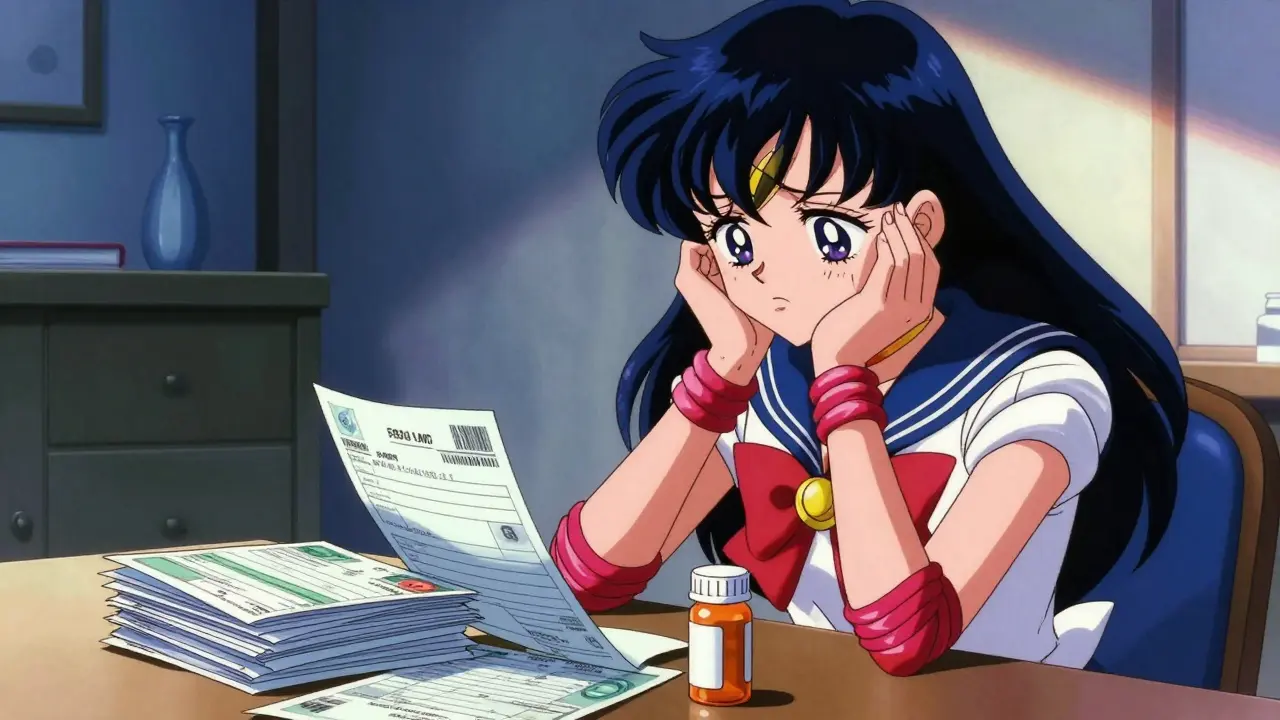
Imagine being prescribed a life-saving medication, only to skip doses because the copay feels like a monthly mortgage payment. This isn't a hypothetical scenario; it’s the daily reality for millions of patients navigating complex insurance formularies. High out-of-pocket costs are not just an inconvenience-they are a primary driver of medication non-adherence, leading to worse health outcomes and skyrocketing healthcare bills. But there is a proven solution that doesn’t require new drugs or miracle cures: lower generic drug prices.
The relationship between cost and compliance is direct and unforgiving. When medications become too expensive, patients stop taking them. The data shows that reducing these financial barriers through generic substitution and lower pricing tiers significantly improves adherence rates while slashing overall system costs. Let’s break down how this works, why generics are so effective, and what this means for your wallet and your health.
The Cost-Adherence Connection: A Dose-Response Relationship
You might think that if a doctor prescribes a drug, you’ll take it. Unfortunately, human behavior rarely follows medical logic when money is on the line. Research consistently demonstrates a 'dose-response' pattern between medication costs and adherence. Simply put: as the price goes up, adherence goes down.
A systematic review published in the Journal of Managed Care & Specialty Pharmacy (JMCP) analyzed 160 studies and found that higher cost-sharing was consistently associated with lower adherence. The impact is quantifiable. For every $10 increase in out-of-pocket costs, adherence rates drop by 2% to 4% across various therapeutic classes. In diabetes management, specifically with GLP-1 receptor agonists, a study in Diabetes Care (2023) showed that each $10 increase in cost reduced the likelihood of adherence by 3.7%. This wasn’t just about skipping pills; non-adherent patients saw a 5.2% increase in emergency department visits.
This creates a vicious cycle. Patients pay less upfront but end up paying far more later through hospitalizations and crisis care. Medication non-adherence accounts for up to 50% of treatment failures and contributes to over 100,000 preventable deaths annually in the United States. The economic toll is staggering, generating between $100 billion and $300 billion in preventable healthcare costs every year.
Why Generics Are the Game Changer
If high costs kill adherence, low costs save lives. Enter generic drugs. These medications are often misunderstood as 'cheaper versions' with inferior quality, but that couldn’t be further from the truth. The U.S. Food and Drug Administration (FDA) requires generic drugs to contain the same active ingredient, strength, dosage form, and route of administration as their brand-name counterparts. They must also demonstrate bioequivalence, meaning they perform within 80-125% of the brand-name drug’s pharmacokinetic profile.
Despite this clinical equivalence, the price difference is massive. Generic drugs typically cost 80-85% less than brand-name equivalents. This isn’t a marginal saving; it’s a transformative one. When patients switch from a brand-name statin to a generic alternative, the financial burden lifts dramatically. A landmark study by Chen et al. (2012) looked at Medicare Part D beneficiaries who were switched from second-tier brand-name statins to first-tier generic drugs. The result? A statistically significant 5.9% increase in the proportion of days covered (PDC), a key metric for adherence.
Real-world anecdotes mirror these statistics. On Reddit’s r/healthinsurance forum, users frequently share stories of switching from brands like Crestor ($75 copay) to generic rosuvastatin ($5 copay). One user reported going from missing three or four doses weekly to perfect adherence for over a year simply because the financial friction disappeared. When the cost barrier is removed, the behavioral hurdle vanishes with it.
| Feature | Brand-Name Drugs | Generic Drugs |
|---|---|---|
| Cost to Patient | High (e.g., $75+ copay) | Low (e.g., $5-$10 copay) |
| Active Ingredient | Proprietary Formula | Identical to Brand |
| Bioequivalence | N/A (Reference Standard) | 80-125% of Brand Profile |
| Adherence Rates | Lower (Higher Discontinuation) | Higher (15-20% better when priced similarly) |
| Market Share | ~10% of Prescriptions | ~90% of Prescriptions |
The Hidden Costs of Non-Adherence
We often focus on the pharmacy bill, but the true cost of medication lies in what happens when you don’t take it. Dr. Roebuck and colleagues published findings in Health Affairs showing that medication adherence leads to lower overall healthcare use and costs, despite increased drug spending. Adherent patients experienced a 15-20% reduction in hospitalizations compared to those who skipped doses.
Consider the case of aromatase inhibitors used in early-stage breast cancer treatment. A study by Hershman et al. (2011) found that patients on brand-name medications had higher discontinuation rates (22.3%) and lower adherence (68.4%) compared to those on generics (17.8% discontinuation, 73.1% adherence). Higher copayments directly correlated with nonadherence. In oncology, stopping treatment early can mean the difference between remission and recurrence. The savings at the pharmacy counter pale in comparison to the cost of treating advanced disease.
This dynamic applies across chronic conditions. For cardiovascular diseases, diabetes, and mental health disorders, consistent medication use prevents acute events. When patients ration insulin or skip blood pressure meds to save money, they risk strokes, heart attacks, and diabetic emergencies. These events are exponentially more expensive than the monthly prescription.
Policy Shifts and Real-Time Tools
Recognizing this crisis, policymakers and healthcare systems are implementing structural changes. The Inflation Reduction Act of 2022 introduced caps on insulin costs ($35/month) and eliminated catastrophic coverage gaps for Medicare Part D beneficiaries by 2025. Starting in 2025, Medicare also imposes a $2,000 annual out-of-pocket cap, projected to improve adherence for 1.4 million beneficiaries according to the Congressional Budget Office.
Technology is also playing a role. Real-time benefit tools (RTBTs) allow doctors to see the exact cost of a medication at the point of prescribing. Pilot programs using these tools, such as Magellan Healthcare’s inforMED program, have demonstrated 12-15% improvements in adherence. By identifying patients at risk of cost-related nonadherence before they leave the office, providers can switch prescriptions to cheaper generics or apply copay assistance instantly. This proactive approach yields a 2:1 return on investment by reducing care gaps and preventing costly complications.

Addressing the Trust Gap
Even with lower prices, some patients remain hesitant to switch to generics due to perceived quality differences. This trust gap is real but surmountable. The FDA’s 'It's Okay to Use Generics' campaign aims to educate the public on the rigorous testing generics undergo. Additionally, pharmacists play a crucial role in counseling patients, explaining that the inactive ingredients may differ slightly, but the therapeutic effect remains identical.
However, confusion persists. A JAMA Network Open survey (2023) of 2,131 adults revealed that 32.7% reported cost-related medication nonadherence (CRN). Among those with CRN, 78.1% said they would be affected if actual prices exceeded estimates. Furthermore, 54.2% of respondents with CRN felt upset if physicians used price tools but didn’t discuss pricing openly. Transparency is key. When doctors talk about cost as part of the treatment plan, patients feel supported rather than judged.
Looking Ahead: Value-Based Insurance Design
The future of medication affordability lies in aligning costs with value. 'Value-based insurance design' (VBID) adjusts copayments based on the clinical effectiveness and cost-effectiveness of a drug, rather than its list price. Pilot programs for VBID have shown an 18.3% improvement in adherence for high-value medications in diabetes and cardiovascular disease. This model encourages patients to take the most effective treatments by making them affordable, regardless of whether they are brand or generic.
Meanwhile, the generic market continues to expand. The FDA’s Generic Drug User Fee Amendments (GDUFA III) commit $1.1 billion to streamline approvals, aiming to add 1,500+ new generic medications by 2027. This influx will maintain the 80-85% cost savings differential versus brand-name drugs, ensuring that more patients have access to affordable, high-quality care.
Are generic drugs as effective as brand-name drugs?
Yes. The FDA requires generic drugs to be bioequivalent to brand-name drugs, meaning they contain the same active ingredient, strength, and dosage form. They must demonstrate a similar rate and extent of absorption in the body. Clinical studies show that generics produce the same therapeutic outcomes as brand-name medications.
How much can I save by switching to generics?
Generic drugs typically cost 80-85% less than their brand-name equivalents. Depending on your insurance plan, this could translate to savings of tens or even hundreds of dollars per month. For example, a $75 brand copay might drop to $5 for the generic version.
Why do some doctors still prescribe brand-name drugs?
Doctors may prescribe brand names due to habit, lack of awareness of generic availability, or specific patient needs (e.g., sensitivity to inactive ingredients). However, many insurance plans automatically substitute generics unless the doctor specifies 'dispense as written.' Patients should always ask their provider if a generic option is available.
What is cost-related medication nonadherence (CRN)?
CRN occurs when patients make decisions about their medication-such as skipping doses, splitting pills, or not filling prescriptions-to save money. It is a significant public health issue, affecting nearly one-third of adults surveyed in recent studies, and leads to worse health outcomes and higher overall healthcare costs.
How can I check the cost of my medication before filling it?
You can use online tools like GoodRx, which provide real-time pricing across different pharmacies. Additionally, many pharmacies offer apps or phone services to estimate copays. Asking your pharmacist or doctor about real-time benefit tools can also help identify the lowest-cost option for your specific insurance plan.
Ashley Jacelyn
June 25, 2026 AT 20:01It is so refreshing to see this topic discussed with such clarity. I have watched friends struggle to choose between groceries and their prescriptions, and it breaks my heart every time. Knowing that generics are just as effective gives me hope that we can actually fix this broken system without needing a miracle cure. We just need people to understand the data and trust the process. Let’s keep pushing for more transparency in healthcare costs.
Dale Simpson
June 26, 2026 AT 15:42man i totally agree with this post! its crazy how much money we waste on brand names when the generic works the same. i switched my dad to generic blood pressure meds last year and he has been doing great ever since. his copay went from like $60 to $4 which is insane. we should all be checking our options before filling scripts. its easy to get stuck in the old way of thinking but changing habits saves cash and health!
alexander barrera
June 26, 2026 AT 16:26Another day, another article telling us to eat less and take cheaper pills 🙄 The real issue is that our healthcare system is designed to fail the average citizen while lining the pockets of pharmaceutical executives who lobby Congress. You think lowering prices helps? It’s a band-aid on a bullet wound. The entire structure is corrupt and built on exploitation. Wake up sheeple! 🇺🇸💊
Charlotte Stuart
June 27, 2026 AT 00:04The assertion that bioequivalence within an 80-125% range equates to clinical identity is a gross oversimplification often propagated by those lacking a nuanced understanding of pharmacokinetics. While the active ingredient may be identical, the excipients-fillers, binders, and coatings-vary significantly between manufacturers. These inactive components can alter absorption rates, particularly in narrow therapeutic index drugs, leading to suboptimal therapeutic outcomes for sensitive patients. To suggest that all patients should blindly switch ignores the physiological variability inherent in human metabolism. One must consider the hysteresis effect and individual patient response profiles rather than relying solely on aggregate statistical adherence metrics.
Hema Khimasia
June 28, 2026 AT 18:56The epistemological framework surrounding generic substitution requires deeper scrutiny beyond mere cost-benefit analysis. While the FDA mandates bioequivalence, the philosophical implication of treating biological entities as interchangeable commodities disregards the holistic nature of patient-provider relationships. The reductionist approach to medication adherence fails to account for the psychosocial determinants of health. We must interrogate the underlying assumptions that prioritize economic efficiency over individualized care pathways. The dichotomy between brand and generic is not merely financial but ontological, reflecting broader societal values regarding commodification of wellness.
krystal Live
June 30, 2026 AT 13:42YES!! This is exactly what we need to hear more of! I was so scared to switch to generics at first because my doctor said they were different but then I read up on it and realized I was wasting so much money. Now I always ask for the generic version and my pharmacist is always happy to help me find the best price. It feels amazing to save money and still stay healthy. Keep spreading the word everyone! 💪✨
Tucker Brown
June 30, 2026 AT 23:08I don't trust these 'studies' funded by big pharma or government agencies. They want you to take whatever they give you without question. The fact that they allow such wide margins in bioequivalence suggests they know something we don't. Why would they make them different if they weren't trying to hide side effects? Think about it. The real solution is natural remedies and taking control of your own body, not relying on these synthetic compounds approved by a corrupt FDA.
Alyssa Smith
July 1, 2026 AT 12:41This is such an important conversation to have across cultures. In many parts of the world, generic access is the norm, not the exception. Bringing this mindset to the US could truly transform public health outcomes. I appreciate how the article highlights the human element behind the statistics. Every person struggling with high copays deserves dignity and affordable care. Let’s continue to advocate for policies that support equitable access to essential medications for everyone.
Frank Polster
July 1, 2026 AT 21:23Oh, fantastic. Another article pretending that cheap pills will solve the existential dread of modern medicine. Sure, let’s all just take our little white lies and pretend the system isn’t rigged against us from birth. But hey, at least the generic placebo effect is free! Thanks for nothing, really. Just what I needed to brighten my day with yet another reminder that healthcare is a joke.
ankit agarwal
July 3, 2026 AT 03:28The paradigm shift towards value-based insurance design represents a critical juncture in healthcare economics. By aligning patient incentives with clinical efficacy, we can mitigate the moral hazard associated with cost-sharing mechanisms. The integration of real-time benefit tools facilitates informed decision-making at the point of care, thereby enhancing adherence through behavioral nudges. Furthermore, the expansion of the generic market via GDUFA III underscores the regulatory commitment to fostering competition. This multifaceted approach addresses both supply-side constraints and demand-side barriers effectively.
Stephanie Cree
July 3, 2026 AT 04:32You absolutely MUST stop ignoring the ethical implications of this!! It is morally reprehensible that anyone goes without life-saving medication due to greed!!! We have a duty to care for one another and this system is failing us miserably!!! Shame on all those who profit from suffering!!! Change now!!!!!! 😡😡😡
Bruno Sarri
July 3, 2026 AT 12:58I really appreciate the detailed breakdown here. It’s helpful to see the specific stats on how even small increases in cost lead to drops in adherence. As someone who works in community outreach, I’ve seen firsthand how fear of cost stops people from getting treatment. Encouraging open dialogue between doctors and patients about price is crucial. It’s not just about the pill; it’s about trust and accessibility. Great resource for anyone navigating these tough choices.
Tumble Farm
July 4, 2026 AT 13:41As a pharmacist, I can confirm that the majority of patients respond identically to generics and brands. The difference in inactive ingredients rarely causes clinical issues unless there is a specific allergy. I recommend using apps like GoodRx to compare prices before filling any prescription. Also, never hesitate to ask your provider about therapeutic alternatives if cost is a barrier. Adherence is key to long-term health management.