
How to Keep Medications Safe from Children and Pets at Home
 Mar, 20 2026
Every year, tens of thousands of children and pets end up in emergency rooms because they got into medicine they weren’t supposed to. It’s not because parents are careless-it’s because medicine is everywhere. A pill left on the counter after breakfast. A bottle in a purse on the floor. Gummy vitamins sitting beside the cereal box. These aren’t rare accidents. They’re predictable ones-and they’re completely preventable.
Why Your Medicine Cabinet Isn’t Safe
Most people think the bathroom cabinet is the best place for medicine. It’s convenient, it’s private, and it’s often locked. But here’s the problem: bathrooms are humid. That moisture doesn’t just make your mirror fog up-it breaks down pills, weakens patches, and ruins liquid medications. The CDC and Seattle Children’s Hospital both warn that humidity above 60% can make your medicine less effective or even unsafe. And it’s not just about shelf life. Kids can reach up to 4 feet high. If your medicine is on a shelf at eye level, they’ll find it. Pets? They’re even smarter. A dog with a good nose can smell a pill through a plastic bottle, especially if it’s flavored. Cats will knock things off counters. Ferrets climb. Even if you think your child or pet is too young or too slow to get into medicine, they’re not.Where to Store Medicine Instead
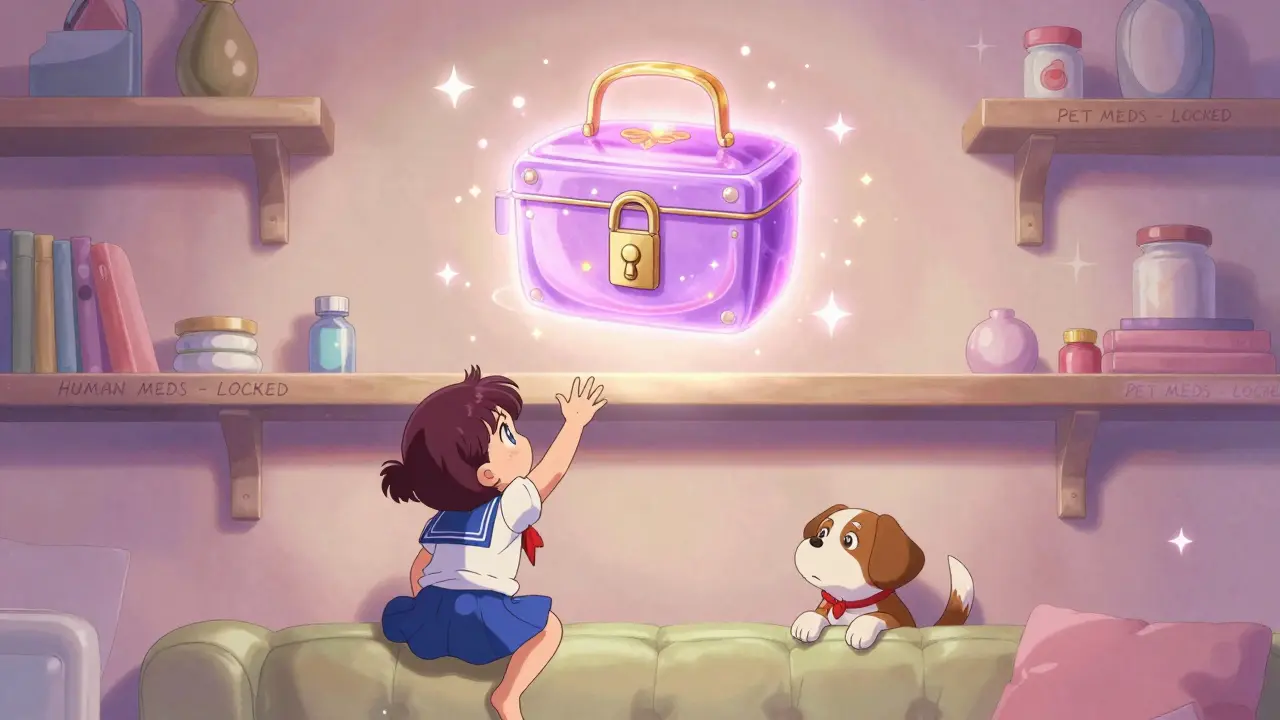
The best place to store medicine isn’t in the bathroom. It’s not on the kitchen counter. It’s not in a drawer you open every morning. It’s in a locked container, high up, and away from food. Start by picking one room: a bedroom closet, a high cabinet in the kitchen, or a drawer in a dresser. Then, install a lock. It doesn’t have to be fancy. A simple combination lock, a key lock, or even a biometric safe-like the ones used by parents on Reddit’s r/Parenting-work. The key is consistency. You need to lock it every single time, even if you’re just stepping out for five minutes. Keep it above 5 feet. That’s the height most children can’t reach without climbing. And if your home has stairs, bookshelves, or furniture they can use to climb? Then go higher. A 2023 study by the Up & Away campaign found that 74% of households with both kids and pets reduced incidents after moving medicine to a height above 5 feet and adding a lock.Separate Human and Pet Medications
Here’s something most people don’t realize: your dog’s arthritis pill can kill your cat. Your child’s ADHD medication can cause seizures in a small dog. And your pet’s flavored antibiotics? They taste like chicken to a dog-and like candy to a toddler. The FDA says 25% of pet medication incidents happen when a person accidentally takes their pet’s medicine. That’s not a typo. A mom grabs a bottle labeled "for Fido" thinking it’s her own vitamin. A dad gives his son a pill that’s meant for the dog. Both are common. That’s why you need separate storage. Keep human and pet medications in different locked containers. Label them clearly: "HUMAN MEDS - LOCKED" and "PET MEDS - LOCKED." If you’re storing pet meds in the kitchen, make sure they’re in a different cabinet than your food. VCA Animal Hospitals recommends a three-zone system:- Zone 1 (Immediate Use): Only the current dose. Keep it on a flat surface while giving it. Never leave it on a counter.
- Zone 2 (Short-Term): Locked container at least 5 feet high. For meds you use daily.
- Zone 3 (Long-Term): Separate locked boxes for human meds, dog meds, and cat meds. Store them in different rooms if possible.
Watch Out for Gummies and Liquids
Gummy vitamins, chewable antibiotics, and flavored syrups are the #1 cause of accidental ingestions in kids under 5. The CDC says gummy supplements make up 30% of all childhood medicine poisonings-even though they’re only 15% of the market. Why? Because they look like candy. And they taste like it. Don’t store them in the same place as real candy. Don’t leave them on the nightstand. Don’t let your kids think they’re snacks. Treat them like prescription drugs: locked, high, and out of sight. Liquids are just as dangerous. A teaspoon of liquid ibuprofen can knock out a toddler. Keep them in child-resistant caps-but don’t rely on them. Child-resistant isn’t child-proof. It’s child-delayed. And a determined child, or a curious dog, will figure it out.Use the Two-Minute Rule
Most accidents happen in the 30 seconds after you give medicine. You open the bottle. You pour the dose. You hand it to your child. You set the bottle down to grab a glass of water. You turn around. And that’s when it happens. Children’s Mercy Hospital found that 52% of childhood poisonings occur during these short moments. That’s why they created the two-minute rule: As soon as you finish giving medicine, lock it away. No exceptions. Even if you’re giving the next dose in two hours. Even if you’re in the same room. Lock it. This rule cuts risk in half. It’s that simple.Dispose of Old or Expired Medicine Properly
Don’t flush pills. Don’t toss them in the trash. Don’t leave them in a drawer "just in case." The EPA says the safest way to dispose of old medicine is to mix it with something unappealing: coffee grounds, cat litter, or dirt. Use a 1:1 ratio by volume. Put it in a sealed plastic bag. Then throw it in the trash. Why? Because 92% of people who try to reuse dumped pills can’t get them out of the mixture. That’s the difference between a child finding a pill and a child finding a pile of wet, bitter coffee grounds. For extra safety, check if your local pharmacy or police station has a drug take-back program. Many do. In New Zealand, pharmacies like Countdown and Pak’nSave offer free disposal bins. You don’t need a receipt. Just drop it in.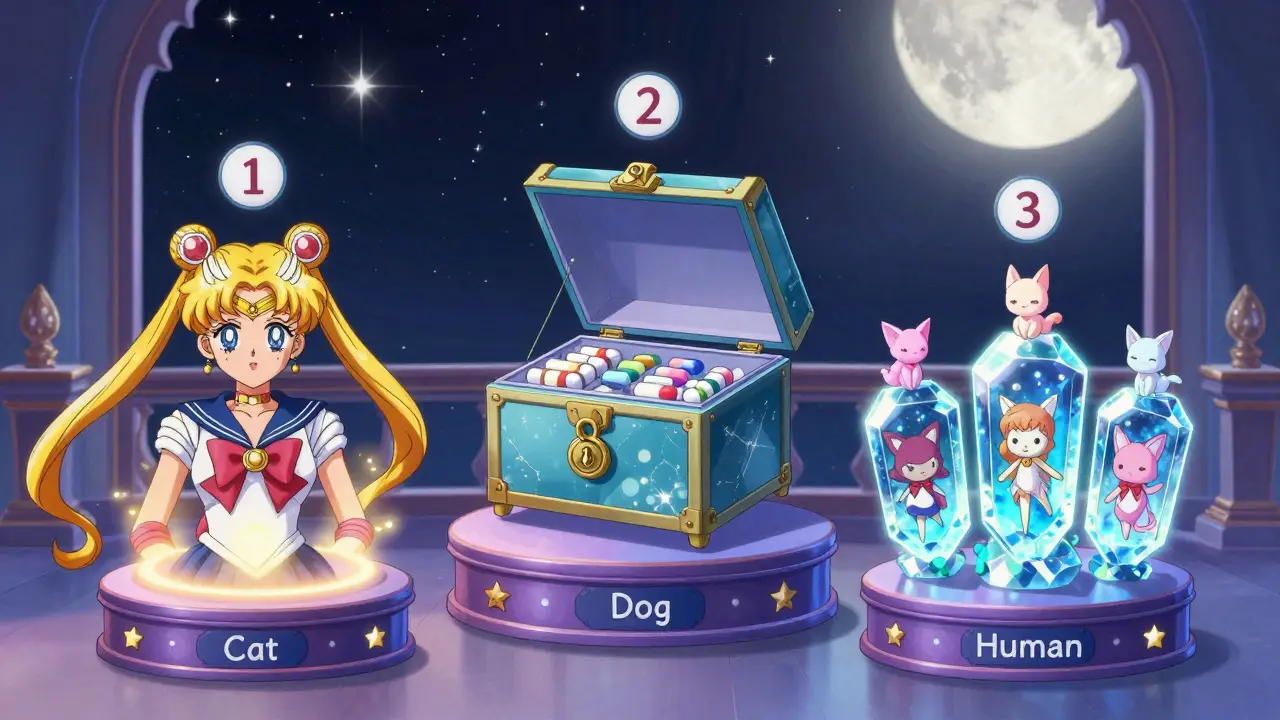
What Works: Real Stories
One parent on the American Kennel Club forum shared how their Labrador dug a pill out from between couch cushions. They’d been storing meds in a cabinet they thought was secure. The dog had learned to jump onto the couch, then onto the armrest. Now, they use a biometric safe on a high shelf. "It adds 10 seconds to my morning," they said. "But I sleep better." Another family switched to weekly lockable pill organizers after their 2-year-old opened a child-resistant bottle and swallowed 12 pills. "We thought we were safe," they told HealthyChildren.org. "Turns out, we were just lucky."What to Buy (and What to Skip)
You don’t need expensive gadgets. But some tools make it easier:- Lockable medication box (11" x 6", like the VADIC Safe Storage Bag) - $15-$25. Fits in a closet. Has a combination lock.
- Biometric safe - $50-$100. Fingerprint unlock. Great for busy households.
- Weekly pill organizer with lock - $10-$20. Helps with routines. Look for ones with separate compartments for kids and pets.
- Child-resistant caps alone - they’re not enough.
- Drawer organizers without locks - curious hands find them.
- Medicine stored in purses, backpacks, or nightstands - too easy to access.
Start Today
You don’t need to overhaul your whole house. Pick one room. Pick one type of medicine. Lock it up. Use the two-minute rule. Do it tomorrow. Do it again the next day. Soon, it becomes automatic. By the end of the week, you’ll have one less thing to worry about. Because the truth is, you can’t always watch your kids and pets. But you can control where the medicine goes. And that’s the difference between a near-miss and a tragedy.Can I store medicine in the fridge?
Only if the label says "refrigerate." Even then, keep it in a locked container inside the fridge-separate from food. Kids and pets can open fridge doors. A locked container prevents accidental access. Always check the medicine’s storage instructions before putting it in the fridge.
What if my child opens a child-resistant bottle?
Child-resistant caps are designed to slow down children-not stop them. If your child gets into a bottle, call Poison Control immediately (in New Zealand, dial 0800 764 766). Don’t wait for symptoms. Even one pill can be dangerous. Then, upgrade your storage: move medicine to a locked box at least 5 feet high.
Are gummy vitamins safe to store with regular medicine?
No. Gummy vitamins are one of the top causes of accidental poisoning in young children because they look and taste like candy. Store them separately-in a locked container, away from snacks. Treat them like prescription drugs: lock them up, keep them high, and never leave them out.
How do I keep pet meds away from my cat?
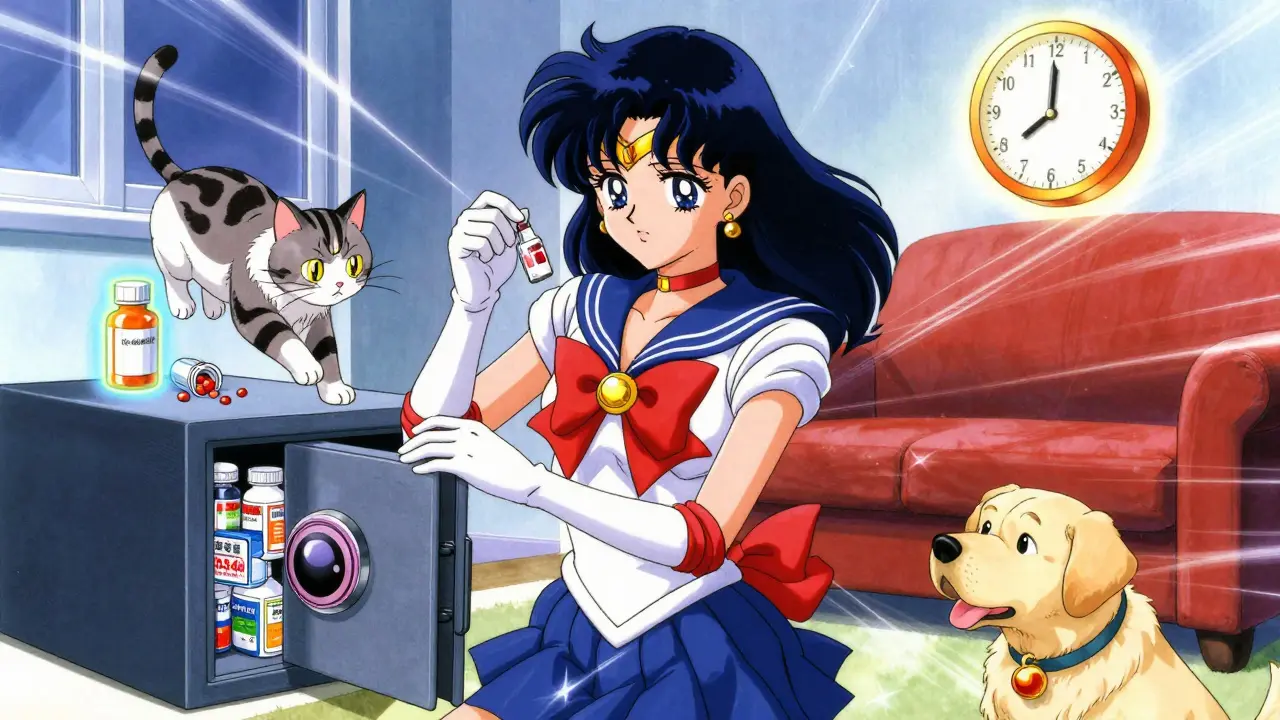
Cats are climbers and jumpers. Even if you think your pet meds are "out of reach," a cat can leap onto a shelf, then a counter, then a cabinet. Store pet meds in a separate locked box, ideally in a different room than where your cat spends time. Never leave them on a windowsill or near a pet food bowl.
Is it okay to keep medicine in my purse or car?
Only if it’s in a locked container. Unlocked purses, diaper bags, or glove compartments are the #1 source of accidental ingestions. If you need to carry medicine, use a small lockable case. Never leave it in a car where heat or cold can ruin it-or where a curious child might find it.
Natali Shevchenko
March 22, 2026 AT 00:06It’s wild how we treat medicine like it’s just another household item, right? Like, we’ve got this ingrained habit of leaving things out because it’s convenient, but we never stop to think about how much our homes have become minefields for curious little hands and noses. I’ve been storing my meds in a locked box on top of the closet since my nephew got into my blood pressure pills last year. He thought they were Skittles. I didn’t even know he’d figured out how to climb onto the chair until I heard the crunching. Now? I lock everything. Even the ibuprofen. Even the fish oil. Even the damn gummy vitamins. It’s not paranoia-it’s just physics. If something is accessible, it will be accessed. And kids? They’re basically tiny, determined scientists with zero fear of consequences.
Also, the two-minute rule? That’s the only thing that actually works. I used to think I could just set it down for a second. Nope. That second is all it takes. Now I lock it before I even take a sip of coffee. It’s become ritualistic. Almost meditative. And honestly? It’s given me peace of mind I didn’t know I was missing.
Also-pet meds in a separate box? I didn’t even think about that. My cat once ate my dog’s heart pill. She was fine. But I almost had a heart attack. Now they’re in different rooms. Different locks. Different vibes. It’s insane how much we overlook the obvious until it almost kills someone.
Nicole James
March 23, 2026 AT 13:10Let’s be real: this whole system is a government ploy to make us buy more locks, more safes, more overpriced plastic boxes… and meanwhile, Big Pharma is quietly raising prices on every pill we’re now forced to store like nuclear material. Why do we need a biometric safe for Tylenol? Why not just… stop making pills that taste like cotton candy? Why not ban gummy vitamins entirely? Why not regulate the flavoring agents? Why is it my job to become a fortress architect just to keep my kid alive? The system is broken. We’re being gaslit into believing that if we just buy the right container, we’ve done our duty. But the real problem? The fact that poison is being marketed as snack food. And we’re all just… complicit.
And don’t even get me started on ‘child-resistant caps.’ That’s not safety-that’s a psychological experiment. ‘Oh, we’ll make it hard enough that they cry for ten minutes before succeeding.’ That’s not prevention. That’s entertainment for pharmaceutical engineers.
Lock it? Sure. But don’t fool yourself. This isn’t about safety. It’s about damage control. And someone’s making billions off it.
Nishan Basnet
March 23, 2026 AT 21:29This article is one of the most thoughtful pieces I’ve read in a long time. It’s rare to see a topic that’s so universally relevant handled with both precision and compassion. I’m from India, where medicine is often stored in open drawers, on kitchen shelves, even in unmarked bottles in the back of cabinets. Accidental poisonings are tragically common here, and yet there’s almost no public awareness. The two-minute rule? Brilliant. Simple. Effective. I’ve already started implementing it at home. My wife and I now have a small, locked wooden box in the bedroom closet-separate compartments for our meds, our daughter’s vitamins, and our dog’s heart medication. We even labeled them in both English and Hindi. It’s not about fear. It’s about responsibility. And yes, it does take two extra seconds. But those two seconds? They’re worth a lifetime.
Also, the idea of storing pet meds separately? Eye-opening. I never realized how many households mix them. My neighbor’s cat died last year because she gave it her son’s ADHD medication. He thought it was a multivitamin. We need more conversations like this. Thank you for writing it.
Allison Priole
March 25, 2026 AT 07:59i just wanna say… this was so helpful. i’ve been kinda lazy about this stuff, like ‘oh it’s fine, my kid’s not a climber’ and ‘my dog’s too chill to care’ but then i read the part about gummy vitamins and i literally gasped. we had a whole jar of them on the nightstand. like, right next to my phone charger. yeah. that’s a disaster waiting to happen. i just went and got a $12 lockbox from target and moved everything. even the dog’s flea med. i didn’t even know they made lockable pill organizers. now i feel like a superhero. i’m gonna do the two-minute rule too. even if i’m tired. even if i’m in a rush. even if i’m just going to the bathroom. lock. it. away. thanks for the wake-up call. i’m gonna sleep better tonight. 🙌
Casey Tenney
March 26, 2026 AT 07:42You’re not safe until you lock it. Period. Stop making excuses. Your kid isn’t ‘too young.’ Your dog isn’t ‘too lazy.’ Your bathroom cabinet isn’t ‘fine.’ If you’re not locking it, you’re gambling with their lives. And if you think a child-resistant cap is enough? You’re not just negligent-you’re reckless. Get a lock. Move it high. Separate pet meds. Use the two-minute rule. Do it now. Not tomorrow. Now.
Chris Dwyer
March 27, 2026 AT 15:30Hey, I just want to say-this is the kind of advice that doesn’t get enough attention. I used to think I was being careful until my toddler opened my purse and swallowed three of my anxiety pills. We got lucky. No ER. But I’ll never forget the panic. Since then, I’ve got a lockbox on my closet shelf, separate boxes for my meds and my dog’s, and I follow the two-minute rule like it’s gospel. It’s not about being perfect. It’s about being consistent. And honestly? It’s become part of my routine. Like brushing my teeth. You don’t think about it-you just do it. And now? I feel way less anxious. If you’re reading this and you’re still leaving stuff out? Just do one thing today. Lock one thing. One. Then tomorrow, lock another. You’ll be surprised how easy it gets. You’ve got this.
Desiree LaPointe
March 28, 2026 AT 17:20Oh, look. Another article that treats parents like they’re toddlers who can’t be trusted to put a pill back in the bottle. Let me guess-you also think we should lock up our toothpaste because ‘kids might mistake it for candy’? And maybe we should install biometric safes on our salt shakers next? This isn’t safety advice. It’s fearmongering dressed up as practicality. Yes, accidents happen. But we used to raise children without locking every single substance in the house. We used to have trust. We used to have supervision. Now? We’ve turned parenting into a compliance checklist. You’re not protecting your child-you’re training them to believe the world is full of hidden dangers that require industrial-grade security just to survive. How about teaching kids not to eat random things? Or, I don’t know-watching them? Just a thought.
Jackie Tucker
March 30, 2026 AT 00:45How quaint. You’ve unlocked the secret to preventing childhood poisonings: a $100 biometric safe. How utterly original. I suppose next you’ll recommend we store our sugar in a vault and our butter in a climate-controlled bunker? The irony is delicious: we’ve reduced parenting to a series of TSA-level security protocols while simultaneously allowing our children to grow up believing that the world is too dangerous to explore. The fact that you think a child-resistant cap is a joke-and that a locked box is the solution-tells me everything about the depth of your insight. We’re not raising children. We’re raising hostages. Bravo. You’ve won the award for Most Overengineered Parenting Advice of the Decade.
Paul Cuccurullo
March 31, 2026 AT 20:34To the person who said we’re turning parenting into a compliance checklist-I hear you. But let me ask you this: if you had the chance to prevent a tragedy with one simple action, wouldn’t you take it? Not because you’re paranoid. Not because you’re overreacting. But because you love someone more than you fear inconvenience? I lost a cousin to a mislabeled pill when I was a kid. He was three. He thought it was a Skittle. We never found the bottle. We never knew which one it was. I don’t want that for anyone else. Locking medicine isn’t about control. It’s about love. It’s about saying: ‘I care enough to do the boring thing, so you don’t have to pay the unthinkable price.’