
How to Manage Interactions When Starting a New Medication
 Dec, 3 2025
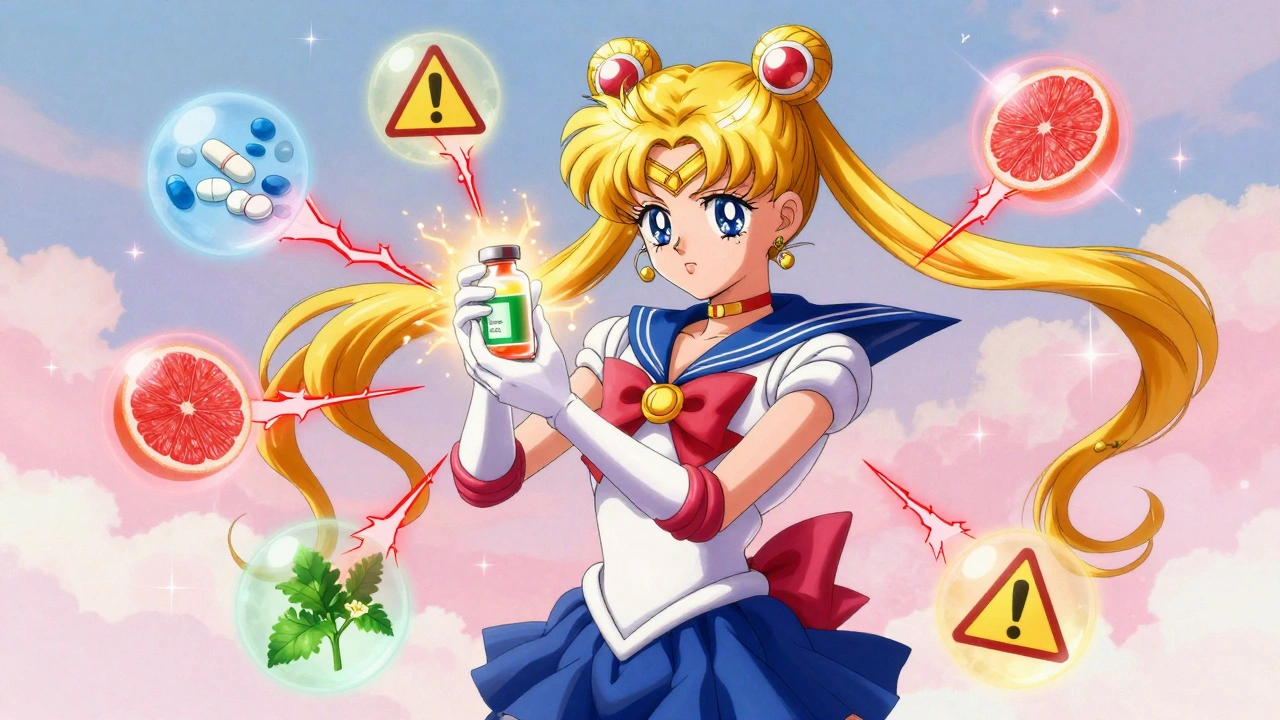
Starting a new medication can feel like a step toward feeling better-but it can also open the door to unexpected and dangerous side effects if other drugs, supplements, or even foods are in the mix. Drug interactions aren’t rare outliers; they’re a daily reality for millions. About 3 to 5% of all outpatient prescriptions involve a clinically significant interaction, and that number jumps to 30% for people taking five or more medications. If you’re over 65, you’re even more at risk: nearly half of adults in that age group take four or more prescription drugs, and many don’t even tell their doctor about the vitamins, herbs, or over-the-counter pills they’re using.
What Exactly Is a Drug Interaction?
A drug interaction happens when one substance changes how another works in your body. This isn’t just about two pills clashing-it’s about how your body absorbs, breaks down, or responds to the medicine. There are two main types:- Pharmacokinetic interactions: These affect how your body handles the drug-whether it’s absorbed in your gut, carried through your bloodstream, broken down by your liver, or flushed out by your kidneys. The most common culprit? The CYP3A4 enzyme in your liver. It processes about half of all drugs, and if something blocks or speeds up this enzyme, your medication levels can spike or drop dangerously.
- Pharmacodynamic interactions: These happen when two drugs affect the same system in your body, making their effects stronger-or canceling each other out. For example, mixing blood thinners like warfarin with amiodarone can make you bleed more easily. Combining opioids with promethazine can slow your breathing to a dangerous level.
Some interactions are so well-documented that they come with strict rules. Take simvastatin, a common cholesterol drug. If you’re also taking amlodipine for high blood pressure, your simvastatin dose must not exceed 20 mg per day. With diltiazem or verapamil, it drops to just 10 mg. Go over that limit, and your risk of severe muscle damage skyrockets.
High-Risk Combinations You Can’t Afford to Ignore
Not all interactions are obvious. Some are buried in everyday habits. Here are the most dangerous ones you need to know:- Warfarin + Amiodarone: Amiodarone, used for irregular heartbeats, can make warfarin up to twice as powerful. This can cause internal bleeding. Doctors often cut the warfarin dose by 30-50% right after starting amiodarone and check your INR (a blood test for clotting) within 3-5 days.
- MAO inhibitors + Tyramine-rich foods: Medications like phenelzine (Nardil) for depression can cause a life-threatening spike in blood pressure if you eat aged cheeses, cured meats, or fermented soy. Just one serving of blue cheese-containing 2-5 mg of tyramine-can push systolic pressure above 200 mmHg.
- St. John’s Wort + Antidepressants or Birth Control: This popular herbal supplement can slash the effectiveness of antidepressants, HIV meds, and even birth control pills by 40-60%. Many patients don’t mention it because they think “natural” means “safe.”
- DOACs + LMWHs: Combining direct oral anticoagulants (like rivaroxaban) with low molecular weight heparins (like enoxaparin) can triple your bleeding risk. This often happens when patients get hospitalized and receive both without realizing the danger.
- Opioids + Sedatives: Mixing opioids with benzodiazepines, sleep aids, or even promethazine can cause respiratory depression. In some cases, the effect is 200-300% stronger than expected.
Why You Can’t Rely on Your EHR or Pharmacy Alerts
You might think your electronic health record or pharmacy system will catch all the bad combinations. It won’t. A 2023 study in JAMA Internal Medicine found that doctors override 90-95% of drug interaction alerts-because most are low-priority, repetitive, or poorly timed. Only high-severity warnings (like contraindicated combinations or 50% dose reductions) get noticed consistently.And pharmacy systems? They miss 15-20% of high-risk interactions. Many don’t include supplements, herbal products, or recreational drugs. If you’re taking St. John’s Wort, melatonin, or even grapefruit juice, your pharmacist might never know unless you tell them.
That’s why the most reliable tool isn’t software-it’s you. Keep a written list of everything you take: prescriptions, over-the-counter pills, vitamins, herbs, CBD, alcohol, and even smoking habits. Bring it to every appointment. Don’t assume your doctor knows what you’re using just because you’ve been seeing them for years.
What You Should Do When Starting a New Medication
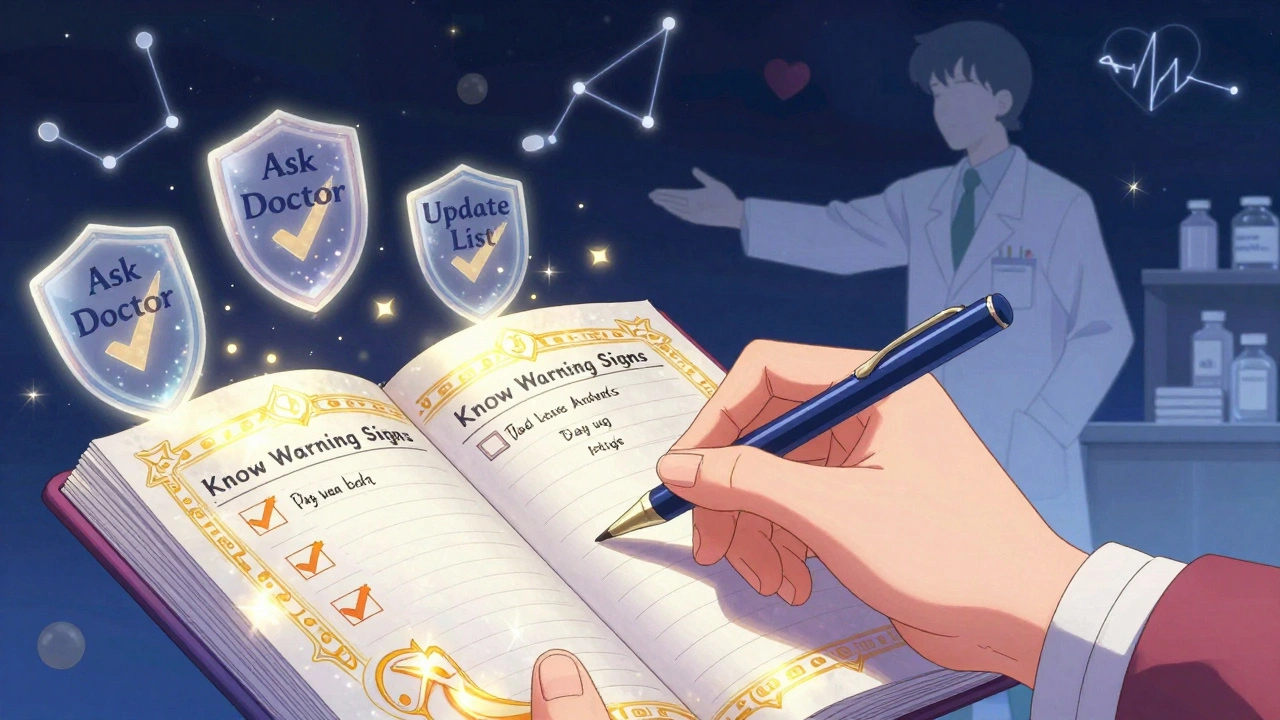
Follow this simple, proven checklist:- Make a complete medication list: Include names, doses, why you take them, and how often. Don’t forget supplements and OTC drugs. Use a notebook or phone app-just make sure it’s updated.
- Ask your doctor or pharmacist: “What should I avoid while taking this?”: Don’t settle for “take with food” or “avoid alcohol.” Ask specifically about other medications, herbs, or foods. For example: “Does this interact with my blood pressure pill?” or “Is it safe with my fish oil?”
- Check for timing rules: “Take on an empty stomach” doesn’t mean “don’t eat for two hours.” It usually means one hour before or two hours after eating. Get it wrong, and your drug won’t work right.
- Know your warning signs: If you feel unusually tired, dizzy, nauseous, bruise easily, or have muscle pain after starting a new drug, call your provider. Don’t wait for your next appointment.
- Get a follow-up plan: For high-risk combinations (like warfarin + amiodarone), ask when your next lab test is due. Schedule it. Don’t wait to be called.

Who Should Be on Your Team?
Managing interactions isn’t just your doctor’s job. It’s a team effort:- Pharmacists: They’re trained to spot interactions you and your doctor might miss. A 2022 study showed pharmacists identify 40-60% more potential interactions during medication reviews than physicians alone.
- Specialist care coordinators: If you’re seeing multiple specialists, make sure they’re talking to each other. A 2024 pilot program by the AAFP found that requiring communication between primary care and specialists within 48 hours of a new high-risk prescription reduced adverse events by 18%.
- You: You’re the only one who knows what you’re really taking. If you’re not telling your provider about your turmeric capsules or your nightly glass of wine, you’re leaving them blind.
When to Consider Alternatives
Sometimes, the safest choice is a different drug. If you’re on simvastatin and need to start diltiazem, your doctor can switch you to pravastatin or rosuvastatin-both are safer with calcium channel blockers. If you’re on a drug that interacts with grapefruit, there’s almost always an alternative. Ask: “Is there another medication that works just as well but doesn’t have this risk?”Don’t assume you’re stuck with the first option. Your doctor might not know all the alternatives unless you ask. And if you’re on five or more medications, ask about deprescribing-removing drugs that may no longer be necessary. Reducing your pill count by even one or two can cut your interaction risk by 15-25%.
What About Supplements and Natural Products?
“Natural” doesn’t mean “safe.” St. John’s Wort is the most common unreported supplement that causes serious interactions. It can make birth control fail, antidepressants useless, and transplant drugs ineffective. Curcumin (turmeric), garlic supplements, and ginkgo biloba can all increase bleeding risk, especially with blood thinners.Even something as simple as grapefruit juice can be dangerous. It blocks the enzyme that breaks down dozens of drugs, including statins, blood pressure meds, and some anxiety pills. One glass can cause effects that last over 24 hours. If your doctor says “avoid grapefruit,” don’t try to sneak it in. There’s no safe amount.
What to Do If You’ve Already Had a Bad Reaction
If you’ve felt worse after starting a new drug-dizziness, confusion, muscle pain, unusual bruising, or trouble breathing-don’t just stop taking it. Call your provider. Stopping suddenly can be dangerous too.Write down exactly what you took, when you started it, and when symptoms began. Bring your full medication list. If possible, get a copy of your recent lab results. This helps your doctor figure out whether it’s a drug interaction, a side effect, or something else entirely.
And if you’re ever unsure-call your pharmacist. They’re available during business hours and can answer questions faster than waiting for a doctor’s appointment.
Looking Ahead: What’s Changing in Drug Safety
In May 2024, the global standard for testing drug interactions changed with the adoption of the ICH M12 Guideline. This means new drugs will be tested more thoroughly for interactions before they hit the market. In the U.S., the FDA now requires companies to test for CYP450 and transporter interactions using human liver cells and microsomes under strict conditions.By 2025, all certified electronic health records will be required to grade drug interactions using a standard scale: contraindicated, major, moderate, minor. This will reduce alert fatigue and help doctors focus on what really matters.
Meanwhile, AI tools like IBM Watson Medication Safety are already being tested in hospitals, predicting dangerous interactions with 92.4% accuracy. These tools won’t replace your doctor-but they’ll help them make smarter decisions faster.
Final Takeaway: Knowledge Is Your Best Protection
Starting a new medication isn’t just about popping a pill. It’s about understanding how it fits into the whole picture of what you’re already taking. The most effective way to avoid dangerous interactions isn’t relying on technology or hoping your doctor remembers everything-it’s staying informed, asking questions, and keeping a clear, updated list of everything you use.Every time you start a new drug, treat it like a new chapter in your health story. Read it carefully. Ask for help if you don’t understand it. And never assume something is safe just because it’s sold over the counter or labeled “natural.”
Your body doesn’t react to drugs in isolation. It reacts to the whole mix. So make sure the whole mix is known.
Ollie Newland
December 4, 2025 AT 09:37Just started apixaban last week and forgot to mention my daily turmeric shot to my pharmacist. Turned out it was a major bleed risk. They caught it before I even left the pharmacy. Never again. Always bring your whole damn list - supplements, energy drinks, even that weird herbal tea your aunt swears by. Your body’s a cocktail party and you’re the bartender.
Michael Feldstein
December 5, 2025 AT 19:11Man, this is the kind of post I wish I’d read before I started my new blood pressure med. I was popping fish oil like candy and didn’t even think twice. Now I’m checking every interaction on Drugs.com before I touch anything. Pro tip: If your doc says ‘take with food,’ ask *what kind* of food. Grapefruit juice isn’t the only troublemaker - avocado and high-fat meals can mess with absorption too.
Benjamin Sedler
December 7, 2025 AT 09:31Let’s be real - if you’re taking more than three meds, you’re basically a lab rat. The system is designed to keep you confused and dependent. Pharmacists? They’re just glorified pill counters with a DEA license. And don’t get me started on ‘natural’ supplements - that’s just Big Herbal’s way of selling you snake oil while pretending to care. Your doctor doesn’t want you to know how many of these drugs are just profit engines. The real danger? Not the interactions - it’s the fact that you’re being sold a system that profits from your confusion.
zac grant
December 9, 2025 AT 05:41Biggest thing I’ve learned since my dad had that near-fatal interaction between simvastatin and diltiazem? Always ask: ‘Is there a safer alternative?’ That’s how we switched him to rosuvastatin - no muscle damage, no dose restrictions. Also, if you’re on anything with CYP3A4, avoid grapefruit like it’s radioactive. One glass = 24 hours of enzyme shutdown. I keep a printed list taped to my fridge. It’s saved my ass twice.
Dematteo Lasonya
December 9, 2025 AT 21:17Jake Deeds
December 11, 2025 AT 12:46It’s not just about drug interactions - it’s about the systemic collapse of medical accountability. The fact that 95% of alerts are overridden? That’s not user error. That’s institutional negligence. And don’t even get me started on the FDA’s ‘minor’ classification for interactions that cause liver failure. We’ve turned healthcare into a game of Russian roulette where the gun is loaded with FDA-approved pills and the doctor’s too busy to pull the trigger. I’m not paranoid - I’m clinically informed.
George Graham
December 11, 2025 AT 17:25As someone who’s been managing polypharmacy since my transplant, I’ll say this: the checklist you laid out? Perfect. I use a simple Notion doc synced across my phone and tablet. I update it after every script fill. And I’ve trained my pharmacist to call me if anything new shows up in my profile - even if it’s ‘just’ a new OTC painkiller. They’ve caught three bad combos for me already. Bottom line: you’re the captain of your ship. No one else is holding the wheel.
Rachel Bonaparte
December 12, 2025 AT 15:28Did you know the FDA doesn’t require drug companies to test interactions with CBD? Or melatonin? Or even black tea? They’re letting Big Pharma get away with it because ‘natural’ products aren’t regulated. But here’s the real secret - the CYP3A4 enzyme is also blocked by cigarette smoke, stress hormones, and even electromagnetic fields from your phone. That’s why your meds stop working when you’re anxious or sleep-deprived. They’ve been hiding this for decades. If you’re on anything long-term, get a hair toxicology test - it’ll show you what your liver’s been dealing with. And yes, your phone is probably sabotaging your statins. I’ve seen it in my data.