
How to Prevent Accidental Medication Poisoning in Kids and Toddlers
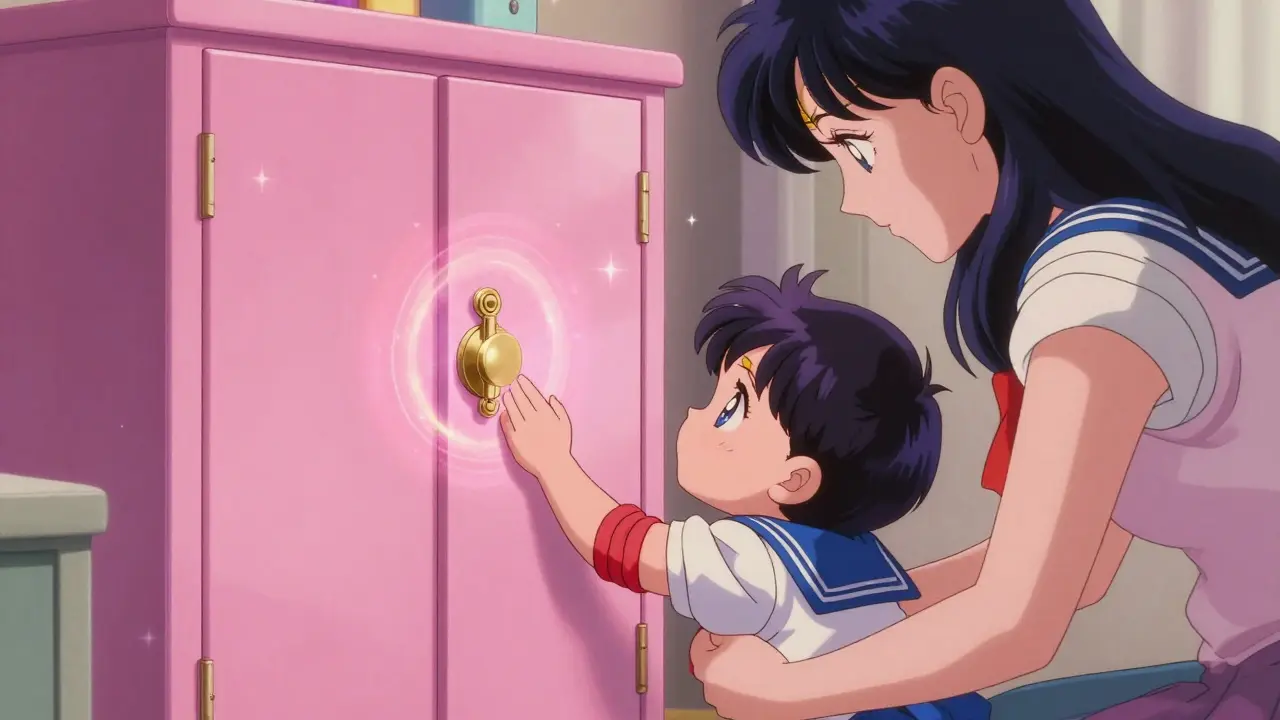 Jan, 3 2026
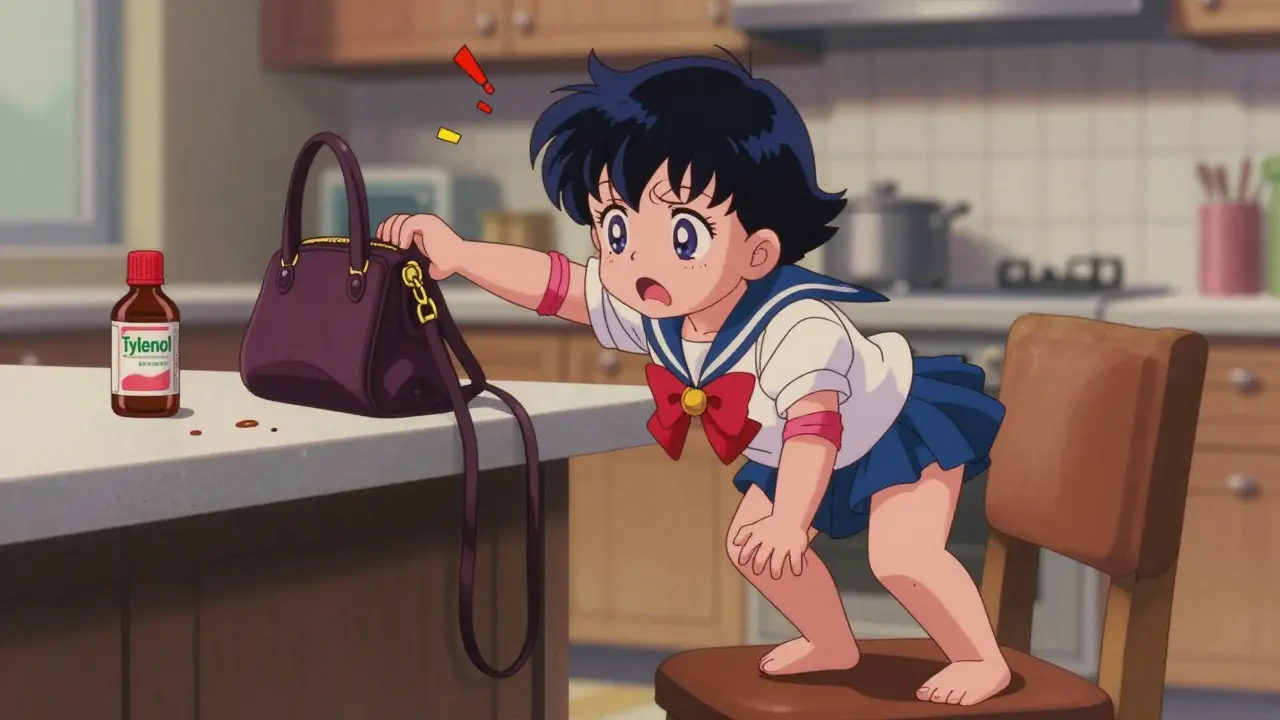
Every year, over 2 million children under age 6 are exposed to medications they shouldn’t touch. Most of these incidents happen right in the home-while a parent is distracted, a visitor leaves a pill bottle on the counter, or a toddler climbs onto a chair to reach a purse. It’s not a rare accident. It’s a preventable crisis. And the stakes are terrifyingly high: nine out of ten poisoning deaths in young children involve drugs. But here’s the good news: with simple, consistent actions, you can cut that risk by more than 80 percent.
Most Common Medications That Poison Toddlers
It’s not just prescription pills. The most dangerous substances in your home are often the ones you think are harmless: acetaminophen (Tylenol), ibuprofen (Advil, Motrin), and aspirin. These are the top three over-the-counter drugs swallowed by toddlers. Liquid nicotine from e-cigarettes is even more deadly-a single teaspoon (5 mL) can kill a child under two. Antihistamines, cold syrups, and even vitamins with iron are frequent culprits. These aren’t exotic chemicals. They’re in your bathroom cabinet, your nightstand, your coat pocket.
One study found that 33% of poisonings in kids aged 1 to 5 were from pain relievers alone. And here’s what makes it worse: many parents don’t realize how quickly these drugs act. A child who swallows just two extra teaspoons of Tylenol can suffer liver damage within hours. There’s no time to wait and see.
Why Child-Resistant Caps Aren’t Enough
You’ve bought the bottles with the safety caps. You feel safe. But here’s the truth: child-resistant doesn’t mean child-proof. In fact, 80% of toddlers can open these caps within minutes-especially if they’ve watched an adult do it. A 2022 study from UCSF Benioff Children’s Hospital showed that kids as young as 18 months can twist, pull, and pop open these containers. And if they’re motivated by curiosity or the smell of sweet syrup? They’ll figure it out faster.
That’s why relying on the cap alone is like locking your front door but leaving the window wide open. The only real barrier is a locked cabinet. Not a high shelf. Not a drawer with a latch. A cabinet with a locked mechanism that engages automatically when closed. Magnetic locks, key locks, or safety latches that require two distinct motions to open are the only reliable solutions.
Where You’re Most Likely to Leave Medicine Within Reach
Think you’re careful? Check these spots:
- On the nightstand next to your bed
- In your purse or coat pocket
- On the kitchen counter while you’re pouring a dose
- On the bathroom sink after brushing your teeth
- In a visitor’s bag-grandparents, babysitters, friends
Here’s the hard truth: 30% of poisonings happen because of medication left out by visitors. Grandparents often keep their own meds in bedside tables or purses. A 2022 report from UCSF found households with frequent visitors had a 35% higher rate of accidental ingestions. That’s not negligence-it’s lack of awareness. Most visitors don’t realize their medicine is a danger to your child.
And don’t forget: toddlers can climb. They’ll use the toilet, a chair, the edge of the bathtub to reach what’s just out of sight. A cabinet at 4 feet? That’s toddler height. Store meds at least 54 inches above the floor-out of reach even if they stand on tiptoes.
The #1 Mistake Parents Make With Dosing
It’s not the pill bottle. It’s the spoon.
Over 40% of dosing errors happen because parents use kitchen spoons. A teaspoon from your drawer can hold anywhere from 3 to 7 milliliters. The difference between 5 mL and 7 mL might seem small-but in a 2-year-old, that extra 2 mL of acetaminophen can push them into toxic range. That’s why every medical guideline says: never use a kitchen spoon.
Use only the measuring tool that comes with the medicine. Oral syringes, dosing cups with milliliter markings, or droppers with clear lines. Store that tool with the medicine so you don’t grab a random spoon in a rush. And always double-check the label. Liquid Tylenol for infants is more concentrated than the version for older kids. Mixing them up can be deadly.
How to Child-Proof Your Home Like a Pro
Here’s a simple test: get down on your hands and knees. Look around your house from your child’s eye level. What do you see?
- Is the medicine bottle on the counter?
- Is the bottle of cough syrup near the cereal box?
- Is the pill organizer on the bedside table?
That’s your danger zone. The Rural Health Information Hub found that 78% of poisonings happen with items stored below 4 feet. So move everything higher. Use locks on cabinets in the bathroom, kitchen, bedroom, and even the guest room. Magnetic locks are the most reliable-they’re hidden, strong, and require a magnet to open. No keys to lose. No fumbling.
Also, anticipate growth. Kids develop fast. At 12 months, they’re pulling up. At 18 months, they’re climbing. By 24 months, they’re opening drawers. Don’t wait until they’re climbing the furniture to secure your meds. Do it now-even if your child can’t stand yet.
Never Call Medicine ‘Candy’
This is one of the most dangerous habits parents don’t realize they have. Saying, “This is sweet medicine,” or “It tastes like candy,” teaches a child that pills are treats. A 2021 analysis from the American Academy of Pediatrics found that children whose parents used this language were 3.2 times more likely to take medicine without asking.
Instead, say: “This is medicine. It helps you feel better, but you can’t have it unless Mommy or Daddy gives it to you.” Be clear. Be calm. Be consistent. Your words shape their understanding more than you think.
Emergency Plan: What to Do If Your Child Swallows Medicine
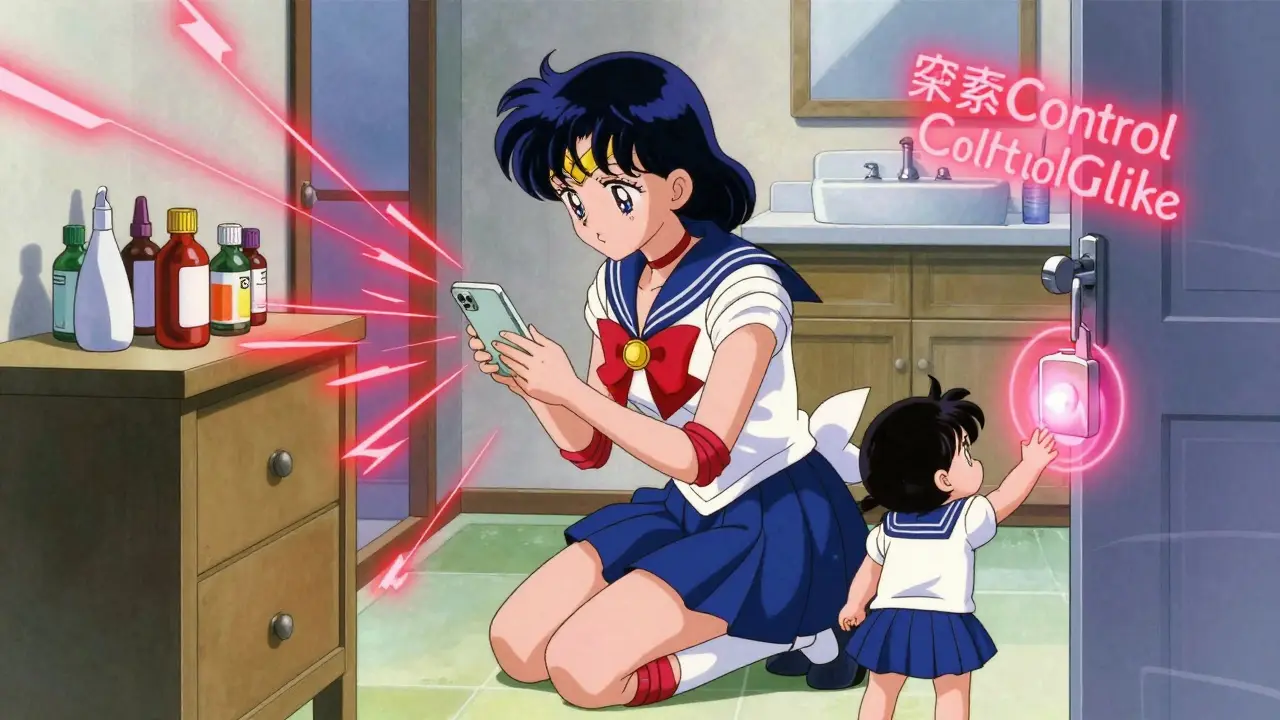
If you suspect your child swallowed anything they shouldn’t:
- Don’t wait for symptoms. Don’t try to make them throw up.
- Call Poison Control immediately: 1-800-222-1222 (in the U.S. and Canada). This line is free, 24/7, and staffed by toxicology experts.
- Have the medicine bottle ready. Know what was taken, how much, and when.
- Follow their instructions exactly. Sometimes they’ll tell you to wait. Other times, they’ll send you straight to the ER.
Timing matters. Poison Control’s data shows that getting help within 5 minutes improves outcomes by 89%. Every second counts. Keep the number posted on your fridge, next to the phone, and saved in your phone’s speed dial.
Also, make sure at least one adult in the house knows CPR and the Heimlich maneuver. In 12% of severe cases, life-saving action before paramedics arrive makes the difference.
What Works: Real Programs That Reduce Poisoning
Some communities are making real progress. In New Zealand, pharmacies now offer free medication lock boxes to families with toddlers under 3. One program saw a 41% drop in access incidents within six months. The ‘Up and Away’ campaign, running since 2015, reduced poisonings by 19% in participating areas by teaching parents about locked storage and safe disposal.
And new tech is coming. Smart pill containers that alert parents if a bottle is opened when no one is home are in pilot testing. Early results show a 63% reduction in unsupervised access. These won’t replace locks-but they’ll be another layer of safety.
Final Checklist: Your Daily Safety Routine
- Lock all medicine in a cabinet at least 54 inches high
- Use automatic-locking safety latches or magnetic locks
- Never leave medicine out-even for a minute
- Store meds in original containers with labels
- Use only the dosing tool that came with the medicine
- Never call medicine candy
- Ask visitors to keep their meds in a locked bag
- Post the Poison Control number (1-800-222-1222) in every room
- Check your home from a toddler’s perspective once a week
Accidental poisoning isn’t about bad parenting. It’s about invisible risks. It’s about a moment of distraction, a misplaced bottle, a well-meaning grandparent. But you can control those risks. You can make your home a place where your child is safe-even when you’re not watching. Start today. One locked cabinet, one less spoon, one clear conversation. Those small steps save lives.
Siobhan Goggin
January 3, 2026 AT 18:23This post saved my life. My 2-year-old got into my ibuprofen last winter. I thought the childproof cap was enough. It wasn't. I now have magnetic locks on every cabinet. No more excuses.
John Ross
January 4, 2026 AT 16:45Let’s be clear: the data here is statistically significant. The CDC’s 2021 pediatric toxicology surveillance report corroborates the 80% risk reduction with locked storage. The real failure is systemic-healthcare providers don’t emphasize this during well-child visits. We need policy-level intervention, not just parental vigilance.
Dee Humprey
January 5, 2026 AT 07:42Just installed magnetic locks on my bathroom cabinet last week. My 18-month-old tried to open it yesterday. He stared at it. Then looked at me. Then gave up and crawled away. It works. Also, I keep the poison control number on my phone lock screen. Seriously, do it.
melissa cucic
January 5, 2026 AT 08:52It is imperative to note, however, that the linguistic framing of medication as something non-rewarding, non-pleasurable, and strictly regulated is not merely a suggestion-it is a developmental necessity. Children construct semantic associations based on caregiver discourse; therefore, the phrase "this is medicine" must be repeated with unambiguous consistency, devoid of affective embellishment.
Akshaya Gandra _ Student - EastCaryMS
January 5, 2026 AT 22:03so i read this and im like wow but wait do we have to lock vitamins too? like the chewable ones? my kid loves those 😅
en Max
January 7, 2026 AT 03:07The empirical evidence presented here is compelling. However, one must also consider the socioeconomic stratification of access to magnetic locking systems. Not every household can afford or install such technology. A public health initiative should provide subsidized or free locking mechanisms to low-income families with children under three.
Angie Rehe
January 7, 2026 AT 05:06Why are we still having this conversation? My neighbor left her Advil on the counter while she made coffee. Her 14-month-old ate four tablets. She didn’t even call Poison Control until the kid was blue. People are literally that careless. Lock your shit. Now.
Jacob Milano
January 7, 2026 AT 11:23I used to think I was safe because I kept meds on the top shelf. Then my kid turned into a ninja. He climbed the bookshelf, pulled down a laundry basket, stood on it, and opened my nightstand. You think you’re safe until your toddler becomes a parkour champion. Lock it. Or lose it.
Enrique González
January 9, 2026 AT 03:21One locked cabinet. One less spoon. One clear conversation. That’s it. That’s the whole game. Start today. Your kid’s life depends on the little things.
Aaron Mercado
January 9, 2026 AT 22:57And yet... people still leave their pills in their purses. Like, what? Are you trying to kill your grandchild? I saw a woman at Target put her cough syrup in her diaper bag. Her baby was 11 months old. I wanted to scream. I didn’t. But I should have.
saurabh singh
January 10, 2026 AT 12:19in india we dont have lock boxes but we use a big steel lunchbox with a padlock. put all medicines inside, tie it with a rope, hang it from the ceiling. works great. kids cant reach. simple. cheap. no tech needed.
John Wilmerding
January 11, 2026 AT 02:04Excellent summary. I would only add that caregivers should also dispose of expired medications properly. Many households retain old bottles, creating latent risks. Pharmacies often offer take-back programs. Utilize them. Consistency in storage and disposal is key.
Peyton Feuer
January 11, 2026 AT 02:26my sister just had a baby and i showed her this. she cried. then she bought magnetic locks. she said she felt like a terrible mom until she read this. she’s not. she’s just learning. we all need a little guidance.
Mandy Kowitz
January 12, 2026 AT 17:13Wow. A whole article about not leaving medicine out. I guess we should also stop breathing oxygen and drinking water. Next up: How to prevent kids from accidentally eating food.