
Inactive Ingredient Interactions in Generic Medication Combinations
 Mar, 10 2026
When you take a generic pill, you might think you're getting the same thing as the brand-name version-same active ingredient, same effect. But what you don't see could be causing real problems. Behind every pill, capsule, or liquid medication are dozens of invisible chemicals: fillers, dyes, preservatives, and binders. These are called inactive ingredients-or excipients-and while they don't treat your condition, they can trigger reactions when combined across multiple medications.
Why Inactive Ingredients Matter More Than You Think
Most people assume that if two drugs have the same active ingredient, they work the same way. That’s true for the main drug component-but not always for how your body handles it. A 2021 FDA analysis found 27 different combinations of inactive ingredients across generic versions of levothyroxine, a thyroid hormone. That means one patient might get a tablet with lactose, another with cornstarch, and a third with a dye that triggers hives. All three contain the same hormone. But your body might react very differently to each.
Here’s the catch: when you take multiple generic drugs, those invisible ingredients add up. A 2020 study in PubMed Central showed that someone on 10 prescription medications ingests nearly 2.8 grams of inactive ingredients every day. That’s over half a teaspoon of fillers, coatings, and preservatives-just from pills. For most people, this is harmless. But for those with sensitivities, it’s a ticking time bomb.
The Hidden Culprits: Common Problematic Excipients
Not all inactive ingredients are created equal. Some are harmless for most, but dangerous for certain groups. Here are the top offenders:
- Lactose - Found in about 60% of oral tablets. Affects an estimated 65% of the global population with some level of lactose intolerance. Even small amounts-50 to 100 mg per pill-can cause bloating, cramps, or diarrhea when combined across three or more medications.
- Propylene glycol - Used in 46% of liquid medications. Can cause seizures, kidney issues, or low blood sugar in infants and people with liver or kidney disease.
- Tartrazine (Yellow Dye #5) - Linked to allergic reactions in 4% of patients. Symptoms include hives, asthma, and in rare cases, anaphylaxis.
- Bisulfites - Preservatives in some injectables and inhalers. Trigger bronchospasm in 5-10% of asthmatics.
- Phthalates and gluten - Found in coatings and binders. Gluten contamination, even in trace amounts, can derail a celiac patient’s health.
One patient might tolerate a single generic painkiller with lactose. But add a generic blood pressure pill with the same filler, plus a thyroid med with more lactose, and suddenly their stomach is in chaos. It’s not the drugs-it’s the combination of excipients.
Brand vs. Generic: The Hidden Difference
Brand-name drugs often use the same excipients across batches. Generic manufacturers? Not so much. Each company picks its own mix based on cost, availability, and patent-free formulas. The FDA doesn’t require generics to match inactive ingredients-only to deliver the same active ingredient within 80-125% of the brand’s absorption rate. That’s why two generics for the same drug can behave differently in your body.
A 2022 study in the Journal of Clinical Pharmacology found that certain generic versions of the epilepsy drug phenytoin had a 15-20% difference in peak blood concentration compared to the brand. Why? A change in the binder. That’s enough to cause breakthrough seizures in someone who was stable on the brand. The FDA says this is rare. But for the patients it affects? It’s life-changing.
Who’s at Risk? The Real Vulnerable Groups
This isn’t a problem for everyone. But it hits hard for specific populations:
- Older adults - The average Medicare beneficiary takes 4.8 prescriptions daily. More meds = more excipients.
- Patients with allergies or autoimmune conditions - Even tiny amounts of allergens can trigger reactions.
- People on narrow-therapeutic-index drugs - Like digoxin, warfarin, or levothyroxine. Small changes in absorption can lead to toxicity or treatment failure.
- Children and infants - Their bodies can’t process propylene glycol or alcohol-based suspensions the way adults can.
One mother in a Reddit thread described how her 8-year-old, on three generic medications for ADHD, asthma, and acid reflux, started having daily nosebleeds and rashes. After switching to generics without tartrazine and propylene glycol, the symptoms vanished. No one had asked about the ingredients-until it was too late.
What Pharmacists Are Starting to Do
Pharmacists are on the front lines. A 2022 survey by the National Community Pharmacists Association found that 23% of pharmacists see at least one patient per month with symptoms linked to excipient interactions. Many now check inactive ingredients before dispensing-especially for high-risk patients.
Here’s how they do it:
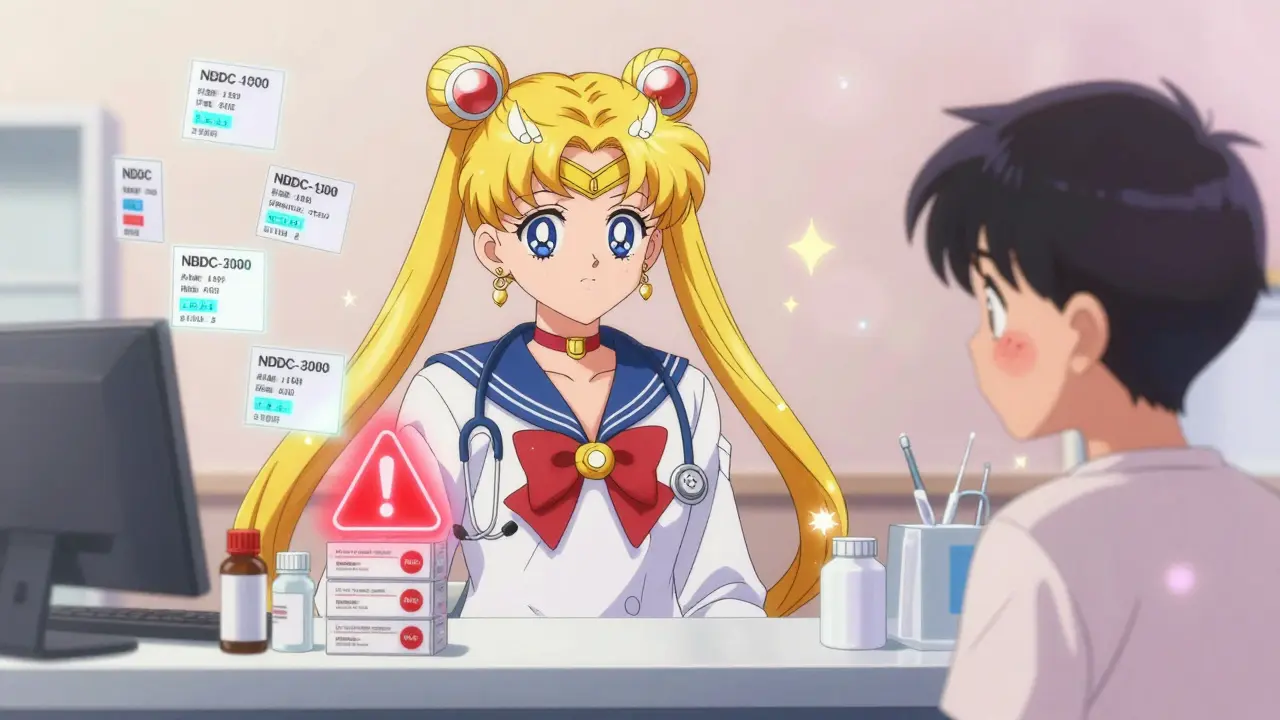
- Look up the National Drug Code (NDC) for each medication.
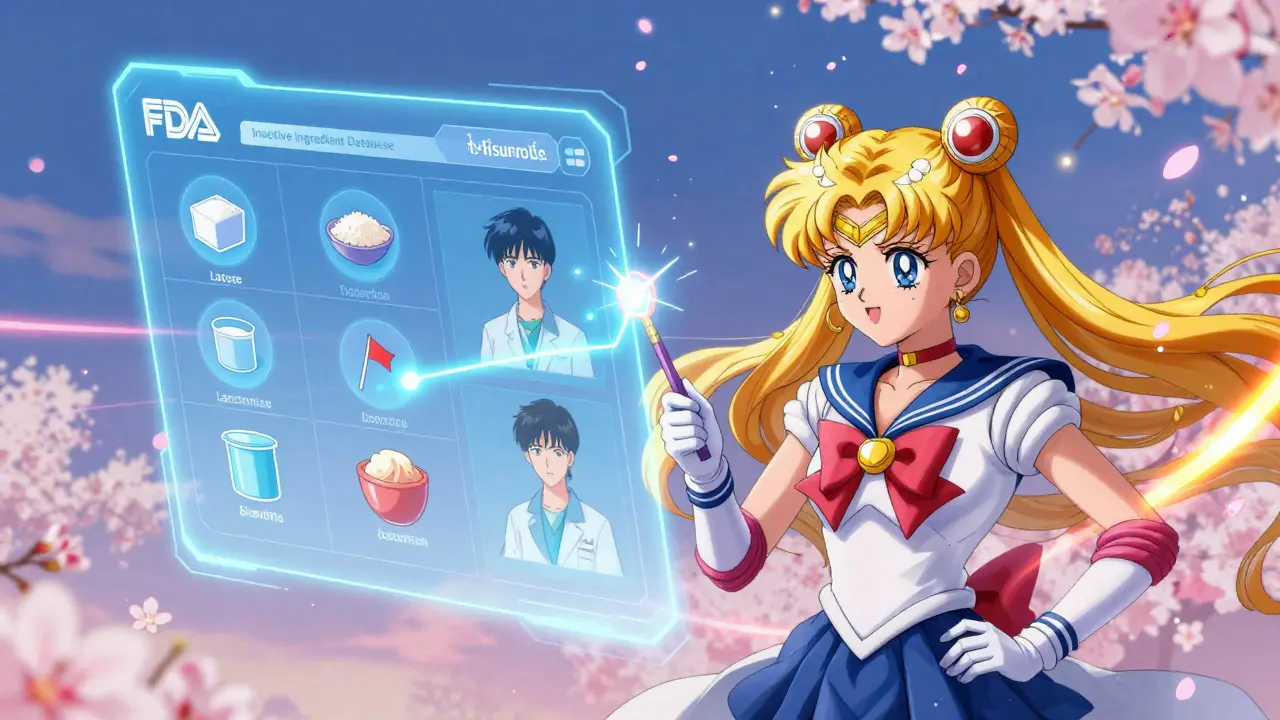
- Use the FDA’s Inactive Ingredient Database (updated quarterly) to find all excipients.
- Compare cumulative exposure-for example, if three pills each contain 75 mg of lactose, that’s 225 mg per dose. Multiply by daily doses.
- Compare to known thresholds: Lactose-intolerant people can often handle under 12 grams per day, but some react to just 1-2 grams.
- Switch to a different generic brand that uses a safer filler.
Tools like DailyMed and MedCheck AI (released in late 2023) now flag potential excipient conflicts. One hospital system reported a 40% drop in adverse events after training staff to check excipients routinely.
Why the System Is Still Broken
Here’s the frustrating part: labeling is inconsistent. A 2021 JAMA Internal Medicine study found that only 63% of medication package inserts fully list inactive ingredients. Some manufacturers bury them in fine print. Others don’t list them at all on online pharmacy sites.
Even when you find the list, it’s hard to compare. One generic might say “cornstarch,” another says “maize starch.” Are they the same? You’d have to call the manufacturer-which takes an average of 3.2 business days.
The FDA says excipient differences “have not been shown to affect safety.” But case reports tell a different story. In 2023 alone, the FDA’s Adverse Event Reporting System (FAERS) logged over 1,200 reports of “unexplained gastrointestinal distress” or “reduced effectiveness” tied to switching generics. Many were later traced to excipient changes.
What’s Changing in 2025 and Beyond
Pressure is building. In January 2024, the FDA launched the Inactive Ingredient Transparency Initiative, requiring all manufacturers to list every excipient in digital drug labels by December 2025. That means apps, pharmacy systems, and EHRs will soon be able to auto-flag conflicts.
Europe is ahead. Since January 2024, the European Medicines Agency requires manufacturers to justify using excipients that affect more than 0.1% of the population. That’s why you’ll see more “lactose-free” or “dye-free” labels on generics overseas.
AI tools like MedCheck AI are already scanning prescriptions and predicting excipient clashes with 89.7% accuracy. By 2026, the European Commission plans to require formal risk assessments for drugs commonly taken together-like statins and blood thinners.
But until then, the burden falls on you and your pharmacist.
What You Can Do Today
You don’t need to be a scientist to protect yourself. Here’s how:
- Ask your pharmacist - “Do these generics have the same fillers?” Show them your full list.
- Check the label - Look for “inactive ingredients” on the bottle. Write them down.
- Track symptoms - If you get bloating, rashes, or worse after switching a generic, note which meds changed.
- Request alternatives - If lactose is the issue, ask for a lactose-free version. Many exist.
- Use the FDA database - Search by drug name at accessdata.fda.gov/scripts/cder/iff/ to see all versions and their ingredients.
One woman in Ohio switched three generic meds after her chronic diarrhea didn’t improve. She found all three contained lactose. Her pharmacist found a version with microcrystalline cellulose instead. Within two weeks, her symptoms were gone. No new prescriptions. Just better ingredient choices.
Can inactive ingredients really affect how well my medication works?
Yes. While inactive ingredients don’t treat your condition, they can change how your body absorbs the active drug. For example, a different binder in a generic version of phenytoin caused a 20% drop in blood levels, leading to seizures in some patients. This is rare, but documented. The same can happen with levothyroxine, warfarin, or digoxin-drugs where small changes in absorption matter.
Are generic drugs less safe than brand-name drugs?
Not inherently. Generic drugs must prove they deliver the same active ingredient at the same rate. But they don’t have to match the excipients. That means while the drug works, your body might react differently due to fillers, dyes, or preservatives. Brand-name drugs often use more consistent formulations, which is why some patients feel better on them-even when the active ingredient is identical.
How do I find out what’s in my generic medication?
Check the printed leaflet inside the box, or look up the NDC code on the FDA’s Inactive Ingredient Database. Many pharmacies now list ingredients on receipts or online portals. If you can’t find it, call the manufacturer-pharmacies can help you get the info.
I’m lactose intolerant. Should I avoid all generic pills?
No. Many generics use non-lactose fillers like cellulose or starch. But if you’re taking multiple generics, check each one. Three pills with 75 mg of lactose each adds up to 225 mg per dose. For sensitive people, that’s enough to cause symptoms. Ask your pharmacist for lactose-free options-they’re more common than you think.
Is this a big problem, or just rare cases?
It’s not common for most people, but it’s underrecognized. About 0.5-2% of medication users have reactions linked to excipients. But among those on five or more drugs, that number jumps. The FDA has documented over 1,200 reports since 2020 of unexplained symptoms tied to generic switches. For high-risk patients, it’s not rare-it’s a real risk.
Chris Bird
March 11, 2026 AT 05:26So let me get this straight - you’re telling me my stomach cramps aren’t from the pills, but from the dust they’re made of? Lactose in 60% of meds? Bro, I’m not even dairy-sensitive and I’m feeling betrayed. This is like finding out your coffee creamer is just powdered chalk with a fancy name.
David L. Thomas
March 12, 2026 AT 16:51The pharmacokinetic variability introduced by excipient heterogeneity is a clinically underappreciated confounder in therapeutic equivalence. Especially in narrow-therapeutic-index agents like levothyroxine or phenytoin, even minor shifts in dissolution profiles can precipitate subtherapeutic or toxic concentrations. The FDA’s 80–125% AUC window is statistically sound but biologically naive when excipient interactions compound across polypharmacy regimens.
Randall Walker
March 14, 2026 AT 05:45Wow. Just wow. So the system is designed so that the only way to not get sick is to become a full-time pharmacist, cross-reference every single pill you take, and beg your pharmacy to play detective? And we wonder why people stop taking meds? I mean, I get it - it’s not the drug, it’s the… filler? The… what? The glitter? The glitter’s in my blood now.
Miranda Varn-Harper
March 14, 2026 AT 19:29I’ve been on 7 meds for 12 years. Never once did a pharmacist ask me about fillers. Never. And now you want me to look up NDC codes? On a phone? In the middle of a Target run? This isn’t healthcare - it’s a scavenger hunt with my life on the line.
Alexander Erb
March 16, 2026 AT 09:01Y’all need to talk to your pharmacist - seriously. I had the same issue with bloating after switching generics. My pharmacist pulled up the FDA database on her tablet, compared all my meds, and switched me to one brand with microcrystalline cellulose. No more gas. No more panic. Just chill. 🙌 Also - ask for lactose-free. They’re everywhere now. Seriously. Life changed.
Donnie DeMarco
March 18, 2026 AT 05:26so like… my pills are basically candy wrappers full of mystery goop? i thought the active ingredient was the whole point. turns out i’m just a human sponge for cornstarch and dye. and now i’m mad. like… why not just call it what it is? “sugar dust + poison glitter”? i’d take that over “inactive ingredients” any day.
Tom Bolt
March 19, 2026 AT 05:33Let me be perfectly clear: This is not an accident. This is not negligence. This is corporate malfeasance disguised as regulation. The FDA allows this because the manufacturers pay lobbyists. The same people who told us asbestos was safe. The same people who said lead paint was fine. Now they’re telling us it’s okay to poison us with lactose and phthalates - because “it’s not the drug.”
Shourya Tanay
March 19, 2026 AT 06:21This is a profound issue in global health equity. In low-resource settings, patients rarely have access to brand-name drugs or pharmacists who can cross-check excipients. The burden falls disproportionately on marginalized populations who cannot afford to switch formulations or advocate for themselves. We need standardized, globally accessible excipient databases - not just in English, but in Hindi, Swahili, Arabic. Knowledge is power - but only if it’s accessible.
LiV Beau
March 19, 2026 AT 19:57OMG I just realized I’ve been on three generics with tartrazine for years 😱 My rashes? My headaches? All that time I thought it was stress… Turns out my body was screaming for help. I called my pharmacy today and switched everything - no dye, no lactose, no propylene glycol. I feel like a new person. 🥹 Thank you for writing this - I’m sharing it with my whole family.
Adam Kleinberg
March 20, 2026 AT 06:55Of course the government lets this happen. They’re in bed with Big Pharma. You think they want you to know your pills are full of hidden poisons? No. They want you to keep taking them. They want you dependent. They want you confused. They want you too tired to look up the NDC code. Wake up. This isn’t medicine - it’s mind control.
Denise Jordan
March 21, 2026 AT 23:59So… what’s the point again? I’m supposed to care about filler? I take pills so I don’t die. If it works, why does it matter if it’s cornstarch or glitter? I’m not a chemist. I’m just trying to live.