
Inactive Ingredients in Generic Medications: What You Need to Know
 Feb, 24 2026
When you pick up a prescription, you probably assume that a generic drug is just as good as the brand-name version. And for the most part, it is. But here’s something most people don’t think about: generic medications can contain completely different fillers, dyes, and preservatives than their brand-name counterparts. These aren’t active ingredients-they don’t treat your condition. But they can still make you sick.
What Are Inactive Ingredients?
Inactive ingredients, also called excipients, are the non-drug parts of a pill. They hold the medicine together, help it dissolve, improve taste, or keep it from breaking down too fast. Think of them like the packaging of a product-the box, the label, the foam padding. The product inside matters most, but if the packaging is made of something you’re allergic to, you’re still in trouble.
Here’s the shocking part: in some pills, more than 90% of the weight comes from inactive ingredients. That means a 100mg tablet might have only 10mg of real medicine. The rest? Cornstarch, lactose, dyes, preservatives, gluten, sugar alcohols, or even peanut oil.
Why Do Generics Use Different Fillers?
The FDA requires that generic drugs have the same active ingredient, strength, dosage form, and bioequivalence as the brand-name version. That means they must deliver the same amount of medicine into your bloodstream at the same rate. But when it comes to inactive ingredients? There are no such rules.
Generic manufacturers can use any FDA-approved excipient they want. One version of levothyroxine might use lactose as a filler. Another might use mannitol. A third might use a different dye entirely. None of these changes affect how well the medicine works-but they can affect how your body reacts to it.
Common Problematic Ingredients
Not all inactive ingredients are harmless. Here are the most common ones that cause real problems:
- Lactose - Found in nearly 20% of oral medications. If you’re lactose intolerant, this can cause bloating, cramps, and diarrhea.
- Gluten - Even tiny amounts in pills can trigger reactions in people with celiac disease. Many generics don’t label this clearly.
- Dyes (FD&C Red 40, Yellow 5, etc.) - Linked to skin rashes, migraines, and hyperactivity in sensitive individuals.
- Sodium metabisulfite - A preservative that can cause severe asthma attacks in people with sulfite sensitivity.
- FODMAP sugars (lactose, fructose, sorbitol) - These ferment in the gut and can wreck havoc for people with IBS. About 55% of medications contain at least one.
- Peanut oil - Rare, but used in some capsules. If you have a peanut allergy, this can be deadly. Manufacturers are required to label this-but many don’t.
Here’s the catch: drug labels rarely list these ingredients in plain language. You won’t see “contains lactose” on the bottle. You’ll see “lactose monohydrate” or “corn starch.” Unless you know what to look for, you won’t connect the dots.
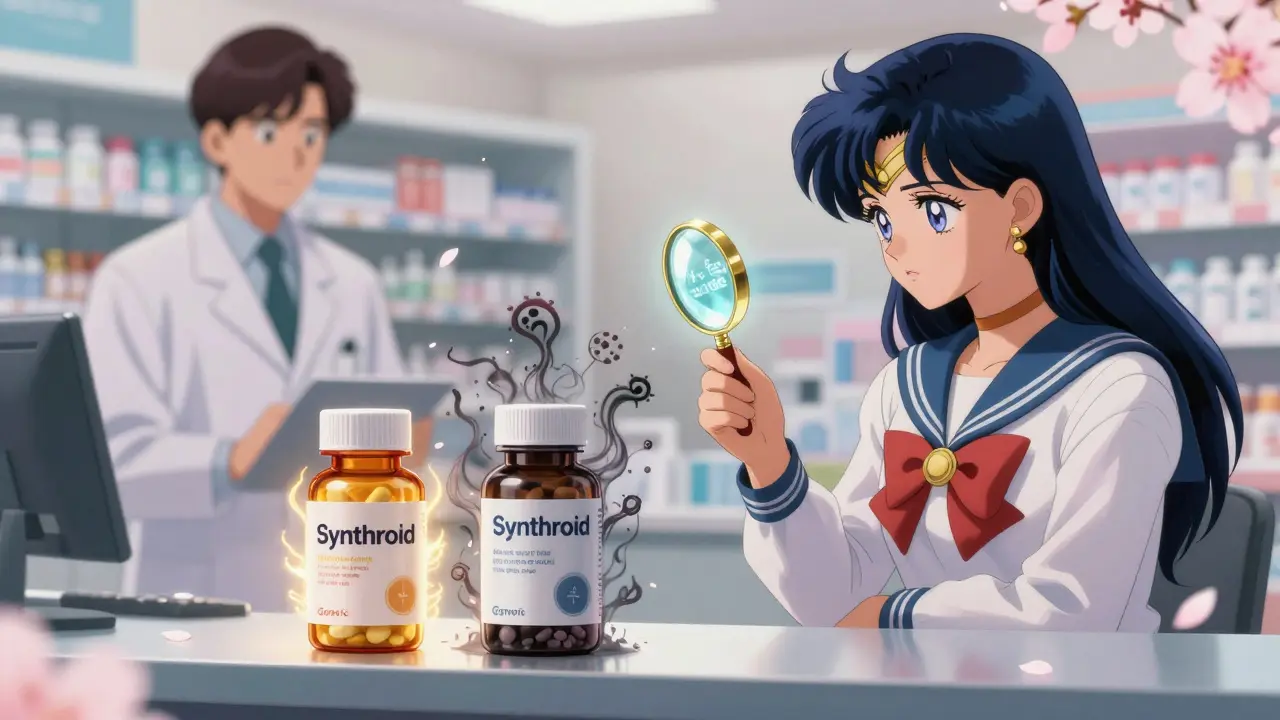
Real People, Real Reactions
It’s not just theory. People are reporting problems after switching to generics.
One woman on a pharmacy forum described how her thyroid symptoms got worse after switching from Synthroid to a generic levothyroxine. She developed severe stomach cramps, fatigue, and brain fog. When she switched back, everything cleared up in days.
A man with celiac disease started having flare-ups after his insurance forced him to switch to a generic blood pressure pill. He didn’t know the filler contained gluten. His doctor didn’t know either.
A 2022 survey by MedShadow found that 27% of people who switched to generics reported new side effects. Of those, 68% blamed the inactive ingredients.
These aren’t rare cases. The FDA’s own adverse event database has hundreds of reports linking reactions to specific fillers in generic drugs. The problem? These reports rarely get followed up. No one tracks which generic version you took. No one connects the dots.
Why Don’t We Know More?
The FDA says generic drugs are safe. And they’re right-for most people. But the system is built on averages. It doesn’t account for people with allergies, intolerances, or multiple chronic conditions.
Dr. Giovanni Traverso from MIT put it bluntly: “Doctors have no idea which of these ingredients will be included in the pills they prescribe to their patients.”
There’s no public database that tells you what’s in each generic version of a drug. The FDA maintains an Inactive Ingredient Database, but it’s a mess. It lists chemical names, not common terms. It doesn’t flag allergens. It’s not searchable by patient needs.
Meanwhile, generic manufacturers aren’t required to test their formulations for allergic potential. They only need to prove the active ingredient works. The rest? They’re treated like packaging.
Who’s at Risk?
You might think this doesn’t apply to you. But here’s who should pay attention:
- People with food allergies or intolerances (lactose, gluten, nuts)
- Those with asthma (especially sulfite sensitivity)
- People with IBS or other digestive disorders
- Patients taking five or more medications daily (polypharmacy)
- Older adults (over 65) who take multiple prescriptions
- Anyone who’s noticed new symptoms after switching to a generic
One study found that 30% of people over 65 take at least five pills a day. Each pill might contain a different filler. Multiply those together, and you’ve got a cocktail of potential irritants.

What Should You Do?
Don’t panic. Most people switch to generics with zero issues. But if you’ve had unexplained symptoms after a switch, here’s what to do:
- Check your pill - Look at the label. Find the inactive ingredients list. It’s usually on the bottom or back. Write down the names.
- Look up the ingredients - Search for “lactose monohydrate,” “sodium metabisulfite,” etc. Many allergens have common names. You don’t need to be a chemist.
- Ask your pharmacist - Say: “Can you tell me what fillers are in this generic version?” Pharmacists have access to databases that list exact formulations. They can often tell you which generic manufacturer makes which version.
- Compare versions - If you’re switching between generics, ask if the fillers changed. Sometimes the same drug comes from different makers with different ingredients.
- Request the brand - If you’re sensitive and the generic is causing issues, ask your doctor to write “Do Not Substitute” on the prescription. Insurance might fight it, but you have a right to request the brand if it’s medically necessary.
Some pharmacies now offer “free-from” generics-formulations without common allergens. These are rare, but they exist. Ask.
The Bigger Picture
The push for generics saves the U.S. healthcare system billions every year. That’s a good thing. But cost shouldn’t come at the cost of safety for vulnerable people.
Researchers at MIT and NIH are pushing for better labeling, standardized allergen warnings, and even hypoallergenic drug options. For now, though, the system is broken.
It’s time we treat inactive ingredients like part of the medicine-not just packaging. Because for some people, the filler isn’t harmless. It’s the problem.
Final Thought
Generic drugs work. They save money. They save lives. But they’re not all the same. If you’ve had a weird reaction after switching, don’t brush it off. Your body is telling you something. And you deserve to know what’s really inside that pill.
Erin Pinheiro
February 26, 2026 AT 02:20pharmacists should be REQUIRED to explain this. not just hand you a pill and say "it's the same." it's not.
Brandice Valentino
February 26, 2026 AT 03:47Larry Zerpa
February 27, 2026 AT 18:49Also, gluten in pills? That’s a myth perpetuated by wellness influencers. The amount is microscopically small-less than what you get from a slice of bread. Unless you're ingesting 20 pills a day, you're fine.
Gwen Vincent
February 28, 2026 AT 02:57Holley T
March 1, 2026 AT 16:48Think about it. Lactose, gluten, sulfites-these are all cheap. They’re not dangerous for most people. But for the 15% who are sensitive? They’re forced to pay more for brand names because the system doesn’t give them alternatives. It’s not negligence. It’s economics. And we’re all just collateral damage.
Ashley Johnson
March 2, 2026 AT 20:58tia novialiswati
March 3, 2026 AT 11:53Christopher Brown
March 5, 2026 AT 07:16Sanjaykumar Rabari
March 5, 2026 AT 17:18