
Iron-Rich Meals and Thyroid Medication: The Right Timing to Avoid Absorption Problems
 Jan, 15 2026
Thyroid Medication & Iron Timing Calculator
Optimize Your Thyroid Medication Timing
Avoid absorption problems between your thyroid medication and iron. This calculator helps you determine the ideal timing based on current medical guidelines.
Timing Analysis
Good timing! Your medication absorption should be optimal with this schedule.
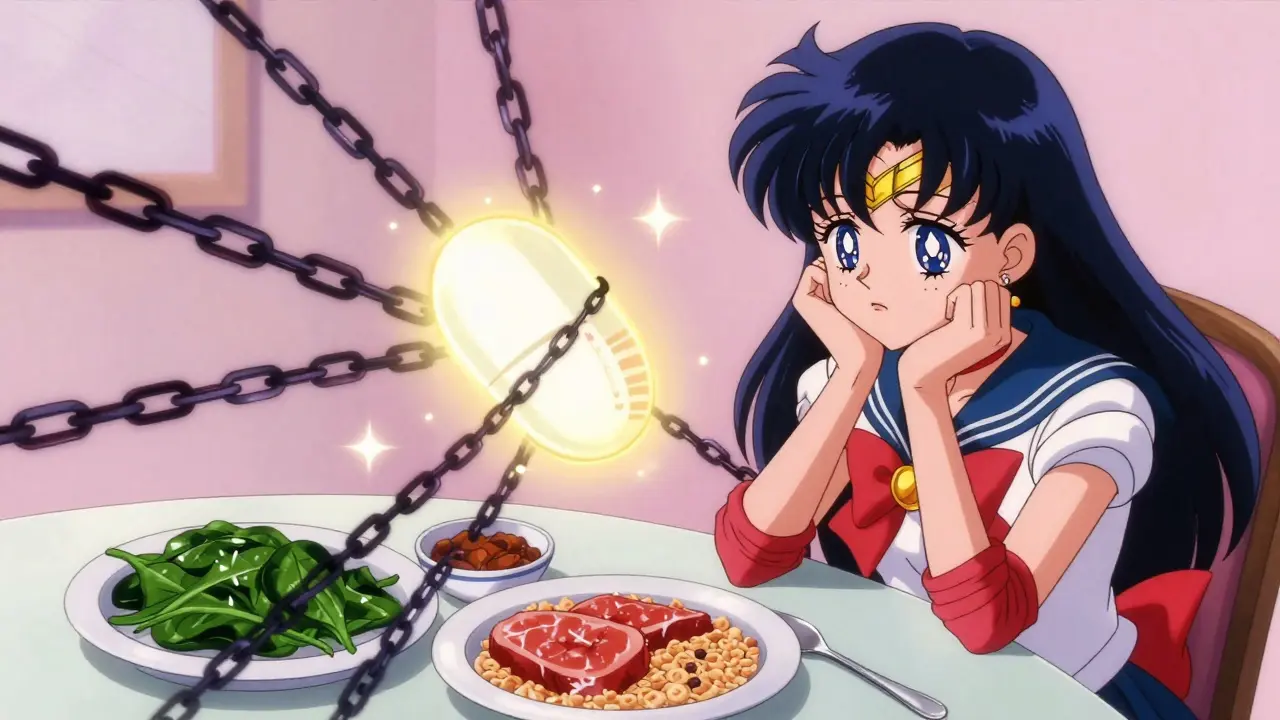
If you're taking levothyroxine for hypothyroidism and also need iron-whether from supplements or diet-you're not alone. Millions of people face this exact problem. But here’s the catch: iron doesn’t just sit quietly next to your thyroid pill. It binds to it. And when that happens, your body can’t absorb the medication properly. The result? Your TSH levels stay high, your fatigue doesn’t go away, and your doctor keeps tweaking your dose-even though you’re taking it exactly as told.
Why Iron Ruins Thyroid Medication Absorption
Levothyroxine, the synthetic form of thyroid hormone found in brands like Synthroid and Levoxyl, needs an empty stomach to work. It dissolves best in the upper part of your small intestine, where pH and food presence make all the difference. Iron, especially in its ferrous sulfate form (the most common supplement type), acts like a magnet for levothyroxine. They latch together in your gut, forming a compound your body can’t absorb. That means up to half of your dose might as well be flushed down the toilet. A 2021 study in the Journal of Clinical Endocrinology & Metabolism showed that when iron and levothyroxine were taken together, absorption dropped by 30-50% in 87% of participants. Even food with iron-like red meat, spinach, or fortified cereal-can cut absorption by 20% or more. The problem isn’t just supplements. It’s your breakfast toast, your morning smoothie with added iron, even that iron-fortified oatmeal you think is healthy.How Long Should You Wait? The Confusing Guidelines
Here’s where things get messy. Different medical groups give different advice. - The American Thyroid Association and Mayo Clinic say wait at least 4 hours between iron and levothyroxine. That includes both supplements and iron-rich meals. - Thyroid UK says 2 hours is enough for dietary iron, but still 4 hours for supplements. - The Endocrine Society recommends 4 hours for supplements, 3-4 hours for meals. - Meanwhile, NIH research found that absorption dropped by 27.4% if taken within 1 hour of iron, 12.6% after 2 hours, and only 4.1% after 4 hours. So why the confusion? Because dietary iron is less concentrated than pills. A serving of beef has about 2-3 mg of iron. A typical iron pill has 65 mg. That’s 20-30 times more. The higher the dose, the stronger the binding. So while a 2-hour gap might work with your lentil soup, it won’t cut it with your daily iron tablet.What Works in Real Life? Practical Timing Strategies
Most people can’t wait 4 hours after breakfast to take their pill-or wake up at 3 a.m. to avoid food. So what’s realistic? Option 1: Morning dosing with strict fasting Take your levothyroxine first thing in the morning, with a full glass of water, 30-60 minutes before eating. That’s the gold standard. But you can’t have coffee, milk, soy, calcium, or iron for at least 4 hours after. That means no fortified cereal, no iron-rich smoothie, no multivitamin with iron until lunch or later. Option 2: Evening dosing (a game-changer for many) A 2020 study from the European Thyroid Association found that taking levothyroxine at bedtime-3-4 hours after your last meal-improved TSH control by nearly 19% compared to morning dosing in patients with iron interactions. Why? Because your stomach is empty, and you’re not eating anything else for hours. No breakfast iron. No lunch iron. No dinner iron. Just your pill, then sleep. This works especially well for women with heavy periods, pregnant people, or anyone on daily iron supplements. It’s not officially FDA-approved for this use, but it’s supported by clinical data and increasingly used by endocrinologists. Option 3: The apple juice trick CommonSpirit Health recommends taking levothyroxine with 100% pure apple juice (not from concentrate). Unlike orange juice (which blocks absorption) or water with minerals, apple juice doesn’t interfere. One study found 58% of patients reported more stable hormone levels after switching to this method. It’s not a magic fix, but it’s a simple adjustment that helps if you struggle with timing.
What Foods and Supplements Are the Biggest Culprits?
Not all iron is equal. And not all supplements are created the same.- High-risk iron sources: Ferrous sulfate pills (most common), ferrous gluconate, iron infusions, prenatal vitamins with iron.
- High-iron foods: Red meat (beef, lamb), liver, oysters, spinach, lentils, tofu, fortified cereals and breads (check labels-some have 2-3 mg per slice).
- Other blockers: Calcium supplements, antacids (like Tums), magnesium, aluminum hydroxide, soy products, high-fiber foods.
What About Generic vs. Brand-Name Thyroid Meds?
Yes, there’s a difference. Generic levothyroxine varies slightly in fillers and how it dissolves. That’s why some patients report better consistency with Synthroid or Tirosint. Tirosint is a softgel capsule with a liquid form of levothyroxine. It’s less affected by food and iron. A 2023 study showed it had 22% less interaction with iron compared to generic tablets. But it costs about $187 for a 30-day supply-almost 4 times more than generic. For many, that’s not an option. If you’re switching brands, stick with the same one. Don’t bounce between generics. Your body gets used to the formulation. Changing brands can cause your TSH to spike, even if the dose is the same.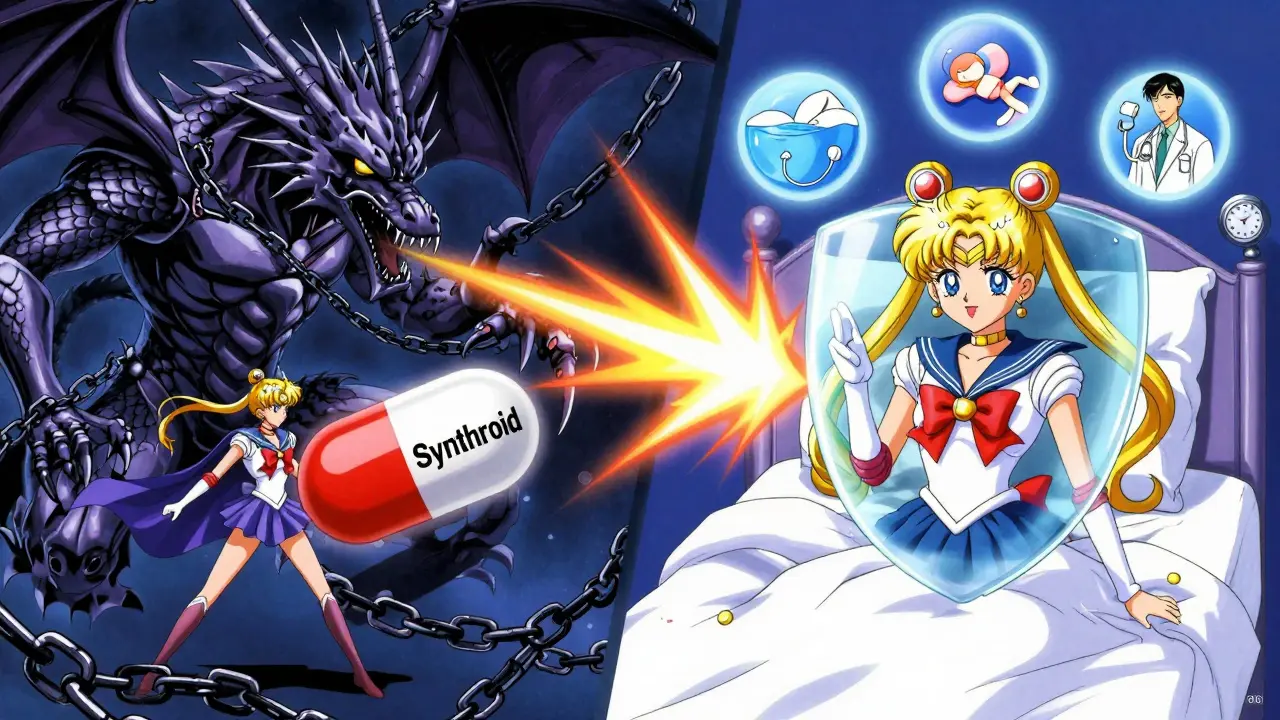
Real Patient Stories: What Goes Wrong
On Reddit, a user named ThyroidWarrior87 wrote: “I take my Synthroid at 5 a.m. and iron at 9 a.m. for three years. My TSH still jumps around. My endocrinologist says it’s the orange juice I have with breakfast.” That’s the hidden trap. Orange juice doesn’t have iron-but it has vitamin C, which boosts iron absorption. So if you take iron and vitamin C together, you’re making the problem worse. Even if you wait 4 hours after your pill, if you have orange juice with your iron at 9 a.m., you’re still increasing the binding effect. Another patient on Drugs.com said: “I take my pill at 6 a.m. and eat lunch at 11:30 a.m. That’s only 3.5 hours. My doctor says my TSH is unstable.” That’s the reality. Most people can’t make it 4 hours. And doctors often don’t realize how hard this is to follow.What If You Can’t Stick to the Rules?
If you’re struggling, here’s what to do:- Ask your doctor about bedtime dosing. It’s safe, effective, and often easier to manage.
- Get your iron levels checked. Do you really need a daily supplement? Some people only need it 2-3 times a week.
- Switch to a non-iron multivitamin. Take iron separately, at a different time.
- Use the apple juice method. It’s simple, cheap, and backed by patient reports.
- Keep a log. Write down what you eat, when you take your pill, and your symptoms. Bring it to your next appointment.
Bottom Line: Timing Matters More Than You Think
This isn’t just about following rules. It’s about making sure your medication works. Suboptimal absorption leads to untreated hypothyroidism-fatigue, weight gain, depression, high cholesterol, even heart problems. And it’s not your fault. The guidelines are confusing, the schedules are hard, and your body is fighting an invisible battle every day. The best advice? Talk to your doctor. Don’t assume your pharmacist or online article has the answer. Ask: “What’s the best timing for me, given my iron needs and daily routine?” And if you’re taking iron and levothyroxine, don’t give up. You just need a plan that fits your life-not the other way around.Can I take iron and levothyroxine at the same time if I space them by 1 hour?
No. Even a 1-hour gap reduces levothyroxine absorption by 27.4%, according to a 2021 NIH systematic review. That’s enough to cause your TSH levels to rise and your symptoms to return. The minimum recommended separation is 4 hours for iron supplements, and 3-4 hours for iron-rich meals.
Is it safe to take levothyroxine at bedtime?
Yes, and for many people, it’s actually better. A 2020 European Thyroid Association study showed 18.7% better TSH control when patients took levothyroxine at bedtime, 3-4 hours after their last meal. This avoids conflicts with breakfast iron and makes timing easier. Always check with your doctor first, but bedtime dosing is a valid, evidence-based option.
Does the type of iron supplement matter?
Yes. Ferrous sulfate causes the strongest interaction with levothyroxine. Ferrous gluconate and heme iron (from food) are slightly less disruptive, but still problematic. If you must take iron, ask your doctor if a lower-dose or slower-release form might help. But timing remains the most important factor-no matter the type.
Can I take my thyroid medication with orange juice?
No. Orange juice contains vitamin C and flavonoids that interfere with levothyroxine absorption. Even worse, vitamin C increases iron absorption, which makes the interaction with your thyroid med stronger. Stick to plain water or 100% pure apple juice, which studies show have minimal interference.
Why does my doctor keep changing my dose if I’m taking my pill correctly?
If you’re taking iron, calcium, or iron-rich foods within hours of your medication, your body isn’t absorbing the full dose-even if you think you’re following instructions. That’s why your TSH stays high. Your doctor isn’t guessing-they’re reacting to lab results. Fix the timing first. Then retest. Many patients find their dose stays stable once interactions are avoided.
If you’re still struggling, ask your pharmacist for a free medication review. Many pharmacies now offer this service. Bring your pill bottles, your supplement list, and your meal schedule. You don’t have to figure this out alone.