
Ischemic vs. Hemorrhagic Stroke: Key Differences, Symptoms, and Prevention
 Jul, 28 2026
You know the phrase "time is brain." It’s not just a catchy slogan; it’s medical reality. Every minute a stroke goes untreated, your brain loses millions of neurons. But here’s the tricky part: treating an ischemic stroke, which accounts for 87% of cases, requires completely different medicine than a hemorrhagic stroke. Giving clot-busting drugs to someone with a bleeding brain can be fatal. That’s why understanding the difference between these two types isn’t just academic-it’s life-saving.
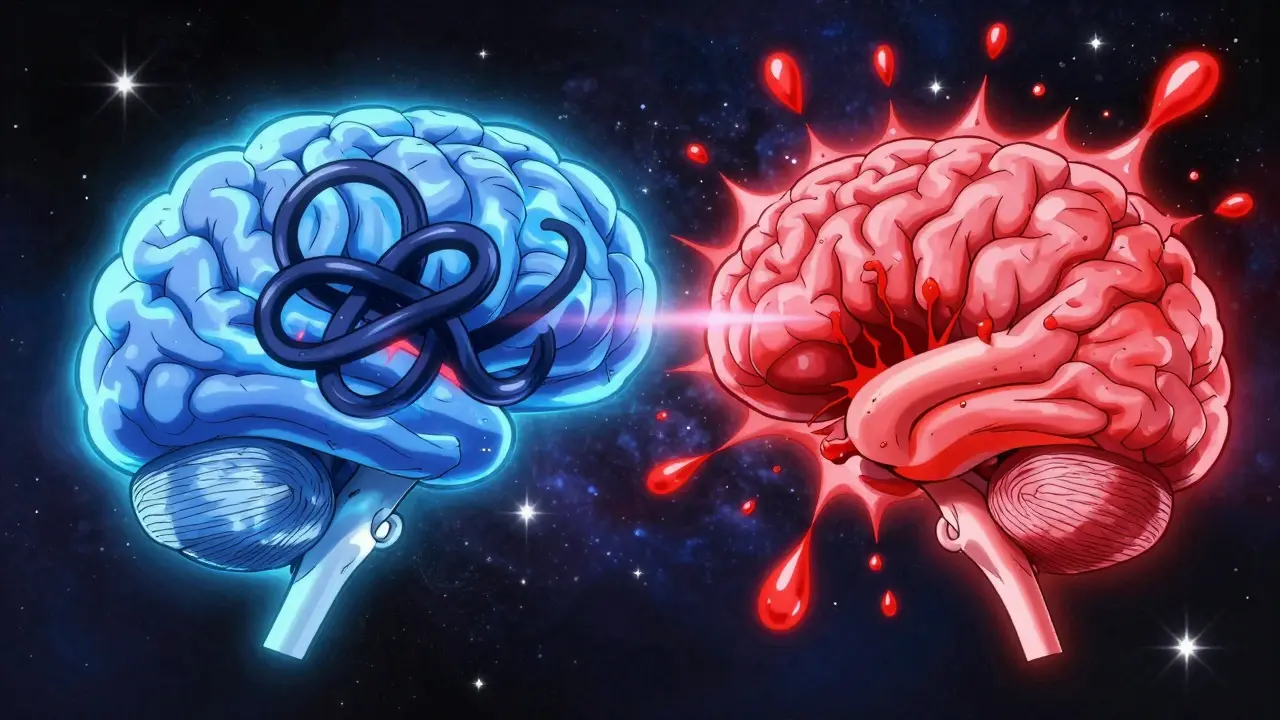
We often lump all strokes together, but they are fundamentally different events. One is a blockage; the other is a leak. Knowing which one you’re dealing with dictates the treatment, the recovery path, and how you prevent it from happening again. Let’s break down exactly what happens in your brain during each type, how to spot the warning signs, and what you can do right now to lower your risk.
The Core Difference: Blockage vs. Bleed
Think of your brain’s blood vessels like plumbing. An ischemic stroke is a blockage in a pipe that stops water (blood) from reaching the faucet (brain tissue). Without oxygen-rich blood, brain cells begin to die within minutes. This type makes up the vast majority of strokes-about 87%, according to the Centers for Disease Control and Prevention (CDC).
In contrast, a hemorrhagic stroke is a burst pipe causing water to spray everywhere, damaging the surrounding area. Here, a weakened blood vessel ruptures, spilling blood into or around the brain. The pressure from this bleeding crushes brain cells. While less common-accounting for 13-15% of cases-they are often more severe and have higher mortality rates because the damage is immediate and aggressive.
The distinction matters because the treatments are opposites. Ischemic strokes need clots broken down or removed. Hemorrhagic strokes need the bleeding stopped and pressure reduced. Misdiagnosing one for the other in the first critical hours can turn a treatable condition into a tragedy.
Breaking Down Ischemic Strokes
Ischemic strokes aren’t all the same. They generally fall into three categories based on where the clot comes from:
- Thrombotic Strokes: A clot forms directly inside one of the arteries supplying blood to your brain. This is often caused by plaque buildup (atherosclerosis). These account for about 50% of ischemic cases.
- Embolic Strokes: A clot forms elsewhere in your body-often in the heart due to atrial fibrillation-and travels through the bloodstream until it gets stuck in a narrower brain artery. This represents about 20% of ischemic cases.
- Cryptogenic Strokes: Despite thorough testing, doctors can’t find the cause. These make up roughly 30% of ischemic strokes.
Symptoms in ischemic strokes can sometimes develop gradually. You might feel numbness spreading over 15 to 20 minutes, or speech becoming progressively slurred. Because the onset can be slower, people sometimes dismiss early signs as fatigue or a minor issue, losing precious time.
Understanding Hemorrhagic Strokes
Hemorrhagic strokes are divided into two main types based on where the bleeding occurs:
- Intracerebral Hemorrhage: A vessel bursts inside the brain tissue itself. This is the most common type of hemorrhagic stroke, linked heavily to uncontrolled high blood pressure.
- Subarachnoid Hemorrhage: Bleeding occurs in the space between the brain and the surrounding membrane. This is frequently caused by a ruptured aneurysm-a weak spot in an artery wall that bulges out like a balloon.
The onset here is usually dramatic. Patients often describe an "explosive" headache-the worst headache of their life-that hits instantly. Other signs include sudden loss of consciousness, seizures, or extreme agitation. In a study of 503 stroke patients, 92.4% of those with hemorrhagic strokes reported severe headaches, compared to only 19% of ischemic stroke patients.

Spotting the Signs: FAST and Beyond
You’ve likely heard of FAST. It’s the gold standard for recognizing stroke symptoms:
- Face drooping: Does one side of the face sag when smiling?
- Arm weakness: Can both arms stay raised equally?
- Speech difficulty: Is speech slurred or strange?
- Time to call emergency services: Don’t wait. Call 911 immediately.
However, FAST doesn’t catch everything. For hemorrhagic strokes, look for additional red flags that suggest bleeding rather than blockage:
- Sudden, severe headache: Often described as a "thunderclap."
- Nausea and vomiting: Common with increased pressure in the skull.
- Stiff neck: Especially if associated with subarachnoid hemorrhage.
- Sensitivity to light: Photophobia is a frequent companion to subarachnoid bleeding.
- Seizures: More common in hemorrhagic cases (17.4%) than ischemic ones (0%).
If you see any of these, assume it’s a stroke. Only a CT scan at the hospital can tell the difference. Don’t drive yourself. Emergency medical technicians can start assessment and alert the hospital, speeding up your care.
Treatment Paths: Why Diagnosis Matters
The moment you arrive at the hospital, speed is everything. Doctors will perform a non-contrast CT scan immediately. This image tells them whether there is blood in the brain (hemorrhagic) or not (likely ischemic).
| Feature | Ischemic Stroke | Hemorrhagic Stroke |
|---|---|---|
| Primary Goal | Restore blood flow | Stop bleeding & reduce pressure |
| Medication | tPA (alteplase) or tenecteplase within 3-4.5 hours | Blood pressure meds, reversal agents for thinners |
| Surgery | Mechanical thrombectomy (clot removal) up to 24 hours | Clipping or coiling aneurysms; craniectomy to relieve pressure |
| Risk of Wrong Treatment | Delay leads to permanent brain damage | Giving tPA causes fatal expansion of bleed |
For ischemic strokes, the window for clot-busting drugs like tPA is tight-ideally within 3 to 4.5 hours. Newer techniques like mechanical thrombectomy can remove large clots surgically even up to 24 hours later in select patients. Recent trials, like WAKE-UP, show MRI-guided treatment might extend this window further.
For hemorrhagic strokes, surgery might involve placing a metal clip on an aneurysm (clipping) or filling it with coils to prevent re-bleeding (coiling). If the bleeding has caused significant swelling, surgeons may remove part of the skull temporarily to give the brain room to expand without being crushed.
Prevention Strategies: Tailored to Your Risk
Prevention isn’t one-size-fits-all. Because the causes differ, your strategy should target the specific risks for each type.
Preventing Ischemic Strokes
The biggest driver here is cardiovascular health. If you have atrial fibrillation (AFib), your risk of embolic stroke jumps by 500%. Anticoagulants like apixaban or warfarin can reduce this risk by 60-70%. For those without AFib, antiplatelet therapy like daily aspirin (81mg) can lower secondary stroke risk by 25%.
Manage cholesterol and diabetes aggressively. Plaque buildup narrows arteries, setting the stage for thrombotic strokes. Statins and lifestyle changes are key here.
Preventing Hemorrhagic Strokes
Blood pressure is king. The SPRINT trial showed that keeping systolic blood pressure below 120 mmHg (instead of 140) reduced hemorrhagic stroke risk by 38%. High pressure weakens vessel walls over time, making them prone to rupture.
If you take blood thinners for other conditions, work closely with your doctor to balance the benefits against bleeding risks. Uncontrolled hypertension combined with anticoagulants is a dangerous mix.
Lifestyle Changes That Work for Both
Some habits protect against both types. The Mediterranean diet, rich in vegetables, fruits, whole grains, and healthy fats, was shown in the PREDIMED study to reduce overall stroke risk by 30%. Regular moderate exercise-150 minutes per week-lowers risk by 27%.
Quit smoking. Within one year of quitting, your stroke risk drops by half. Limit alcohol intake, as heavy drinking raises blood pressure and can trigger arrhythmias.
Recovery and Long-Term Outlook
Recovery depends more on the severity of the initial injury than the type of stroke. However, hemorrhagic strokes often result in more immediate disability due to the widespread damage from bleeding. Early rehabilitation-physical, occupational, and speech therapy-is crucial for both types.
Don’t underestimate the power of follow-up care. Secondary prevention involves managing risk factors continuously. Regular check-ups to monitor blood pressure, cholesterol, and heart rhythm can prevent a second stroke, which carries a much higher risk of death or severe disability.
How long does it take to recover from a stroke?
Recovery varies widely. Most improvement happens in the first 3 to 6 months, but progress can continue for years. Ischemic stroke survivors may regain function faster if treated quickly with tPA. Hemorrhagic stroke recovery is often slower due to greater initial tissue damage. Consistent rehabilitation is key.
Can a small stroke go unnoticed?
Yes, these are called transient ischemic attacks (TIAs) or "mini-strokes." Symptoms last minutes to hours and resolve completely. However, a TIA is a major warning sign. About 1 in 3 people who have a TIA will have a full stroke within a year, with half occurring within 48 hours. Treat every TIA as a medical emergency.
What is the survival rate for hemorrhagic stroke?
Hemorrhagic strokes have a higher mortality rate. Approximately 50% of patients die within 30 days. Survivors often face significant long-term disabilities. In comparison, ischemic stroke has a lower immediate mortality rate, but it remains a leading cause of long-term disability worldwide.
Does aspirin help prevent all types of strokes?
Aspirin helps prevent ischemic strokes by reducing platelet clumping. However, it can increase the risk of bleeding, potentially worsening outcomes if a hemorrhagic stroke occurs. Doctors typically prescribe aspirin only after ruling out high bleeding risk. Never self-medicate with aspirin for suspected stroke symptoms without medical advice.
Are women at higher risk for stroke than men?
Women actually suffer more strokes and deaths from stroke than men. Hormonal factors, pregnancy complications like preeclampsia, and longer life expectancy contribute to this risk. Women also experience unique stroke triggers such as oral contraceptive use and migraine with aura. Awareness of these specific risks is vital for female patients.