
Liability and Indemnification in Generic Transactions: A Practical Guide
 May, 7 2026
Every business deal carries hidden risks. You might sell a product that accidentally infringes on someone else's patent. Or perhaps a vendor you hire causes a data breach that exposes your customers' private information. In these moments, the question isn't just who is at fault-it’s who pays for the damage. This is where liability and indemnification come into play. These are not just legal buzzwords; they are the financial safety nets of commerce.
Think of an indemnification clause as a promise to cover costs if things go wrong. It shifts the financial burden from one party to another based on pre-agreed rules. Without it, businesses would spend more time fighting over damages than focusing on their core operations. Understanding how these clauses work can save you from catastrophic losses or unfair liabilities down the road.
What Is Indemnification?
At its core, indemnification is a contractual mechanism where one party (the indemnifier) agrees to compensate another party (the indemnitee) for specific losses, damages, or liabilities. The Cornell Law School’s Legal Information Institute defines this simply: to indemnify means compensating a person for damages or losses they have incurred or will incur related to a specified accident, incident, or event.
This concept originates from common law but has evolved into a sophisticated tool for risk allocation. According to Thomson Reuters, these provisions appear in nearly all commercial agreements because they serve as essential mechanisms for allocating risk between parties. Davis Wright Tremaine explains that these tools allow buyers and sellers to agree in advance on who bears the liability associated with certain specified risks, such as pre-closing liabilities, breaches of contract, or tax issues.
The primary value here is certainty. If a specific event occurs as outlined in the contract, the indemnifying party is obligated to cover the indemnified party's expenses, damages, and legal fees. Icertis notes that this provides a strategic transfer of risk, delineating exactly who bears the financial burden when unexpected problems arise.
The Seven Critical Elements of an Indemnification Clause
A robust indemnification agreement isn't just a single sentence buried in fine print. It contains several critical elements that define its scope and effectiveness. Icertis identifies seven key components that every well-drafted clause should address:
- Scope of Indemnification: This defines the extent of the indemnifier's responsibility. It specifies what types of losses are covered, such as legal fees, third-party claims, or damages resulting from negligence.
- Triggering Events: These outline the specific actions or events that activate the indemnification obligation. Common triggers include breaches of contract, negligence, or misconduct.
- Duration: This specifies the time frame during which indemnification applies. It might be limited to the duration of the contract or extend beyond its termination.
- Limitations and Exclusions: Many clauses include caps on the total amount of indemnification or exclude certain types of damages, such as indirect or consequential damages.
- Procedures for Claims: This outlines the process for making a claim, including notification requirements and strict timelines.
- Insurance Requirements: This section spells out whether the indemnifying party must carry insurance to cover potential claims, specifying the type and amount of coverage required.
- Jurisdiction and Governing Law: This determines where disputes will be resolved and which laws apply, crucial for cross-border transactions.
McLane adds three more transactional elements often seen in mergers and acquisitions: survival periods for representations and warranties, the basket or deductible amount that triggers obligations, and the cap on a party's liability for losses.
Mutual vs. Unilateral Indemnification
Not all indemnification structures are created equal. The balance of power between parties often dictates the structure of the clause. ContractNerds explains two main types:
- Mutual Indemnification: Both parties agree to compensate each other for losses arising from their respective breaches. This is common in partnerships or joint ventures where both sides share similar risk profiles.
- Unilateral Indemnification: Only one party agrees to indemnify the other. This is typical in scenarios where one party holds significant bargaining power. For example, a software vendor might be required to unilaterally indemnify a large enterprise buyer against claims that the software infringes on someone else's intellectual property rights.
Whiteford Law identifies three distinct categories of indemnification within these structures: breaches of purchase agreement reps and warranties, breaches of covenants (promises made pre- or post-closing), and specifically negotiated indemnities. The latter often arises from due diligence "hotspots," such as identified environmental risks or pending litigation.
Understanding the Three Operative Concepts
Legal practitioners often bundle three concepts under the umbrella of "indemnification," but they have distinct meanings. Davis Wright Tremaine highlights these differences:
- To Indemnify: The seller reimburses the buyer for a loss or liability. This is the core financial compensation aspect.
- To Defend: The seller pays the buyer's legal fees for suits that arise from specific risks. This covers the cost of fighting the claim, not just the final judgment.
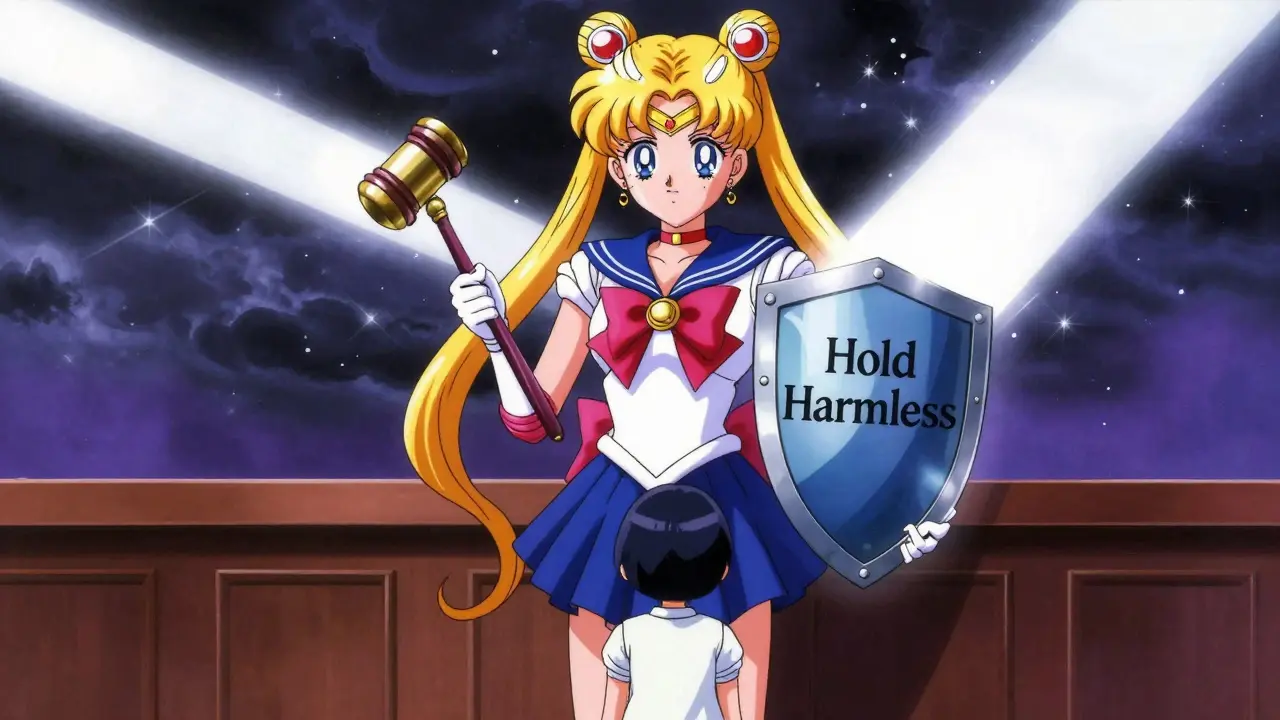
- To Hold Harmless: The seller cannot pursue the buyer for liability that the seller is exposed to due to the buyer's own actions. This prevents circular lawsuits.
Morgan Lewis clarifies the precise legal meaning of "indemnify," citing California case law (Crawford, 44 Cal. 4th 541), which states that to indemnify means to pay or compensate the other party for its legal liabilities or losses. Understanding these distinctions helps in drafting clearer contracts and avoiding ambiguity during disputes.
Negotiating Liability Caps and Baskets
In any generic transaction, the most heavily negotiated aspects of indemnification are usually the limits on exposure. Sellers want to limit their risk, while buyers want maximum protection. McLane notes that indemnification provisions are often the second most highly negotiated provisions in M&A transactions, right after representations and warranties.
Key negotiation points include:
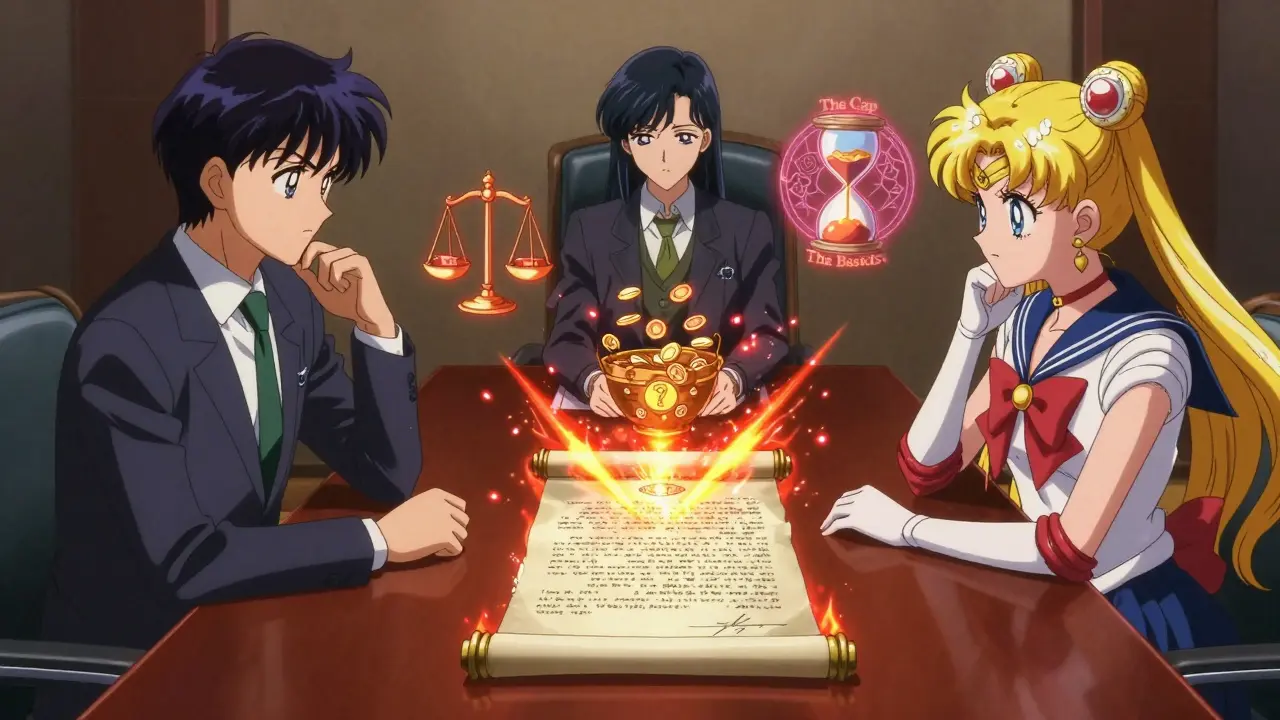
- The Cap: The maximum amount the indemnifier will pay. Sellers argue for lower caps to protect their equity, while buyers push for higher or unlimited caps for fundamental breaches like fraud or IP infringement.
- The Basket: A deductible amount that must be reached before indemnification kicks in. Small claims below this threshold are absorbed by the injured party, reducing administrative burdens.
- Survival Periods: How long the indemnification lasts after the deal closes. Fundamental representations (like organization authority or tax matters) typically survive longer than non-fundamental ones (like employee benefits).
Davis Wright Tremaine advises that sellers should narrow the scope of indemnification to the extent possible, though acknowledging that some level of indemnification is standard practice. A realistic, market-based approach considering leverage and deal context is essential to streamline negotiations.
Practical Implementation and Triggers
Even the best-written clause is useless if you don’t understand when and how to use it. Triggering events must be clearly defined. Icertis specifies that these might cover legal fees, third-party claims, or damages resulting from negligence. ContractNerds provides a concrete example: if a data breach occurs due to a vendor's failure to maintain adequate security measures, this triggers the vendor's obligation to indemnify the customer for resulting damages, including notification costs and credit monitoring services.
Procedural requirements are equally critical. Parties must adhere to specific notification requirements and timelines outlined in the agreement. Failure to notify the indemnifier within the stipulated period can void the right to claim compensation. Additionally, insurance requirements ensure that the indemnifying party has sufficient resources to fulfill their obligations. Icertis notes that this section should specify the type and amount of coverage required.
| Feature | Mutual Indemnification | Unilateral Indemnification |
|---|---|---|
| Risk Allocation | Balanced; both parties share risk | Skillewed; one party bears most risk |
| Common Use Cases | Partnerships, Joint Ventures, Construction | Vendor-Buyer relationships, SaaS licenses |
| Negotiation Leverage | Equal footing | Dominant party dictates terms |
| Complexity | Higher; requires reciprocal clauses | Lower; simpler structure |
Industry Variations and Jurisdictional Differences
The structure of indemnification provisions varies significantly by industry and jurisdiction. Whiteford Law notes that indemnification serves as a key M&A risk allocation device, providing post-closing protection for buyers against seller breaches. In construction contracts, mutual agreements are common to protect both parties against injury to employees or subcontractors.
However, legal landscapes differ across regions. Some states distinguish between indemnification provisions and hold-harmless clauses as separate doctrines, while others treat the phrase "hold harmless" as redundant. Thomson Reuters points out that this variation requires careful attention to local laws when drafting cross-jurisdictional contracts. Industry practice also influences survival periods, with fundamental representations traditionally surviving longer than non-fundamental ones based on the nature of the representation.
Current Trends in Drafting
Modern legal practice emphasizes precision in drafting. Adams on Contract Drafting specifies detailed language requirements, defining terms like "Litigation Expense" as any reasonable out-of-pocket expense incurred in defending a proceeding or related investigation. Recent legal interpretations continue to refine the distinctions between indemnify, defend, and hold harmless, informing contemporary drafting practices.
Market trends show increasing sophistication in indemnification structures. Practitioners recognize that each contracting party bears some risk that can be mitigated via indemnification, leading to more tailored provisions rather than boilerplate language. ContractNerds highlights that control rights affect risk exposure, as the party controlling the defense is charged with litigation strategy, which directly impacts costs. Therefore, defense and control of a claim should align with the parties' respective risk profiles.
What is the difference between liability and indemnification?
Liability refers to the legal responsibility for an act or omission, meaning you are legally bound to pay for damages caused. Indemnification is a contractual agreement where one party agrees to compensate the other for those liabilities. Essentially, liability is the obligation itself, while indemnification is the mechanism to shift the financial burden of that obligation to another party.
Why are indemnification clauses important in generic transactions?
They provide certainty and financial protection against specified risks. By agreeing in advance on who bears the cost of potential losses, such as legal fees or third-party claims, businesses can allocate risk efficiently. This prevents costly disputes after the fact and ensures that parties have the resources to handle unexpected events.
What are triggering events in an indemnification clause?
Triggering events are specific actions or circumstances that activate the indemnification obligation. Common examples include breaches of contract, negligence, misconduct, intellectual property infringement, or data breaches. The clause must clearly define these events to avoid ambiguity about when compensation is owed.
How do mutual and unilateral indemnification differ?
In mutual indemnification, both parties agree to compensate each other for losses arising from their respective breaches, creating a balanced risk profile. In unilateral indemnification, only one party agrees to indemnify the other, which is common when one party has significantly more bargaining power, such as a large enterprise buying software from a smaller vendor.
What is a "basket" in indemnification negotiations?
A basket is a deductible amount that must be reached before the indemnifying party is required to pay. Claims below this threshold are absorbed by the injured party. This reduces administrative burdens by filtering out small, insignificant claims and ensuring that only substantial losses trigger the indemnification process.
Does indemnification cover legal fees?
Yes, if the clause includes a "defense" obligation. To "defend" means the indemnifier pays the indemnitee's legal fees for suits arising from specific risks. This is distinct from "indemnifying," which covers the actual loss or liability. Many comprehensive clauses include both defense and indemnification to fully protect the injured party.
andrew iregbayen
May 9, 2026 AT 00:06honestly this is the kind of stuff that keeps me up at night but also makes me feel like i actually understand what my lawyers are charging me for. it's wild how much risk we just hand over in these standard vendor agreements without even blinking. thanks for breaking down the difference between indemnify and defend, that was always a grey area for me.
Guy Birtwhistle
May 9, 2026 AT 01:04Oh look, another article pretending that boilerplate legal jargon is some sort of secret handshake to financial stability.
let's be real here, most of these clauses are written by people who have never actually had to pay out a dime on them. they're just scare tactics to keep you signing things faster. if you think a 'basket' clause is going to save your ass when your vendor screws up, you're living in a fantasy land where contracts actually mean something.
Kenny Pines
May 10, 2026 AT 07:28lol @guy_birtwhistle you're so dramatic 😂
but seriously, i get what you're saying about the power imbalance. i've seen small vendors get absolutely crushed by enterprise buyers demanding unilateral indemnification for everything under the sun. it's not fair, but it's the game we play. 🤷♂️
Brian Fibelkorn
May 11, 2026 AT 11:41The moral decay of modern commerce is evident in the sheer audacity of shifting liability to parties with less capital reserves. It is an affront to basic ethical standards to demand unconditional indemnification from smaller entities while larger corporations shield themselves behind layers of subsidiary structures. The legal framework should prioritize equity, not just efficiency. To ignore the inherent power asymmetry is to perpetuate a system designed to exploit the vulnerable. We must demand more than just procedural correctness; we need substantive justice in our contractual relationships.
David Rangkhal
May 11, 2026 AT 12:30i think there is a middle ground here guys. mutual indemnification works well when both sides have skin in the game. in india we see a lot of joint ventures where this balance is crucial. you cant just push all the risk to one side and expect a healthy partnership. communication is key. 🤝
Chelsea Grdina
May 11, 2026 AT 16:54I completely agree with David Rangkhal on the importance of balance, and I think it’s fascinating how cultural approaches to negotiation can really shape these outcomes, especially when you’re dealing with cross-border transactions where the legal norms might differ significantly from what we’re used to seeing in North American markets, which often tend to be more adversarial by default rather than collaborative, and I’ve noticed that companies that take the time to educate their partners on why certain clauses are necessary actually end up with smoother negotiations and fewer disputes down the line because trust has been established early on in the process rather than being forced through rigid contractual language that feels like a threat instead of a safeguard.
Sarah Kwiatkowski
May 12, 2026 AT 15:05You guys are bringing such great points! I love how Chelsea highlighted the cultural aspect of negotiation. It’s true that understanding the 'why' behind the clauses helps build trust. For anyone struggling with the concept of 'survival periods', just remember that fundamental reps like tax and IP usually survive longer because those risks don't disappear just because the deal closed. Keep asking questions!
Brian LeClercq
May 14, 2026 AT 00:11This entire discourse reeks of weak-minded capitulation to globalist legal harmonization. Why should we accept foreign interpretations of indemnification when our own common law traditions provide sufficient protection? The idea that we need to cater to international sensitivities or adopt 'best practices' from jurisdictions with weaker property rights is absurd. A strong nation demands ironclad unilateral protections for its domestic enterprises, period. Any deviation from this stance is nothing short of treasonous negligence.
Frances Kendall
May 15, 2026 AT 19:59Brian LeClercq, your perspective is certainly passionate, though perhaps overly narrow. From a philosophical standpoint, contract law is essentially a social contract within a commercial context. If we view indemnification not as a zero-sum game but as a mechanism for mutual assurance, we begin to see its value in fostering cooperation rather than just protecting individual interests. The 'self-righteous' approach you advocate for might win a battle, but it often loses the war by destroying long-term business relationships. True strength lies in creating systems where all parties feel secure enough to innovate and take calculated risks together.
Natali Brown
May 16, 2026 AT 18:56I hear what Brian is saying about wanting strong protections, and honestly, I think we can all relate to that feeling of wanting to make sure our business is safe from unexpected disasters, which is exactly why these indemnification clauses exist in the first place, but maybe we can find a way to frame this not as a battle of national pride or moral superiority, but simply as a practical tool for managing human error and unforeseen circumstances, because at the end of the day, we’re all just trying to build sustainable businesses that can weather storms without collapsing under the weight of legal fees and litigation costs, and perhaps a little empathy for the other side’s position could lead to better, more resilient agreements for everyone involved. :)