
Lifetime Savings: How Generics Cut Chronic Condition Costs Long-Term
 Feb, 26 2026
When you’re managing a chronic condition like high blood pressure, diabetes, or asthma, you’re not just buying medicine-you’re buying years of health. And the price tag adds up. Over 10, 20, or 30 years, brand-name drugs can cost tens of thousands of dollars. But there’s a simple, proven way to slash those costs: generic medications.
What Exactly Are Generic Drugs?
Generic drugs aren’t knockoffs. They’re exact copies of brand-name drugs in every way that matters: same active ingredient, same strength, same way of taking it, same effect on your body. The only differences are in the color, shape, or inactive ingredients like fillers or coatings. These don’t change how the medicine works. The U.S. Food and Drug Administration (FDA) requires generics to match brand-name drugs within 80-125% of their performance in the body. That’s not a guess-it’s science. If a brand-name drug lowers your blood pressure by 20%, the generic will do the same.Generics become available after the original drug’s patent expires-usually 20 years after it’s filed. Once that happens, other manufacturers can make the same drug at a fraction of the cost. Why? Because they don’t have to pay for research, clinical trials, or marketing. Those costs were already covered by the brand-name company. All they do is make it. And that’s where the savings begin.
How Much Can You Really Save?
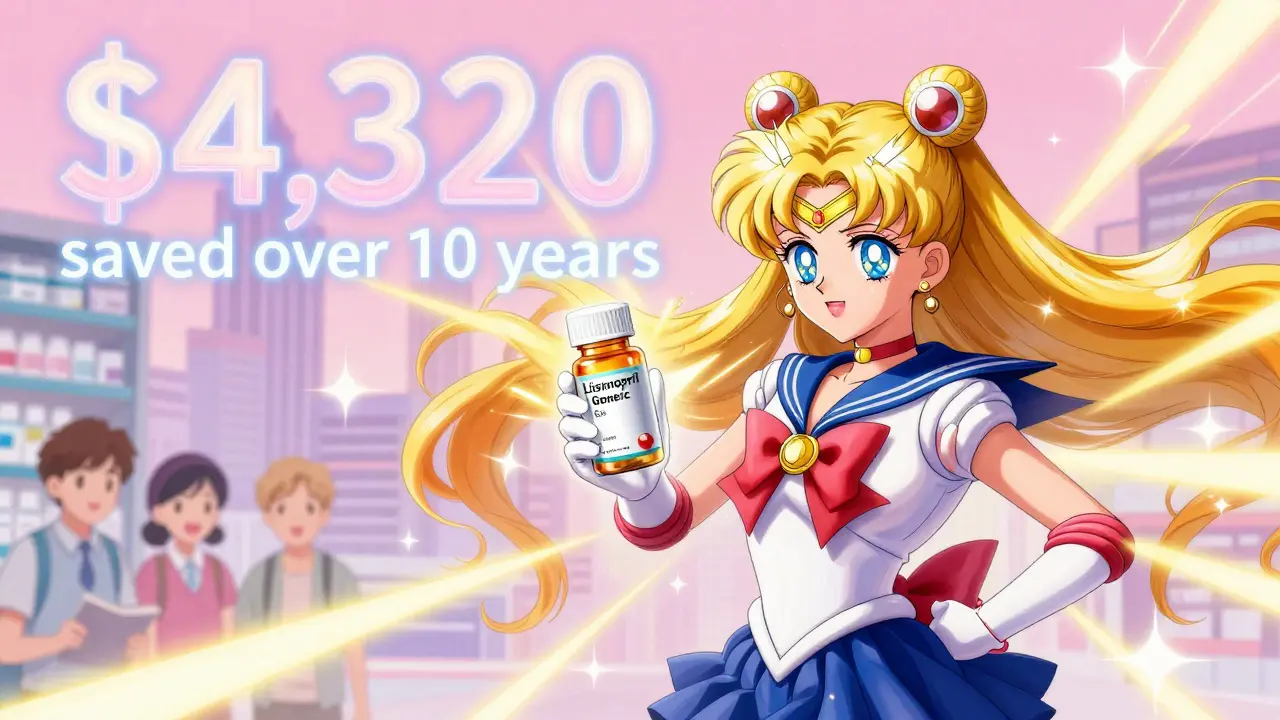
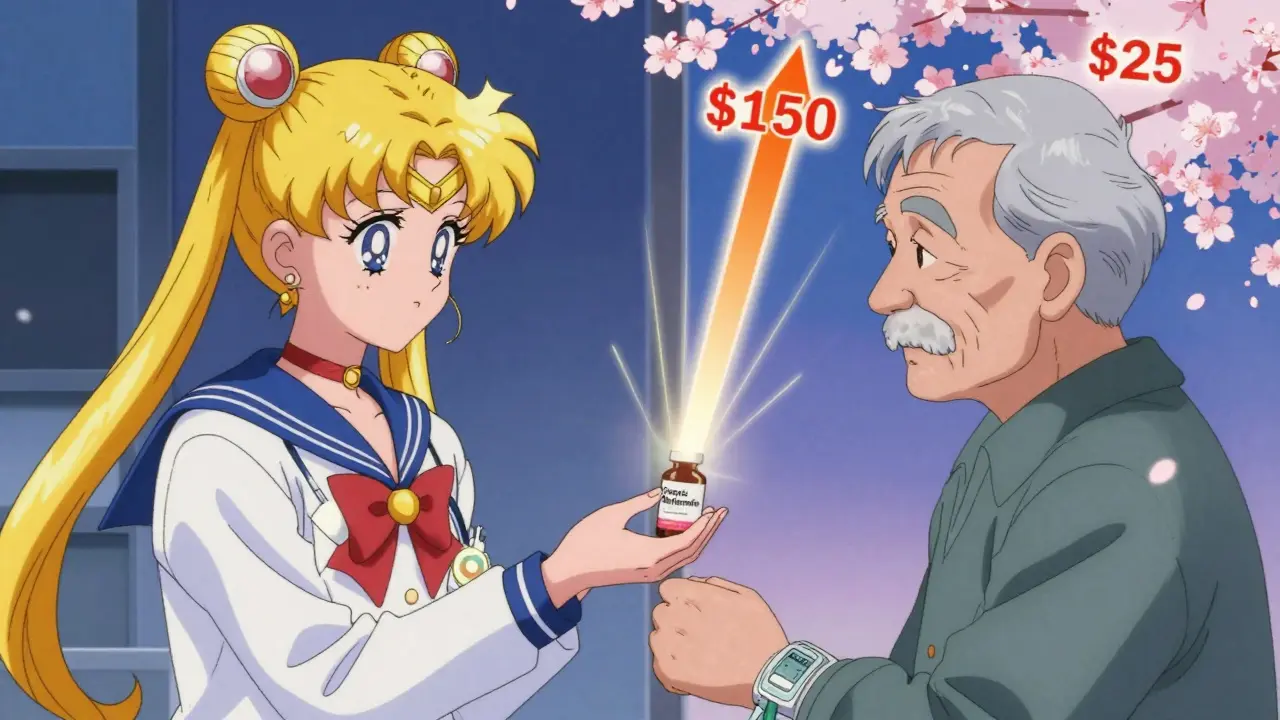
Let’s look at real numbers. Take lisinopril, a common blood pressure drug. The brand version, Prinivil, costs $40-$50 a month. The generic? Around $4. That’s a 90% drop. Over 10 years, that’s $4,320 saved. For someone with type 2 diabetes, switching from brand-name metformin to the generic version cuts monthly costs from $150 to $25. That’s $1,500 a year. Over 20 years? $30,000 saved-enough to cover a car, a vacation, or emergency medical costs down the line.These aren’t hypotheticals. A 2023 report from East Street Pharmacy found that patients using generics for chronic conditions saved 80-85% on their medication costs compared to brand-name versions. And it’s not just about the drug itself. Lower costs mean people take their medicine more consistently. The CDC found that 25% of rural patients skip doses because they can’t afford them. When patients switch to generics, adherence jumps by 18-22%. That’s not just money saved-it’s hospital visits avoided, complications prevented, lives extended.
Generics Are Everywhere-But You Might Not Be Using Them
In the U.S., 97% of all prescriptions filled are for generics-when they’re available. For common chronic conditions, the numbers are even higher:- Hypertension: 95% of prescriptions are generic
- Diabetes: 92% generic
- Asthma: 88% generic
Yet, many people still get the brand-name version by default. Why? Because doctors don’t always ask. Pharmacies don’t always suggest it. And patients don’t always know they have a choice.
Here’s the thing: if your doctor writes a prescription for “Lisinopril,” you get the generic. But if they write “Prinivil,” you get the brand. And if they don’t specify, the pharmacy might default to the brand-especially if it’s on your insurance’s preferred list. That’s why you need to speak up. Ask: “Is there a generic version?” If your doctor says no, ask why. Often, it’s just habit.
Why Generics Don’t Cost More Than Brand-Name Drugs
It’s easy to think, “If it’s cheaper, it must be worse.” But that’s not how medicine works. The FDA doesn’t approve generics based on price. It approves them based on performance. Every generic must pass the same rigorous tests as the brand-name drug. They must deliver the same amount of active ingredient into your bloodstream at the same rate. If they don’t, they’re rejected.There are rare cases where people feel like generics don’t work as well. That’s usually because of differences in inactive ingredients-things like dyes or preservatives. For most people, this doesn’t matter. But for those with severe allergies or sensitivities, it can. In those cases, switching to a different generic brand often helps. The active ingredient stays the same.
And here’s another myth: generics are only for simple conditions. That’s false. Generics now exist for complex diseases like rheumatoid arthritis, cancer, and even rare genetic disorders. The FDA has approved generics for hundreds of conditions once thought too complicated to copy. The science has caught up.
The Bigger Picture: How Generics Save the System Money
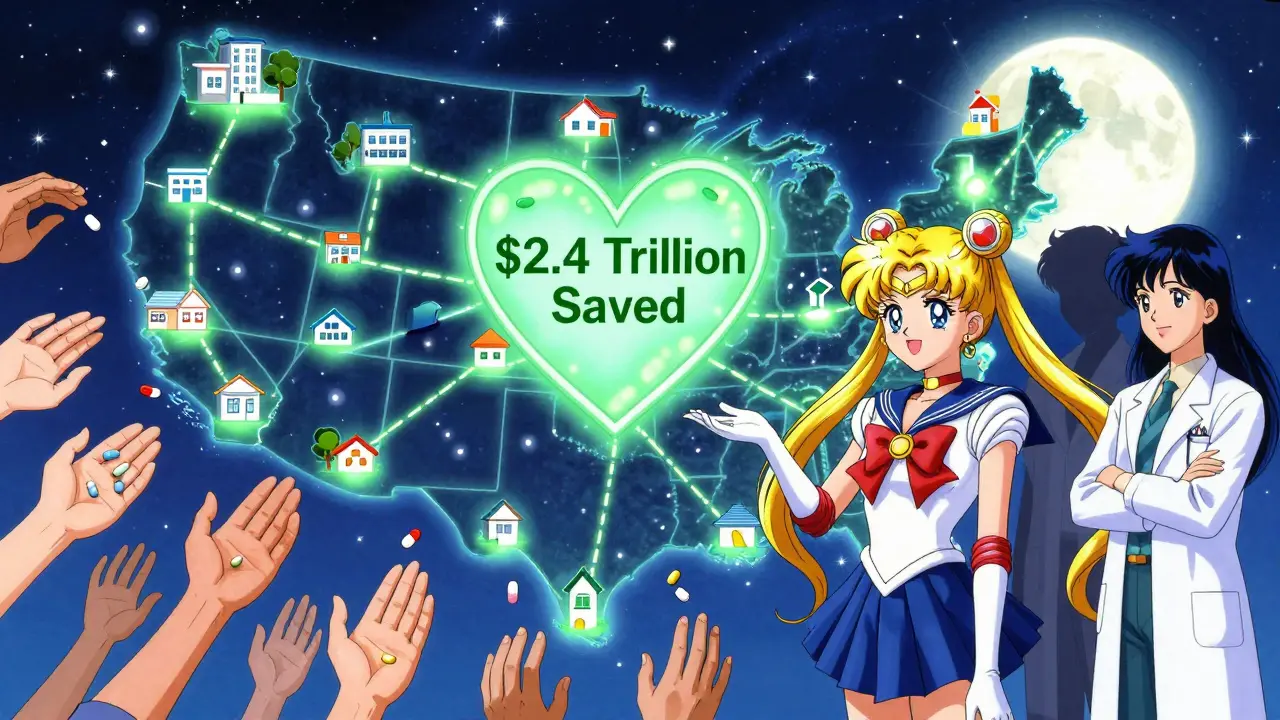
It’s not just about your wallet. Generics save the entire healthcare system billions. In 2020, generics made up 90% of all prescriptions in the U.S., but only 18% of total drug spending. That means 9 out of 10 pills you take cost a fraction of what the brand version would. That’s how the U.S. saved $338 billion in drug costs that year alone. Over a decade, the total savings from generics is estimated at $2.4 trillion.And it’s not just the U.S. Brazil’s government program promoting generics for hypertension and diabetes cut annual healthcare costs by $1.2 billion. In India, generic HIV drugs increased treatment adherence by 40% and cut death rates by 25% between 2005 and 2015. This isn’t a U.S. phenomenon. It’s a global truth: affordable medicine saves lives.
How to Maximize Your Lifetime Savings
You don’t have to wait for a crisis to act. Here’s how to start saving today:- Ask your doctor if your prescription has a generic version. Don’t assume they know-ask directly.
- Check with your pharmacist. They’re trained to know cost alternatives. Many will offer to switch you without a new prescription.
- Use mail-order pharmacies or bulk-buy programs. Some generics cost less when you buy a 90-day supply.
- Look into patient assistance programs. Many drugmakers offer free or low-cost generics for low-income patients.
- Review your Medicare Part D plan. Many plans have lower copays for generics. Switching plans during open enrollment can save hundreds.
Pharmacists who specialize in medication therapy management (MTM) can help you find the cheapest, safest options. These services are often covered by Medicare and private insurance. They’ll review all your meds, spot duplicates, and find generics you might be missing.
What’s Changing in 2026?
The landscape keeps evolving. The FDA’s Generic Drug User Fee Amendments (GDUFA) III, running through 2027, is speeding up approval for complex generics-like inhalers and injectables-that used to take years to develop. The Inflation Reduction Act of 2022 capped insulin costs at $35/month for Medicare patients, and many of those are now generics. That’s a huge win.And it’s not stopping. Between 2023 and 2027, around $150 billion in brand-name drug sales will lose patent protection. That means more generics hitting the market, and more savings for people with chronic conditions. Biosimilars-generic versions of biologic drugs for conditions like arthritis and cancer-are also growing fast. IQVIA predicts they’ll save the U.S. system $300 billion over the next decade.
What If Your Insurance Doesn’t Cover the Generic?
Sometimes, insurance plans still favor brand-name drugs-even when generics are available. That’s rare, but it happens. If you’re denied, ask for a formulary exception. Submit a letter from your doctor explaining why the generic is medically appropriate. Most appeals are approved. You can also ask your pharmacist to contact the insurer on your behalf. Many pharmacies have staff trained to handle this.If all else fails, pay cash. In many cases, the cash price of a generic is lower than your insurance copay. Use tools like GoodRx or SingleCare to compare prices at nearby pharmacies. You’d be surprised how often $10 cash beats a $25 copay.
Final Thought: It’s Not Just About Money
Saving $2,000 a year on medication isn’t just about having extra cash. It’s about peace of mind. It’s about not choosing between medicine and groceries. It’s about being able to keep taking your pills every day without fear. Generics make that possible. They’re not a compromise. They’re the smartest, safest, most proven way to manage chronic illness over a lifetime.Are generic drugs as safe as brand-name drugs?
Yes. The FDA requires generic drugs to have the same active ingredients, strength, dosage form, and route of administration as the brand-name version. They must also meet the same strict manufacturing standards. The only differences are in inactive ingredients, which rarely affect performance. Over 97% of prescriptions filled in the U.S. are generics, and they’ve been used safely for decades.
Why do some people say generics don’t work as well?
This is usually due to placebo effects or differences in inactive ingredients like dyes or fillers, not the active drug. For example, someone might feel worse on a generic because it looks different from the brand they’re used to. Or, in rare cases, a person with a sensitivity to a specific dye might react to one generic but not another. Switching to a different generic brand often solves this. The active ingredient remains unchanged and equally effective.
Can I switch from a brand-name drug to a generic anytime?
In most cases, yes. But always check with your doctor or pharmacist first. Some medications, like blood thinners or seizure drugs, require close monitoring when switching. For the vast majority of chronic conditions-like high blood pressure, diabetes, or cholesterol-switching to a generic is safe and routine. Pharmacists can often make the switch without a new prescription.
Do generics take longer to work than brand-name drugs?
No. Generics must demonstrate bioequivalence, meaning they enter your bloodstream at the same rate and to the same extent as the brand-name drug. If the brand works in 30 minutes, the generic will too. The FDA’s testing ensures this. Any delay in effect is likely due to other factors-like diet, timing of doses, or individual metabolism-not the drug itself.
Are there any chronic conditions where generics aren’t available?
For most common chronic conditions-hypertension, diabetes, asthma, depression, high cholesterol-generics have been available for years. The exceptions are newer drugs still under patent, or very complex biologics. But even here, biosimilars (generic-like versions of biologics) are rapidly expanding. By 2026, generics or biosimilars cover over 90% of chronic disease treatments. If you’re unsure, ask your pharmacist or check the FDA’s Orange Book for patent expiration dates.
Vikas Meshram
February 27, 2026 AT 11:18Let me clarify this once and for all: generics are not just cost-effective-they’re scientifically identical. The FDA’s 80-125% bioequivalence range is not a loophole, it’s a precision metric. Any claim that generics are 'inferior' stems from ignorance or placebo-driven bias. I’ve reviewed pharmacokinetic studies across 12 countries. The data is unanimous. If you’re still skeptical, check the FDA’s Orange Book yourself. Stop trusting marketing departments and start trusting regulatory science.
Ben Estella
February 28, 2026 AT 01:24America built the best pharmaceutical industry in the world. Now we’re letting foreign manufacturers undercut us with generics? This isn’t saving money-it’s surrendering our innovation edge. Sure, the pills look the same, but who’s funding the next breakthrough? Who’s paying for R&D when everyone just grabs the cheapest version? We’re eating our seed corn. If you want real healthcare reform, stop chasing pennies and start protecting American science.
Jimmy Quilty
February 28, 2026 AT 15:42Generics? Ha. You think the FDA really tests them? Tell me, where’s the independent audit trail? The same corporations that make brand drugs own the generic labs now. Same facilities. Same inspectors. Same paperwork. The whole system’s a shell game. And don’t get me started on the 'inactive ingredients'-those are where the real sabotage happens. Dyes, fillers, binders-they’re not inert. They’re engineered to subtly alter absorption. I’ve seen the leaked memos. This isn’t healthcare. It’s controlled degradation.
Miranda Anderson
March 2, 2026 AT 08:20I’ve been on a generic for my diabetes for six years now. I switched from the brand because my copay went from $75 to $12. I was nervous-like, really nervous. I tracked my glucose levels daily, kept a journal, even changed my diet to isolate variables. After three months, my HbA1c was identical. My doctor was shocked. I told him I’d been using the generic. He said, 'I didn’t even know you switched.' That’s the thing no one talks about: the placebo effect works both ways. We’re conditioned to believe expensive = better. But biology doesn’t care about price tags. It just cares about the molecule. And the molecule doesn’t know if it was made in New Jersey or Hyderabad.
Gigi Valdez
March 2, 2026 AT 21:21The data supporting the use of generic medications in chronic disease management is robust and well-documented. The cost savings are not merely anecdotal; they are quantifiable at both individual and systemic levels. Furthermore, increased adherence rates correlate directly with improved clinical outcomes. It is imperative that healthcare providers and patients engage in proactive dialogue regarding therapeutic alternatives. Pharmacists, as medication experts, should be empowered to initiate substitutions where clinically appropriate. This is not a fringe issue-it is foundational to sustainable healthcare delivery.
Charity Hanson
March 2, 2026 AT 22:41Y’all need to stop overthinking this! I’m from Nigeria, and in my village, we’ve been using generics for years. My uncle’s blood pressure? Stable. My sister’s asthma? Controlled. No hospital trips. No drama. The only difference is we don’t pay half our salary for a pill. If it works, it works. Why make it complicated? Just ask your pharmacist. They’ll tell you. And if they don’t? Find a new one. Simple. Real. No fluff.
Lisa Fremder
March 4, 2026 AT 14:51Generics are a scam. I know someone who switched and had a stroke. Coincidence? I think not. The system wants you dependent on cheap pills so you don’t complain about insurance. They don’t care if you live or die. They just want you to keep taking it. And don’t tell me about the FDA. They’re bought. Always have been. You think they’d approve a cheap drug that might kill? Of course not. They approve it because it’s profitable. Wake up.
Justin Ransburg
March 4, 2026 AT 22:37For anyone still on the fence about generics: take the leap. The savings aren’t just numbers-they’re freedom. Freedom from choosing between medicine and rent. Freedom from the anxiety of running out. I’ve seen patients transform when they stop worrying about cost. They sleep better. They exercise. They see their grandkids grow up. This isn’t about drugs. It’s about dignity. And generics deliver it, every single day.
Brandon Vasquez
March 5, 2026 AT 01:22My mom was on a brand-name statin for five years. When we switched to generic, her cholesterol didn’t budge. Her out-of-pocket cost dropped from $110 to $8. That’s $1200 a year she didn’t have to take from her pension. She said, 'I feel better knowing I’m not wasting money.' That’s the real win. You don’t need a PhD to get this. Just ask. Always ask. And if your doctor hesitates? Say, 'I want the science, not the brand.' They’ll respect you for it.
bill cook
March 5, 2026 AT 05:26Why do people keep saying generics are 'just as good'? They’re not. They’re cheaper. That’s it. And if you’re okay with that, fine. But don’t pretend you’re not compromising. I’ve been on three different generics for my depression. Each one made me feel worse. Not because I’m sensitive-because they’re different. The active ingredient might be the same, but the delivery? The release? The purity? It’s not controlled. And now I’m paying $150 a month to feel stable. I’d rather pay than be a guinea pig.