
Managing Therapeutic Equivalents in Combination Products: Dose Differences and Real-World Risks
 Jan, 21 2026
When two drugs are combined into one pill or injection, it’s not just about adding doses. It’s about making sure the therapeutic equivalence holds up - even when the doses change. This isn’t theoretical. Every day, pharmacists swap out brand-name combo drugs for generics, assuming they work the same. But sometimes, they don’t. And patients pay the price.
What Therapeutic Equivalence Really Means
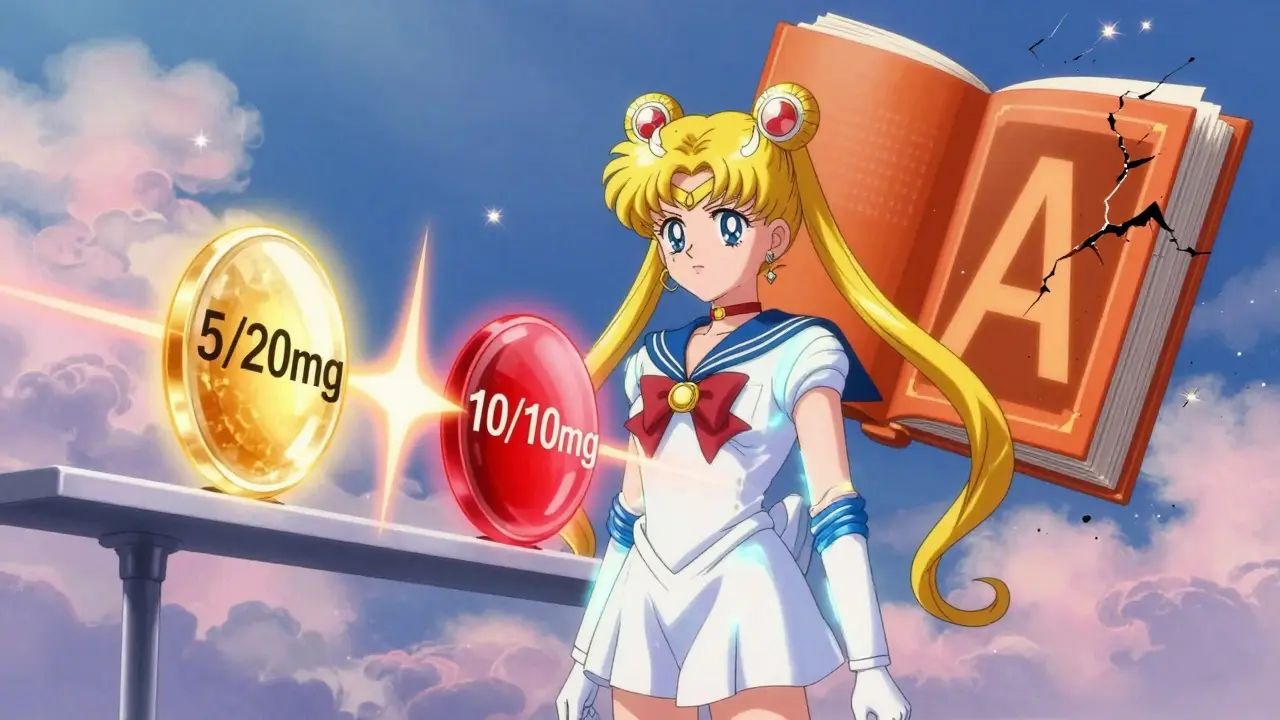
Therapeutic equivalence means two drug products - say, a brand-name and a generic - have the same active ingredients, in the same strength, same form (tablet, capsule, etc.), and same way of getting into your body (oral, injected, etc.). The FDA calls this a "pharmaceutical equivalent." If they also deliver those ingredients into your bloodstream at the same rate and amount, they’re considered therapeutically equivalent. That’s the "A" rating in the FDA’s Orange Book.Over 14,000 drug products have been rated this way. About 95% are "A" rated. That sounds reassuring. But here’s the catch: this only applies when the combination has identical active ingredients and doses. If one version uses 5mg of drug A and 10mg of drug B, and another uses 10mg of A and 5mg of B? They’re not interchangeable. Even if both are "A" rated, they’re different products.
Why Dose Differences Break Equivalence
Combination products like amlodipine/benazepril for high blood pressure or ezetimibe/simvastatin for cholesterol don’t always behave like simple math. One drug might boost the effect of the other. In tramadol and acetaminophen combos, the pain relief isn’t just the sum of each drug’s effect - it’s stronger. That’s synergy. And that means changing the dose of one component can throw off the whole balance.Take sirolimus and topotecan, used in cancer treatment. One reduces cell growth by 69.8%, the other by 88.9%. To match the effect, you can’t just swap doses. You need a formula: beq(a) = CBγ(1+CAa)−1, where γ is the ratio of their effectiveness. This isn’t something a pharmacist can eyeball. It requires modeling. And most substitution systems don’t account for it.
Even small differences in inactive ingredients - like the filler or coating - can change how quickly the active drugs are absorbed. One generic version of rivaroxaban uses croscarmellose sodium as a disintegrant; another uses sodium starch glycolate. In isolation, both are "A" rated. But when combined with another drug that’s sensitive to absorption timing? That difference can mean the difference between control and a clot.

Narrow Therapeutic Index Drugs: The Hidden Danger
Some drugs are like walking a tightrope. Too little? The disease comes back. Too much? You’re in the ER. These are called narrow therapeutic index (NTI) drugs. Think warfarin, levothyroxine, phenytoin.When NTI drugs are in combination - say, levothyroxine with a calcium blocker - the margin for error shrinks even more. The FDA requires bioequivalence studies for these to fall within 90-111% instead of the usual 80-125%. But even that isn’t foolproof. A 2018 study found 12% of patients had adverse events after switching between generic levothyroxine products - even though both met FDA standards.
Why? Because thyroid hormone levels are exquisitely sensitive to tiny changes in absorption. A 5% difference in how fast the pill dissolves can push a patient from euthyroid to hyperthyroid. In a combo product, that change might be masked by the other drug - until the patient starts having palpitations or losing weight without trying.
What Goes Wrong in Practice
Pharmacists aren’t careless. But systems aren’t built for complexity.A pharmacist in Ohio reported three dose errors in six months just from swapping different strengths of amlodipine/benazepril. The system flagged "therapeutic equivalence," but didn’t tell her that the 5/20mg version was being replaced with a 10/10mg version. Same TE code. Totally different doses. The patient ended up with dangerously low blood pressure.
On Allnurses, a nurse practitioner described switching a patient from brand-name Vytorin to a generic. The LDL cholesterol jumped 15%. The generic had the same active ingredients and doses. But the formulation altered how much simvastatin got absorbed. The patient didn’t have a heart attack - but they needed a higher dose later, and more monitoring.
The FDA’s adverse event database recorded 247 incidents in 2022 tied to dose conversion errors in combination products. Nearly 40% involved heart meds. Almost 30% involved psychiatric drugs like sertraline/olanzapine. These aren’t rare. They’re systemic.
How to Get It Right
There’s a way forward - but it takes discipline.First: Always check the exact strength. Don’t trust the TE code alone. If the combination has changed dose, it’s not equivalent, no matter what the Orange Book says.
Second: For NTI combinations, use standardized conversion tables. Don’t rely on memory or apps that don’t flag NTI status. The Institute for Safe Medication Practices recommends barcode scanning for every substitution - and a 72-hour follow-up for high-risk patients.
Third: Train your team. The University of California Health System cut substitution errors by 65% after a 40-hour training program focused on combo products. That’s not just about rules. It’s about understanding why dose matters in synergy, absorption, and individual metabolism.
Fourth: Document everything. If you switch a combo product, note why. What was the old version? What’s the new one? Did the patient report changes? That paper trail protects the patient - and you.
The Bigger Picture
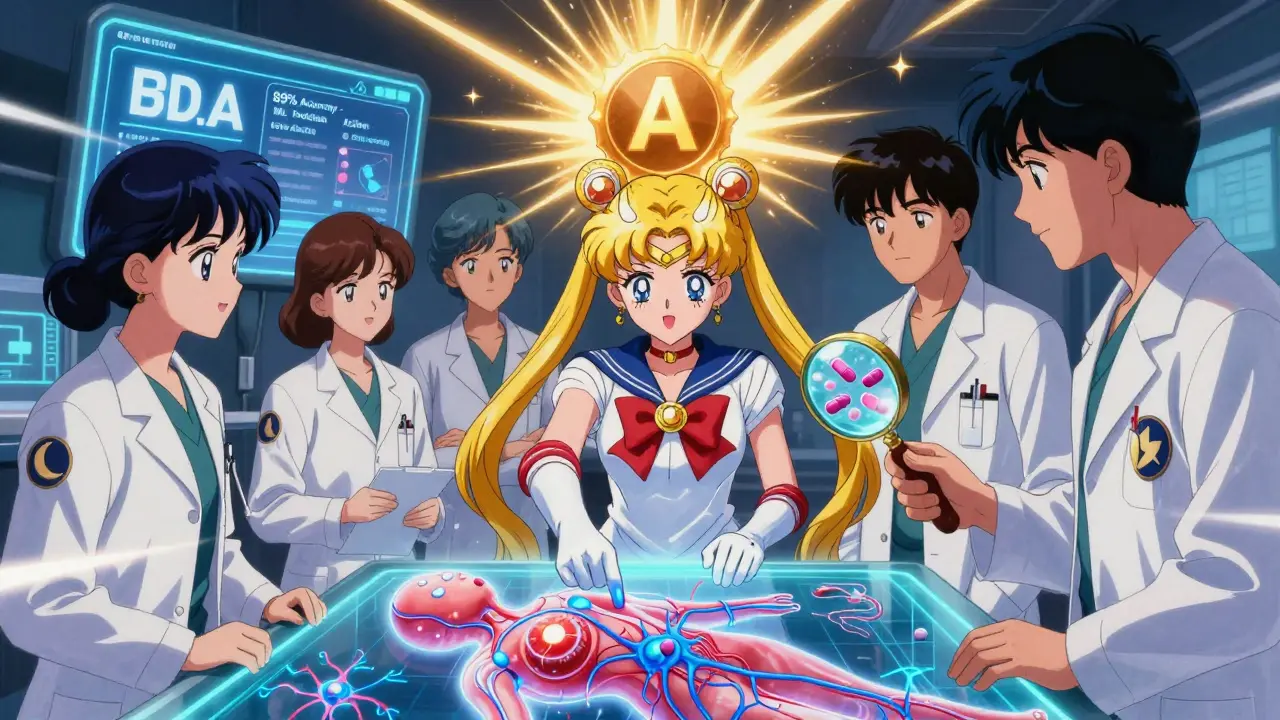
The push for generics saves the U.S. healthcare system over $1.7 trillion a decade. That’s huge. But savings shouldn’t come at the cost of safety. Combination products are growing fast - 18% of all generic approvals now. Cardiovascular combos make up a third of those. We’re not going to stop making them.The FDA is working on new tools. In 2023, they released draft guidance for complex combinations. They’re testing machine learning models that predict which generic substitutions might fail based on formulation differences. Early results? 89% accurate.
Long-term, we may see "A*" ratings for combinations that prove bioequivalence across multiple doses. Or even pharmacogenomic adjustments - where a patient’s DNA tells us how they metabolize a combo drug. By 2030, 30% of therapeutic equivalence decisions could include genetic data.
Until then, the responsibility falls on the people who hand the pills out. A TE code isn’t a green light. It’s a starting point. And when doses change in a combo, you don’t just check the label. You think.
Can two combination drugs with the same TE code have different doses?
No. If two combination products have the same TE code, they must have identical active ingredients in identical strengths. Different doses mean they’re different products - even if they’re made by the same company. Always verify the strength on the label, not just the TE code.
Are generic combination drugs always safe to substitute?
Not always. While most are safe, NTI drugs and combos with synergistic effects are higher risk. Studies show 12% of patients on levothyroxine combos had adverse events after switching generics. Always assess the patient’s history, monitor after substitution, and avoid substitutions in unstable patients.
Why do some generic combos cause different side effects?
Inactive ingredients - like fillers or coatings - can change how quickly the active drugs are absorbed. One generic might release the drug faster than another, even if both meet FDA standards. In combos, this can alter the balance between drugs, leading to unexpected side effects or reduced effectiveness.
What should I do if a patient has a bad reaction after switching a combo drug?
Immediately revert to the original product if possible. Document the reaction, the drugs involved, and the exact strengths. Report it to the FDA’s MedWatch system. Then, review the substitution protocol - was the TE code checked? Were the doses confirmed? Was the patient on an NTI drug? Use this as a learning moment to improve your process.
Is there a list of combination products that are high-risk for substitution?
There isn’t an official public list, but you can identify high-risk combos by looking for NTI drugs (warfarin, levothyroxine, phenytoin, digoxin) and those with known synergistic effects (tramadol/acetaminophen, sertraline/olanzapine). Always treat these as special cases. Consult clinical pharmacists or use tools like Lexicomp or Micromedex that flag NTI combinations.
Akriti Jain
January 22, 2026 AT 19:12Mike P
January 24, 2026 AT 18:34shivani acharya
January 25, 2026 AT 10:26Margaret Khaemba
January 25, 2026 AT 16:33Neil Ellis
January 26, 2026 AT 12:30Kenji Gaerlan
January 26, 2026 AT 21:42Jasmine Bryant
January 28, 2026 AT 18:05Liberty C
January 30, 2026 AT 08:15Rob Sims
January 30, 2026 AT 18:52Patrick Roth
February 1, 2026 AT 12:00