
Medication Safety Guide for Caregivers: How to Prevent Costly Errors
 Apr, 30 2026
Quick Wins for Immediate Safety
- Ditch the kitchen spoons: Never use a household spoon for liquid medicine. They vary by 20-40% in volume. Always use a calibrated oral syringe.
- Check the temperature: Most meds need to be kept between 68-77°F (20-25°C). Avoid the "medicine cabinet" in the bathroom, as humidity can degrade the drugs.
- The "Right Now" Check: Before every single dose, verify the person's name, the drug name, the exact dose, and the frequency.
Mastering the Medication List
One of the biggest risks occurs during "care transitions"-like when your loved one comes home from a hospital stay. This is where 62% of medication errors happen because the home list doesn't match the hospital's discharge papers. To stop this, you need a living document that goes beyond just a list of names.
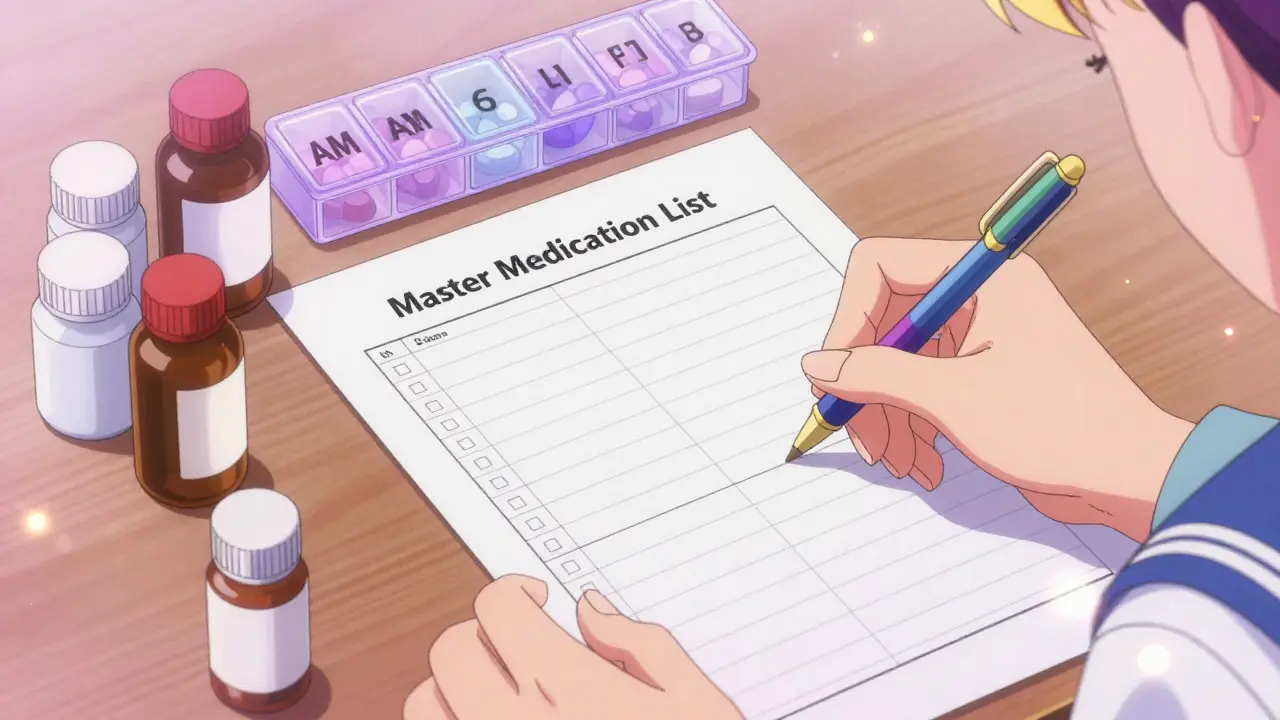
Spend 60 to 90 minutes creating a master list. This isn't just a scrap of paper; it should be a detailed grid including brand and generic names, the exact dosage (e.g., 500mg tablet), the precise timing (e.g., 8:00 AM), and why they are taking it. Including the documented side effects on this list allows you to spot a reaction quickly without hunting through a pharmacy pamphlet.
| Attribute | What to Record | Why it Matters |
|---|---|---|
| Drug Identity | Brand & Generic names | Prevents confusion with "look-alike" drugs. |
| Precision Dose | Exact mg or mL | Avoids unit conversion mistakes (common in 22% of errors). |
| Schedule | Exact time of day | Ensures consistent therapeutic levels in the blood. |
| Purpose | Condition being treated | Helps you identify the drug if the label is lost. |
Dealing with Polypharmacy and High-Risk Drugs
If your loved one is taking five or more medications, they are experiencing polypharmacy. This isn't just a fancy term; it's a danger zone. Taking five or more drugs increases the risk of an adverse event by 88% for adults over 65. Many of these patients end up on meds that actually pose more risks than benefits.
Be particularly wary of benzodiazepines and proton pump inhibitors, which are frequently misprescribed to seniors. You should also be on the lookout for "look-alike, sound-alike" names. For example, it's incredibly easy to confuse hydroxyzine with hydrocortisone if you're glancing quickly at a bottle. Always read the label twice, slowly.
Practical Tools for Daily Management
Paper logs are a start, but they are prone to human error. If you're caring for someone with dementia or Alzheimer's, a simple list isn't enough. The medication safety toolkit should include a seven-day pill organizer with clear AM/PM compartments. For those struggling with adherence, organizers with built-in alarms are a game-changer, as reported by many caregivers in support forums.
If you're tech-savvy, digital tracking apps like Medisafe or CareZone can reduce missed doses by 32%. However, if you find technology frustrating, don't force it. The most important thing is a system you will actually use every day. If a high-tech app makes you stressed, a physical checklist on the fridge is a better choice.
The Pharmacist: Your Secret Weapon
Most of us treat the pharmacy as a place to pick up a bag and leave. To truly protect your loved one, you need to change that relationship. A 15-minute conversation during your pharmacy visit can uncover problems in 35% of cases. One of the most effective moves you can make is requesting a Medication Therapy Management (MTM) review.
Set up a bi-annual (every six months) consultation with the pharmacist. This 45-minute deep dive into all prescriptions and supplements can reduce adverse drug events by 28%. Ask them specifically about drug-drug interactions and whether any medications on the list are listed in the Beers Criteria-a guide that identifies drugs generally inappropriate for elderly patients.

Safe Storage and Disposal
Where you keep the meds is as important as when you give them. Humidity from a bathroom shower can break down the chemical stability of a pill. Keep medications in a cool, dry place. Additionally, make it a habit to spend 10 minutes every week auditing your supplies. Check for expiration dates; surprisingly, 90% of caregivers fail to monitor these, potentially administering ineffective or dangerous expired medication.
When a medication is discontinued, don't just throw it in the trash where a child or pet could find it. Use pharmacy take-back programs to ensure the drugs are destroyed safely and don't end up in the water supply.
How do I know if my loved one is having a bad reaction to a medication?
Look for sudden changes in mood, balance, or appetite. In older adults, medication reactions often look like "confusion" or sudden dizziness, which can be mistaken for dementia. Compare the symptoms against the side-effect list you created in your master medication list and contact the doctor immediately.
What should I do if I miss a dose?
Do not double the next dose to "catch up" unless specifically instructed by a doctor. The rule of thumb is to check the patient information leaflet or call the pharmacist. Some drugs have a narrow window where they are effective, while others can be taken later in the day without issue.
Are over-the-counter (OTC) meds safe if they aren't prescriptions?
Absolutely not. OTC drugs like aspirin or certain cough syrups can have dangerous interactions with prescription medications. Always add OTC supplements and vitamins to your master medication list and review them with your pharmacist during your bi-annual check-up.
How can I simplify the refill process to avoid missed doses?
Ask your pharmacy about "medication synchronization." Many major chains now align all your refills to a single day of the week. This reduces the number of trips to the pharmacy and has been shown to reduce missed doses by 39%.
What is the safest way to measure liquid medicine for a child?
Use a calibrated oral syringe. Avoid household teaspoons or tablespoons, as they are not standardized and can lead to significant under- or over-dosing. The syringe provides the most accurate measurement and is easier to administer to a reluctant child.
Next Steps for Every Caregiver
If you are just starting today, your first goal is the master list. Don't try to do everything at once. Start by gathering every single bottle in the house-including vitamins-and spending an hour documenting them. Next, call your pharmacist and ask about synchronization and an MTM review. If you are managing a high-risk patient, look into smart dispensing systems that verify the user's identity before releasing a pill, which can significantly cut down on dosing errors.
Sarah Mifsud
May 2, 2026 AT 07:16That part about the bathroom humidity is so true!! I never knew that before and’ve been keepin all my meds in the cabinet for years. Definitely movin them to the bedroom today.
J. Walter Jenkem
May 4, 2026 AT 07:05Medication synchronization really takes the stress out of the monthly routine.
Elizabeth Holden
May 4, 2026 AT 19:19Ugh, obviously you need a master list. Only a total amatuer would forget to do this. I've been doin this for ages and it's basic stuff. Some peple just dont have any common sense lol.
Jenny X
May 5, 2026 AT 01:01The push for MTM reviews is just a way for big pharma to increase their surveillance of patient biomarkers through pharmacokinetic monitoring. They want a tighter loop on how we react to synthetic compounds so they can adjust the titration for maximum dependency. The systemic integration of digital tracking apps is even worse because it's basically a data mine for insurance conglomerates to flag pre-existing conditions using algorithmic profiling. We are basically beta testing their social credit system through the guise of health safety. Just use a paper log and keep it off the cloud if you don't want your biological data sold to the highest bidder in a dark-web data exchange. The pharmaceutical industrial complex is just optimizing their profit margins by controlling the distribution and administration of these substances through these "safety guides." Stay woke to the biopsychosocial manipulation happening here. It's all about control, not care. They want every dose tracked to ensure no one is experimenting with off-label usage that might actually work without their patented additives. The systemic capture of the pharmacist role makes them mere agents of the corporate state rather than independent medical advisors. It is an absolute nightmare of bureaucratic oversight designed to strip away patient autonomy. Don't let the fancy apps lure you into a digital panopticon where your health is just a metric for a shareholder meeting.
Kartik Agarwal
May 5, 2026 AT 07:40Integrating the Beers Criteria into a home-care regimen is essential for mitigating the risk of iatrogenic complications in geriatric populations.
Allison Maier
May 5, 2026 AT 17:33Too long didn't read. Just use a pill box. 🙄
Joel Bonstell
May 7, 2026 AT 14:36I felt so bad when I realized I was useing the wrong spoon for my kids meds... this guide is a lifesaver. Really helps take the edge off the anxiety of caregivin.
Alexa Mack
May 8, 2026 AT 08:52It's interesting how different cultures handle elder care and medication. In some places, family members handle everything without these lists, but the systematic approach here is really grounding.
Andrew Hanssen
May 10, 2026 AT 00:59The claim that a 15-minute conversation with a pharmacist can uncover problems in 35% of cases is statistically dubious at best.
Prudence Wesson
May 11, 2026 AT 22:37The sheer lack of discipline in modern caregiving is appalling!!! One must adhere to the strictest protocols or risk complete failure!!!
Divya Patel
May 13, 2026 AT 12:28Managing health is like tending a garden... one must be patient and mindful of every small detail... it is a spiritual journey of love!!!
SWATI NAWANGE
May 14, 2026 AT 03:05It is simply quaint that some people require a guide for something as rudimentary as measuring liquid medication. One would assume a basic level of competence in any caregiver, yet here we are, explaining the use of a syringe as if it were a revelation from the heavens.
nikki paurillo
May 14, 2026 AT 20:23This is like a roadmap for the soul of caregiving, weaving a safety net of precision and love for those we cherish most.
Tallulah Sandison
May 16, 2026 AT 01:25Get that master list sorted now! No time to waste!!