
OTC First Aid Essentials: Antiseptics, Antibiotic Ointments, and Pain Relief Guide
 Jun, 11 2026
You cut your finger while chopping vegetables. It stings. Blood wells up. Your instinct is to grab the nearest bottle from the bathroom cabinet. But which one? Hydrogen peroxide? Alcohol? Or maybe that tube of cream you bought three years ago? Getting this wrong can hurt more than help.
Over-the-counter (OTC) first aid medications are the backbone of home care. They allow us to treat minor injuries immediately without waiting for a doctor. Yet, many of us use them incorrectly. We pour alcohol directly into open wounds. We ignore expiration dates on painkillers. We assume all antibiotic creams are the same. These mistakes delay healing or cause unnecessary pain.
This guide breaks down the three pillars of OTC first aid: antiseptics, antibiotic ointments, and pain relief. You will learn what works, what doesn’t, and how to keep your kit effective in 2026.
The Truth About Antiseptics: Clean Without Damage
Antiseptics kill germs on living tissue. Their job is to prepare a wound for healing by reducing bacterial load. However, not all antiseptics are created equal, and some do more harm than good if used improperly.
Hydrogen Peroxide is the classic choice found in almost every household. Typically sold at a 3% concentration, it bubbles when it hits dirt and blood. That fizzing feels like cleaning, but it’s actually dead cells being destroyed. A 2022 study in the Journal of Wound Care showed that while hydrogen peroxide reduces bacteria by 92.3%, it also damages healthy tissue. This damage slows down the body’s natural repair process. Use it only for initial rinsing of very dirty wounds, then rinse thoroughly with water. Never leave it on an open cut.
Isopropyl Alcohol (usually 60-70%) is another common option. It kills microbes quickly. But here is the catch: it hurts. According to Cleveland Clinic patient surveys, 87% of people report significant stinging. More importantly, alcohol dries out skin and kills new cells trying to heal the wound. Experts recommend using alcohol pads to clean the skin around a wound, never inside it. Think of it as sanitizing the border, not the battlefield.
A better alternative for many situations is Povidone-Iodine. Sold under brands like Betadine, this solution offers broader antimicrobial coverage. The same 2022 study noted it reduced bacterial load by 99.8%. It stains skin yellow-brown, which looks messy, but it is gentler on healing tissue than alcohol or peroxide. If you have a deep scrape or a puncture wound, povidone-iodine is often the superior choice.
Storage matters too. Hydrogen peroxide loses its potency within 30 days of opening because it breaks down into water and oxygen. Keep it in a dark, airtight container. If the liquid looks clear instead of slightly cloudy, it’s likely useless. Check expiration dates strictly; efficacy drops by 40-60% after the labeled date.
Antibiotic Ointments: Prevention vs. Allergy Risks
Once a wound is clean and dry, you need to keep bacteria out while it heals. This is where antibiotic ointments come in. They create a moist environment that promotes healing and blocks infection.
The gold standard is Triple Antibiotic Ointment. It contains three drugs: bacitracin, neomycin, and polymyxin B. This combination attacks different types of bacteria, making it highly effective. A double-blind study at Mayo Clinic involving 1,247 patients found that triple antibiotic ointment prevented infection in 92.7% of cases. Compare that to single-antibiotic alternatives, which succeeded in only 78.3% of cases. For most minor cuts, scrapes, and burns, this is the best defense.
However, there is a catch. Neomycin, one of the three ingredients, is a common allergen. About 5.2% of the population develops contact dermatitis-a red, itchy rash-from neomycin. If you notice itching or increased redness after applying the cream, stop immediately. You might be reacting to the medicine, not getting infected.
For those sensitive to neomycin, Bacitracin-only ointment is a safer bet. It lacks the allergenic neomycin but still provides solid protection against gram-positive bacteria. While slightly less broad-spectrum than the triple combo, it avoids the risk of allergic reactions entirely. Keep both types in your kit if possible.
Application technique is simple but critical:
- Clean and dry the wound completely.
- Apply a thin layer of ointment-don’t slather it on thickly.
- Cover with a sterile bandage to keep it moist and protected.
- Change the dressing daily or if it gets wet/dirty.
Shelf life is shorter than you think. Once opened, antibiotic ointments lose about 15% of their potency every year. The University of Nebraska-Lincoln Health Center advises replacing them annually, regardless of whether they look fine. An old tube might look creamy, but the active ingredients may be degraded.

Pain Relief: Choosing the Right Medication
Pain management is the third pillar. OTC pain relievers fall into two main categories: acetaminophen and NSAIDs (nonsteroidal anti-inflammatory drugs). Knowing the difference prevents side effects and ensures you get the right relief.
Acetaminophen (brand name Tylenol) is the go-to for general pain and fever. It works by blocking pain signals in the brain. It does not reduce inflammation. This makes it ideal for headaches, toothaches, or fevers where swelling isn’t the issue. It is also safer for people who cannot take NSAIDs due to stomach issues or allergies. However, it has a strict limit. Do not exceed 4,000mg in 24 hours. Exceeding this can cause severe liver damage. Many cold medicines contain acetaminophen, so check labels to avoid accidental overdose.
Ibuprofen (Advil, Motrin) is an NSAID. It reduces pain, fever, and inflammation. If you sprained an ankle or have sore muscles, ibuprofen is usually more effective than acetaminophen. Data from Princeton University Health Services shows ibuprofen has a 68% effectiveness rating for inflammatory pain, compared to 42% for acetaminophen. Take it with food to protect your stomach. Regular use can increase the risk of gastrointestinal bleeding in 1.2% of users.
Aspirin serves a dual purpose. For general pain, it works similarly to ibuprofen. But chewable aspirin tablets have a specific emergency role. If someone shows signs of a heart attack, chewing 325mg of aspirin can reduce mortality by 30% if taken within 30 minutes of symptoms. The American Heart Association recommends keeping chewable aspirin in your kit for this exact reason. Note: Never give aspirin to children or teenagers recovering from viral infections due to the risk of Reye’s syndrome.
Naproxen Sodium (Aleve) is another NSAID. Its advantage is duration. One dose lasts up to 12 hours, whereas ibuprofen lasts 4-6 hours. This makes it convenient for long-lasting pain like backaches. However, it carries higher cardiovascular risks for people with pre-existing heart conditions. Consult a doctor before regular use.
| Medication | Type | Best For | Key Risk | Dosage Frequency |
|---|---|---|---|---|
| Acetaminophen | Analgesic | Headaches, Fever, Non-inflammatory pain | Liver damage if overdosed | Every 4-6 hours |
| Ibuprofen | NSAID | Sprains, Swelling, Muscle Pain | Stomach irritation/bleeding | Every 4-6 hours |
| Aspirin | NSAID/Antiplatelet | Heart Attack Emergency, General Pain | Reye's Syndrome in kids | Every 4 hours (if needed) |
| Naproxen | NSAID | Long-lasting pain (Backache) | Cardiovascular risk | Every 8-12 hours |
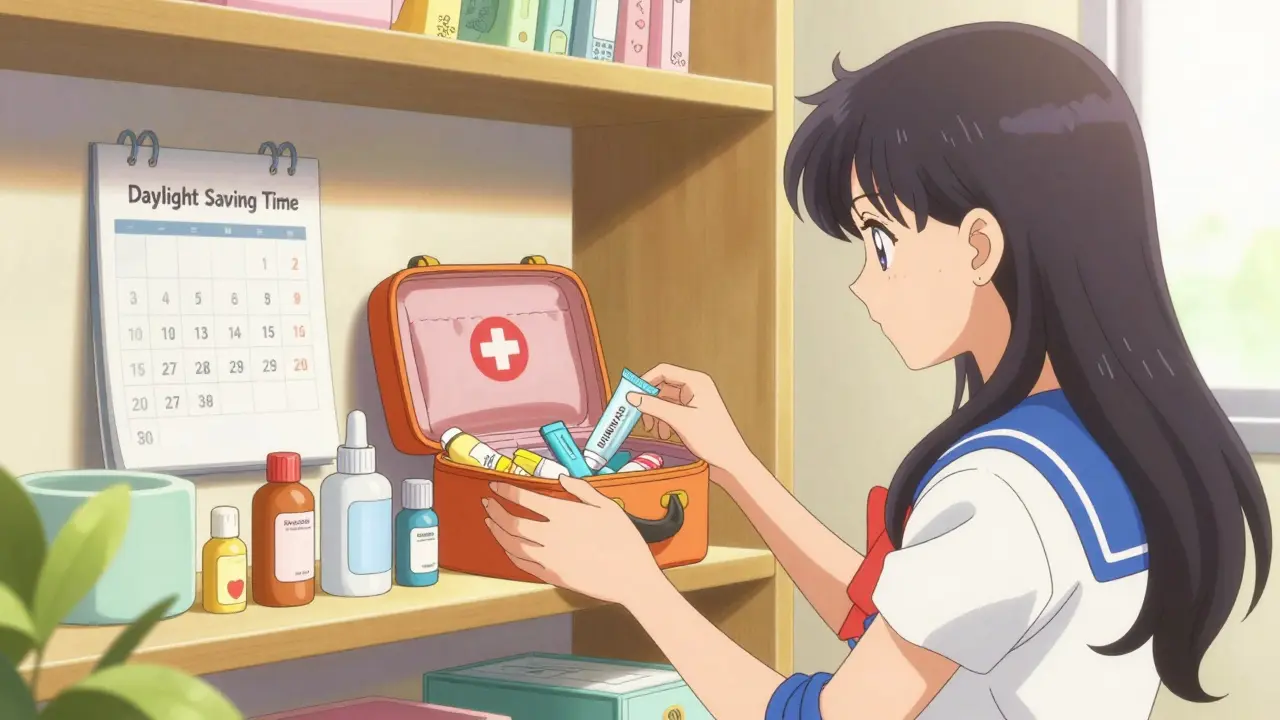
Building and Maintaining Your Kit
Having the right meds is useless if they are expired or stored poorly. A 2022 community survey by Mary Washington Healthcare found that 73% of household first aid kits contained at least one expired item. Here is how to stay ahead.
Check Twice a Year: Tie your kit check to daylight saving time changes. When you change your clocks, check your meds. Throw out anything past its date. Liquid medications lose potency faster-up to 20-30% annually. Solid tablets last longer, sometimes 2-3 years beyond expiration, but don’t rely on this.
Temperature Control: Heat destroys medicine. Exposure to temperatures above 86°F (30°C) for more than two weeks can degrade acetaminophen by 35%. Don’t store your kit in a hot car glovebox or near a furnace. A cool, dry closet shelf is ideal.
Read the Drug Facts Label: Since 1999, the FDA has required standardized labeling. In August 2022, these labels were updated for better readability. Always read the "Active Ingredients" and "Warnings" sections. Dr. Sarah Johnson from Cleveland Clinic notes that 68% of OTC errors come from dosage miscalculations. Use the calibrated spoon provided, not a kitchen teaspoon.
Know When to Stop: OTC meds are for minor ailments. If you need painkillers regularly for more than a few days, see a doctor. As Dr. Michael Chen states, "If you feel you need to take them regularly, you should see a healthcare provider." Masking chronic pain can hide serious underlying issues.
Frequently Asked Questions
Can I put hydrogen peroxide directly on an open wound?
No. Hydrogen peroxide kills healthy cells along with bacteria, which delays healing. Use it only to rinse very dirty wounds initially, then wash thoroughly with water. Better options for open wounds include saline solution or povidone-iodine.
How long do antibiotic ointments last after opening?
They lose about 15% of their potency each year after opening. Experts recommend replacing antibiotic ointments every 12 months, even if they look fine, to ensure maximum effectiveness.
What is the difference between acetaminophen and ibuprofen?
Acetaminophen treats pain and fever but does not reduce inflammation. Ibuprofen is an NSAID that treats pain, fever, and inflammation. Choose ibuprofen for sprains or swelling, and acetaminophen for headaches or if you have stomach sensitivity.
Why should I keep aspirin in my first aid kit?
Chewable aspirin can be a life-saving intervention during a suspected heart attack. Chewing 325mg within 30 minutes of symptoms can reduce mortality by 30%. It is also useful for general pain relief, but never give it to children.
Is neomycin in antibiotic ointments dangerous?
Neomycin is effective but causes allergic reactions in about 5.2% of people. Symptoms include itching and redness. If you experience these, switch to a bacitracin-only ointment, which lacks neomycin.
Where is the best place to store my first aid kit?
Store it in a cool, dry place away from direct sunlight. Avoid hot cars or humid bathrooms. Temperatures above 86°F (30°C) can degrade medications like acetaminophen significantly.
When should I see a doctor instead of using OTC meds?
See a doctor if pain persists for more than a few days, if a wound shows signs of infection (pus, increasing redness, warmth), or if you need to take pain medication regularly. OTC meds are for minor, temporary issues only.