
Patent Law and Generics: How Patents Protect Innovation in Pharma
 Jul, 30 2026
Imagine spending billions of dollars and over a decade developing a life-saving drug, only to have competitors copy it the day you launch. That was the reality before the mid-1980s. Today, that scenario is rare because of a specific legal framework designed to balance two competing needs: rewarding pharmaceutical innovation and ensuring patients can access affordable medicines. This balance is struck through the complex interplay between patent law and generic drug approval.
The system isn't perfect, and it’s often criticized by both sides. Drugmakers argue they need strong protections to recoup costs, while patient advocates say patents keep prices too high for too long. To understand how this works, we need to look at the legislation that created the modern landscape, the mechanisms that protect brand-name drugs, and the pathways that allow generics to enter the market.
The Foundation: The Hatch-Waxman Act
The current structure of the U.S. pharmaceutical industry rests on the Drug Price Competition and Patent Term Restoration Act of 1984, commonly known as the Hatch-Waxman Act. This landmark legislation was introduced by Senators Orrin Hatch (R-UT) and Henry Waxman (D-CA) to resolve a standoff between brand-name manufacturers and generic producers.
Before 1984, the system was broken. Brand companies could block generic development until their patents expired, but once they did, generics flooded the market immediately, leaving innovators with little time to recover their investment. Conversely, generics had no clear legal path to prove their drugs were equivalent without waiting years for FDA approval after the patent expired. Hatch-Waxman fixed this by creating a dual system:
- Patent Term Restoration: It allows brand companies to extend their patent life by up to five years to compensate for the time spent getting FDA approval during the patent term.
- Abbreviated New Drug Applications (ANDA): It allows generic manufacturers to seek approval before the brand patent expires, provided they prove their drug is bioequivalent to the original.
This act fundamentally changed the game. It gave innovators a guaranteed period of exclusivity-typically 12 to 14 years of effective market protection despite the 20-year patent clock starting at filing. In exchange, it created a streamlined process for generics to enter the market once that exclusivity ended.
How Patents Protect Innovation
Why do pharma companies need such strong protection? The numbers are staggering. According to a 2016 analysis by the Tufts Center for the Study of Drug Development, it costs an average of $2.6 billion to bring a new drug to market. This includes years of research, clinical trials, and regulatory hurdles. For every successful drug, dozens fail.
Without patent protection, a competitor could simply analyze the chemical structure of a successful drug and sell it at a fraction of the cost, undercutting the innovator before they’ve earned back their R&D spend. Patents grant a temporary monopoly, allowing the originator company to charge premium prices. This revenue fuels further research.
However, this monopoly comes with strict rules. The patent must be novel, non-obvious, and useful. Once granted, the details of the invention become public knowledge. This transparency ensures that when the patent eventually expires, other scientists can build upon that knowledge rather than reinventing the wheel.
The Role of the Orange Book
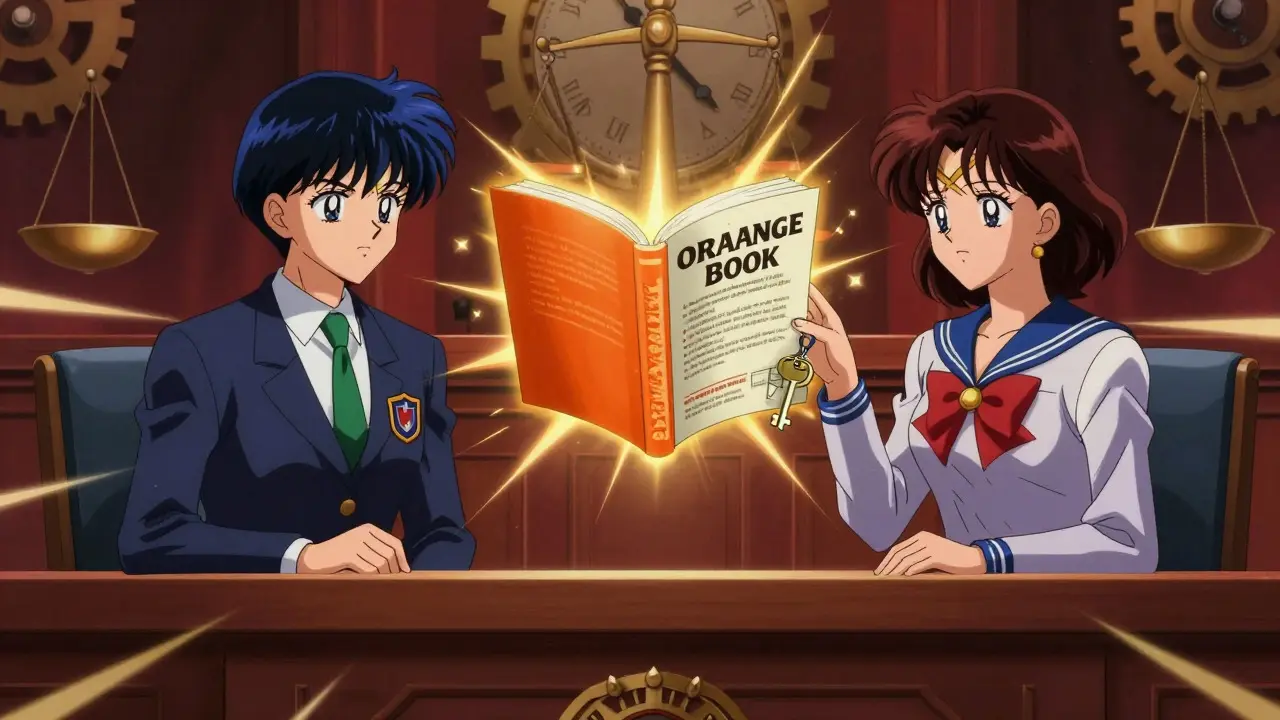
A critical component of this system is the FDA Orange Book, officially titled "Approved Drug Products with Therapeutic Equivalence Evaluations." This database lists all approved drug products along with their patent information and exclusivity data.
For generic manufacturers, the Orange Book is a roadmap. Before investing millions in development, they check if any active patents cover the drug. If there are no listed patents, they can file for approval immediately. If patents are listed, they face a choice: wait for expiration or challenge the patent.
This creates a proactive pre-market framework. Instead of waiting for a lawsuit after launching a generic product, companies resolve disputes before the FDA grants approval. This protects consumers from potential supply disruptions and gives brand companies a chance to defend their intellectual property early.
Challenging Patents: Paragraph IV Certification
Not all patents are unbreakable. Generic companies often use a strategy called Paragraph IV certification. Under this process, a generic applicant certifies that one of the patents listed in the Orange Book is invalid, unenforceable, or will not be infringed by their generic version.
This certification triggers a specific timeline:
- The brand company has 45 days to sue for patent infringement.
- If they sue, the FDA automatically stays the approval of the generic drug for 30 months.
- During this stay, the courts decide the validity of the patent.
- If the generic wins, or if the brand doesn’t sue, the FDA can approve the generic immediately.
To incentivize these risky challenges, Hatch-Waxman offers the first successful generic challenger 180 days of market exclusivity. During this window, no other generic can enter the market. Given that state laws often require pharmacists to substitute generics automatically, this exclusivity period can be incredibly lucrative, sometimes worth hundreds of millions of dollars.
The Impact of Generic Entry
When a patent expires and generics enter the market, the economic impact is dramatic. Studies show that originator drugs typically lose 80% of their market share within the first year of generic competition. Prices drop by 20-30% initially, and with each additional generic entrant, prices fall further-sometimes by up to 90%.
Consider the case of Prozac. When Eli Lilly’s patent expired in 2001, the company lost 70% of its market share and approximately $2.4 billion in annual U.S. sales. While painful for the innovator, this shift saved the healthcare system billions. Today, generic drugs account for 91% of all prescriptions in the U.S., yet they represent only 24% of total drug spending. According to 2022 FDA data, generics save patients and payers about $373 billion annually.
Criticisms and Challenges
Despite its successes, the system faces significant criticism. One major issue is "evergreening," where brand companies obtain secondary patents on minor changes like dosing regimens, formulations, or delivery methods. These secondary patents can extend market exclusivity well beyond the primary compound patent.
Another concern is "pay-for-delay" settlements, where brand companies pay generic manufacturers to delay market entry. The Federal Trade Commission estimates these deals cost consumers $3.5 billion annually. Recent legislation, such as the CREATES Act of 2022, aims to curb some of these anti-competitive practices by addressing issues around sample access and product hopping.
Additionally, the rise of biologics has complicated the landscape. The Biologics Price Competition and Innovation Act attempted to create a similar pathway for biosimilars, but court decisions like Amgen v. Sandoz have created uncertainty. Unlike small-molecule drugs, biologics are complex proteins produced in living cells, making them harder to replicate and challenging to regulate under traditional generic frameworks.
| Feature | Brand-Name Drugs | Generic Drugs |
|---|---|---|
| Development Cost | $2.6 billion average | Fraction of brand cost |
| Time to Market | 10-15 years | 1-3 years (after patent expiry) |
| Pricing Power | High (monopoly pricing) | Low (competitive pricing) |
| Regulatory Pathway | New Drug Application (NDA) | Abbreviated New Drug Application (ANDA) |
| Market Share Post-Patent | Typically drops to ~20% | Rises to ~80%+ |
The Future of Pharmaceutical Patents
As drug development becomes more expensive and complex, the pressure on the patent system intensifies. Prescription drug spending reached $621 billion in 2022, accounting for 22% of total U.S. healthcare expenditure. Policymakers are increasingly focused on curbing excessive pricing while maintaining incentives for innovation.
Proposals like the Preserve Access to Affordable Generics and Biosimilars Act aim to reduce litigation delays and prevent anti-competitive behavior. Meanwhile, the use of Inter Partes Review (IPR) proceedings at the Patent Trial and Appeal Board has become a common tool for generics to challenge weak patents quickly and cheaply.
Ultimately, the goal remains the same: finding the right balance. We need enough protection to encourage the discovery of cures for diseases like cancer and Alzheimer’s, but enough competition to ensure those treatments are accessible to everyone. The Hatch-Waxman framework, despite its flaws, provides the essential scaffolding for this delicate equilibrium.
What is the Hatch-Waxman Act?
The Hatch-Waxman Act is the 1984 legislation that established the current framework for pharmaceutical patents and generic drug approval in the U.S. It balances the need for innovation incentives with public access to affordable medicines by allowing patent term restoration for brand drugs and creating a streamlined approval process for generics.
How long does patent protection last for a drug?
A standard patent lasts 20 years from the filing date. However, due to the lengthy FDA approval process, the effective market exclusivity is typically 12-14 years. The Hatch-Waxman Act allows for patent term restoration of up to 5 years to compensate for time lost during regulatory review.
What is Paragraph IV certification?
Paragraph IV certification is a legal mechanism used by generic manufacturers to challenge the validity or enforceability of a brand-name drug's patent listed in the Orange Book. If successful, it allows the generic to enter the market before the patent expires, triggering a 30-month stay on FDA approval while the dispute is litigated.
Why are generic drugs cheaper?
Generic drugs are cheaper because manufacturers don't bear the full cost of initial research, development, and clinical trials. They only need to prove bioequivalence to the brand-name drug. Additionally, competition among multiple generic manufacturers drives prices down significantly, often by 80-85% compared to the branded version.
What is the Orange Book?
The Orange Book is an FDA publication that lists all approved drug products along with their patent information and exclusivity data. It serves as a key resource for generic manufacturers to determine whether a drug is protected by active patents and if they can file for approval immediately or need to challenge existing patents.
What is evergreening in pharmaceutical patents?
Evergreening refers to the practice where brand-name companies obtain secondary patents on minor modifications of a drug, such as new formulations, dosing schedules, or delivery methods. This strategy aims to extend market exclusivity beyond the expiration of the primary compound patent, potentially delaying generic competition.