
Pharmacy Inventory Management: Effective Generic Stocking Strategies for 2026
 Jan, 19 2026
Most pharmacies spend 80% of their drug budget on just 20% of their inventory. That’s not a coincidence-it’s the 80/20 rule in action. And in today’s market, that 20% is mostly generic medications. If you’re still stocking generics the same way you did five years ago, you’re leaving money on the table-and risking stockouts that drive patients away.
Generic drugs make up 90% of all prescriptions filled in the U.S., but only 20% of total drug spending. That’s the sweet spot: high volume, low cost. But here’s the catch-generics move fast. New ones hit the market every week. Old ones get discontinued. Prices swing. And if your inventory system doesn’t keep up, you’ll end up with expired stock or empty shelves.
Why Generic Stocking Isn’t Just About Saving Money
It’s not just about buying cheaper pills. It’s about cash flow. For independent pharmacies, inventory often represents 60-70% of total assets. Every dollar tied up in slow-moving generics is a dollar you can’t use for rent, staff, or new tech. The goal isn’t to stock more generics-it’s to stock the right generics, in the right amounts, at the right time.
Pharmacies using data-driven generic stocking strategies see 10-15% lower holding costs and 15% fewer stockouts. That’s not theory-it’s real numbers from pharmacies in Wisconsin, Texas, and New Zealand. One owner in Auckland cut his generic inventory costs by 18% after syncing automatic refills with patient refill patterns. He didn’t buy less-he bought smarter.
The Core Tools: Reorder Points and Economic Order Quantity
You can’t guess your way to optimal stock. You need math. Two formulas drive everything:
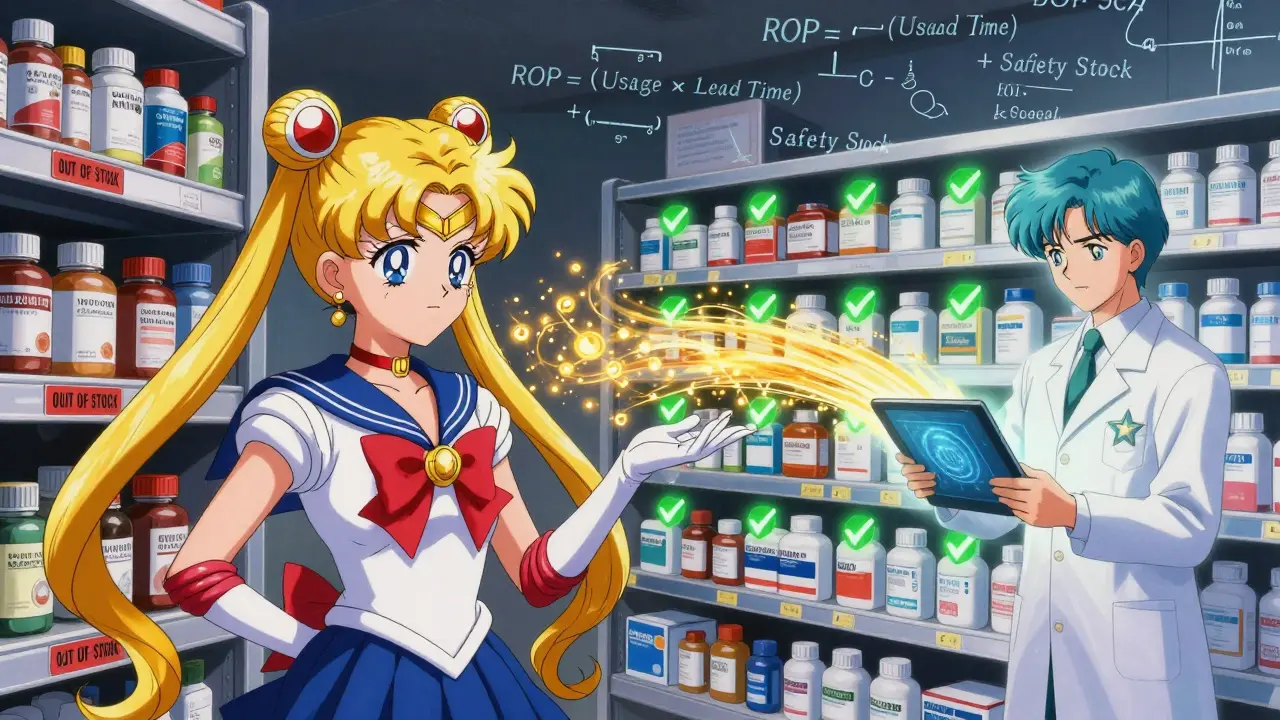
- Reorder Point (ROP): (Average Daily Usage × Lead Time in Days) + Safety Stock
- Economic Order Quantity (EOQ): The ideal order size that minimizes total inventory costs
Take metformin, for example. If your pharmacy dispenses 12 bottles a week, that’s about 1.7 bottles per day. If your supplier takes 5 days to deliver, and you want a 3-day safety buffer, your ROP is: (1.7 × 5) + 3 = 11.5 bottles. Round up to 12. When you hit 12, you order.
EOQ is trickier. It balances ordering cost (time, labor, shipping) against holding cost (storage, expiry, capital). For fast-moving generics like lisinopril or atorvastatin, you might order weekly. For slower ones like certain thyroid meds, monthly works. Most pharmacy software lets you set these per SKU. Don’t use the same settings for everything.
The Minimum-Maximum Method: Simple, But Powerful
If you’re not using minimum-maximum limits for generics, you’re flying blind. Set a minimum stock level-what you need to get through the next delivery-and a maximum-what you can safely store without risking expiry.
For high-turnover generics like ibuprofen or omeprazole, keep 7-10 days’ supply on hand. That’s enough to cover weekend spikes, supply delays, or sudden demand from flu season. Don’t stock a month’s worth. Generic manufacturers cut prices to win market share, and shelf life is often shorter than brand-name drugs. Expired stock is pure loss.
For low-turnover generics-like rare thyroid formulations or specialty injectables-set a minimum of one unit and a maximum of three. Order only when you hit the minimum. That’s called just-in-time for generics. It keeps capital free and waste low.
Handling New Generic Launches: The Real Challenge
When a new generic hits-say, a generic version of a $300 brand-name cholesterol drug-the old brand’s sales drop fast. But not all at once. Some patients stick with the brand. Some insurers won’t switch until the formulary updates. Some prescribers need convincing.
Here’s what happens if you don’t adjust: You keep ordering the brand. You get stuck with $5,000 in obsolete inventory. That’s not hypothetical. One pharmacy in Ohio lost $3,200 on brand-name atorvastatin because their system didn’t auto-reduce orders when the generic launched.
Best practice? As soon as a new generic is approved, your inventory system should:
- Reduce the reorder quantity for the brand-name version by 50%
- Set a new minimum of 5 units for the generic
- Trigger a weekly review for the first month
Use your pharmacy software’s therapeutic interchange flag. If a patient comes in for the brand, the system should suggest the generic-and your pharmacist should be trained to explain why it’s safe and cheaper. Studies show that when pharmacists actively recommend generics, switch rates jump by 30-40%.
Software Matters: What to Look For
Not all inventory systems are built for generics. Many still treat them like brand-name drugs-with fixed reorder cycles and no dynamic adjustments.
Look for software that:
- Tracks cost of goods sold (COGS) per generic SKU
- Automatically adjusts reorder points based on 90-day sales trends
- Flags generics nearing expiry (within 60 days)
- Has a dedicated module for new generic transitions
- Integrates with supplier data for real-time pricing updates
Pharmacies using systems with these features report 22% higher satisfaction and 12-18% higher inventory turnover. Systems without them? They’re stuck in 2018.
Staff Training and SOPs: The Hidden Key
Even the best software fails if your staff doesn’t use it right.
Every pharmacy needs clear, written procedures for:
- Receiving generic shipments-check lot numbers and expiry dates
- Returning expired stock to suppliers-many will take back unopened generics within 30 days
- Reconciling inventory after refills-don’t wait until month-end
- Handling unclaimed prescriptions-return them to stock within 24 hours
One pharmacy in Wellington cut inventory discrepancies by 22% just by returning unclaimed generics to stock. That’s $1,500 a year saved on phantom inventory.
Training takes 2-4 weeks. Don’t skip it. Run weekly cycle counts during the first month. Have staff log every stockout and every overstock. You’ll learn fast what’s working and what’s not.

Common Mistakes (And How to Avoid Them)
Here’s what goes wrong-and how to fix it:
- Mistake: Stocking too much of a new generic too soon. Fix: Start with 3-5 units. Scale up after 30 days of sales data.
- Mistake: Ignoring expiry dates on generics. Fix: Set alerts for anything expiring in 60 days. Offer discounts to move it.
- Mistake: Not tracking supplier performance. Fix: Log lead times and fill rates for each generic supplier. Switch if one is consistently late.
- Mistake: Letting prescribers override generic substitution without reason. Fix: Use collaborative practice agreements (CPAs). In 17 U.S. states and parts of New Zealand, pharmacists can legally switch to generics under approved protocols.
One pharmacy in Christchurch had 8 stockouts of metformin in 3 months. Why? They kept a 14-day supply. Patients expected it to be there every time. They switched to a 7-day minimum and added a second supplier. Stockouts dropped to zero.
What’s Next? AI and the Future of Generic Stocking
By 2026, the top pharmacies won’t be the ones with the biggest shelves. They’ll be the ones with the smartest systems.
AI-powered tools now predict generic demand shifts based on FDA approvals, insurance formulary changes, and even social media trends. One system, tested in late 2023, reduced brand-to-generic inventory imbalances by 28% by adjusting orders within 24 hours of a new generic approval.
Blockchain is coming too-tracking the origin and shelf life of every generic pill. Pilot programs are already underway. But you don’t need AI to win. You just need to:
- Use your current software to its full potential
- Adjust for real demand, not historical averages
- Train your team to treat generics like high-volume, low-margin products-not afterthoughts
Pharmacies doing this right will see 15-20% higher profit margins by 2027. The ones clinging to old methods? They’ll keep losing money to expired stock, stockouts, and inefficient ordering.
Start Small. Win Big.
You don’t need to overhaul everything tomorrow. Pick one high-turnover generic-maybe ibuprofen or levothyroxine. Set a minimum and maximum. Track sales for 30 days. Adjust your reorder point. See what happens.
Then do it again. With another drug. And another.
Generic inventory management isn’t about perfection. It’s about consistency. Small, smart changes add up. And in a business where margins are thin, that’s everything.
How often should I adjust my generic inventory levels?
Review your generic stock levels weekly for the first 30 days after a new generic launches or after a major price change. After that, monthly reviews are usually enough-unless you notice sudden spikes or drops in sales. Use your software’s trend reports to spot changes early. Don’t wait for stockouts to tell you something’s wrong.
Can I stock too many generics?
Yes-and it’s more common than you think. Generics have shorter shelf lives because manufacturers cut costs to compete on price. Overstocking means expired pills. That’s not just wasted money-it’s a regulatory risk. Stick to 7-10 days’ supply for fast-movers. For slow-movers, keep only what you’ll use in the next 3 months. Use expiry alerts and return policies to minimize loss.
What’s the best way to handle generic transitions?
When a new generic enters the market, immediately reduce orders for the brand-name version by 50%. Set a minimum stock level of 5 units for the generic. Monitor sales daily for the first two weeks. If demand exceeds expectations, increase your reorder quantity by 20%. If it’s slow, hold off. Don’t assume all patients will switch-some won’t. But most will, if you make it easy.
Do I need special software for generic inventory?
You don’t need special software, but you’ll struggle without it. Standard inventory systems treat all drugs the same. Generic drugs need dynamic settings-different reorder points, expiry alerts, and transition flags. Look for software that lets you set per-SKU rules, tracks COGS, and has a dedicated generic transition module. The ROI is clear: pharmacies using these tools save 10-15% on inventory costs.
How do I train my staff on generic inventory?
Start with a 1-hour training session on the new SOPs: receiving, expiry tracking, returns, and cycle counting. Then, run weekly 15-minute check-ins for the first month. Have staff log every stockout and every overstock. Use real examples-like the metformin case-to show why it matters. Make it part of their daily routine, not a one-time task. The goal is to build habits, not just knowledge.
What’s the biggest risk in generic inventory management?
The biggest risk is assuming historical data will predict future demand. Generics are volatile. A new competitor can drop the price overnight. A formulary change can kill demand. An algorithm that doesn’t adapt will keep ordering the wrong amounts. Always leave room for human judgment. If a new generic is gaining traction, trust the data-but don’t ignore the pharmacist’s experience.
Next steps: Pick one generic. Set your min and max. Track it for 30 days. Adjust. Repeat. That’s how you build a system that works-without overhauling your entire operation.
shubham rathee
January 19, 2026 AT 21:27bro the whole system is rigged anyway who even trusts generic meds anymore i mean sure they work but what if the factory in bangalore uses expired chemicals and the FDA just looks the other way for kickbacks
Steve Hesketh
January 20, 2026 AT 07:20Man this hit different. I run a little shop in Lagos and we used to drown in expired paracetamol until we started doing min-max like you said. Now we’re turning over stock every 10 days and patients actually trust us more. It’s not magic-it’s just paying attention. Keep sharing this stuff.
Sangeeta Isaac
January 21, 2026 AT 08:36so like… i read this whole thing and honestly i’m just impressed that someone actually cares about the math behind pills. like most people think pharmacy = cash register + yelling at old people. but you? you’re out here doing EOQ like it’s a yoga practice. respect.
Dee Monroe
January 21, 2026 AT 15:25It’s fascinating how the 80/20 rule manifests so clearly in pharmaceutical inventory-not just as a business heuristic, but as a reflection of human behavior. Patients don’t choose generics because they’re cheaper; they choose them because they’re reliable, accessible, and quietly trusted. The real innovation isn’t in the software-it’s in recognizing that behind every pill is a person who needs consistency, not novelty.
Philip Williams
January 21, 2026 AT 22:58Excellent breakdown. The emphasis on staff training is critical. I’ve seen pharmacies invest $50k in software then have the techs ignore the alerts because no one ever explained why it mattered. A 15-minute daily huddle with the team can do more than any algorithm.
Rod Wheatley
January 23, 2026 AT 00:32YES. YES. YES. I’ve been screaming this from the rooftops for years! The moment you treat generics like disposable commodities, you’re setting yourself up for disaster. One of my clients had a $12k stockpile of expired levothyroxine because they didn’t track expiry dates. Now? Weekly cycle counts, expiry alerts, and a ‘return first’ policy with their distributor. Saved $8k last year alone. Don’t sleep on the little things!
Roisin Kelly
January 24, 2026 AT 03:56you think this is about inventory? nah. this is just the pharmaceutical industry’s way of making you dependent on their system. next thing you know they’ll be tracking your refill patterns to sell your data to insurers. wake up.
Jerry Rodrigues
January 24, 2026 AT 12:01Simple stuff really. Min-max. Weekly check. Train your team. Don’t overcomplicate it. I’ve seen pharmacies with 10 different software modules and still have expired stock. The answer’s not more tech-it’s more discipline.
Amber Lane
January 25, 2026 AT 05:44My grandma takes metformin. She doesn’t care about EOQ. She just wants it to be there when she walks in. This post? It’s for the people making sure it is.
lokesh prasanth
January 26, 2026 AT 08:51you forgot to mention that 40% of generics are made in china and half of them fail purity tests
Malvina Tomja
January 26, 2026 AT 23:28Typical corporate fluff. You talk about ‘data-driven’ like it’s gospel. But who codes the algorithm? A 22-year-old intern who’s never stocked a pill? This system fails when the market shifts-because it’s not adaptive, it’s just automated. Real pharmacy is human. Always has been.
Samuel Mendoza
January 28, 2026 AT 00:23Actually, the 80/20 rule is a myth. It’s more like 90/10. And you’re ignoring regional differences. In rural Iowa, metformin moves like candy. In Manhattan, it’s a backwater drug. One-size-fits-all BS.
MAHENDRA MEGHWAL
January 29, 2026 AT 13:06While the methodology presented is commendable, one must not overlook the ethical dimension of inventory management in healthcare. The pursuit of cost-efficiency must never supersede patient safety. The introduction of automated systems, while beneficial, must be accompanied by rigorous oversight and human accountability to ensure that profit-driven logic does not inadvertently compromise therapeutic integrity.
Kevin Narvaes
January 31, 2026 AT 04:13so like… i think this whole thing is just a ploy to make us buy more software. who even uses eoq anymore? i just eyeball it and if it runs out i yell at the supplier. also generic drugs are basically placebo with a cheaper label am i right?
Alex Carletti Gouvea
February 1, 2026 AT 02:31Why are we letting foreign suppliers dictate our medicine supply? If we had more domestic generic manufacturing, we wouldn’t be dealing with these delays and expiry nightmares. This isn’t inventory management-it’s national security.