
Specialty Pharmacy: How Providers Dispense Generic Specialty Drugs
 Dec, 27 2025
When a patient gets a generic version of a specialty drug, many assume it’s just like picking up a regular pill at the corner pharmacy. But that’s not how it works. Even when the drug is no longer branded - even when it costs a fraction of the original - it still goes through a specialty pharmacy. Why? Because it’s not about the price. It’s about the process.
What Makes a Drug ‘Specialty’?
A specialty drug isn’t defined by cost alone. It’s defined by complexity. These are medications that need special handling: refrigeration, precise dosing, infusion, or injections. They often treat chronic, life-altering conditions like rheumatoid arthritis, multiple sclerosis, cancer, or hepatitis C. Some are biologics - large, protein-based molecules made in living cells. Others are small-molecule drugs with narrow therapeutic windows, meaning even small dosing errors can cause serious harm. The FDA doesn’t have a strict definition, but industry standards agree: if a drug requires special storage, administration, monitoring, or patient education, it’s specialty. And here’s the catch - even when a generic version is approved, the manufacturer can still require it to be dispensed only through specialty pharmacies. This isn’t a loophole. It’s a distribution mandate.Why Can’t Retail Pharmacies Fill These Prescriptions?
You might wonder: if it’s a generic, why not just fill it at CVS or Walgreens? The answer lies in control. Manufacturers of specialty drugs - even generics - often enter into exclusive distribution agreements. These agreements ensure the drug is handled correctly from the moment it leaves the warehouse to the moment it reaches the patient. Retail pharmacies don’t have the infrastructure for this. Specialty pharmacies are built for complexity. They have refrigerated storage units that maintain 2-8°C. They use secure electronic systems to track prescriptions through prior authorization, insurance verification, and REMS (Risk Evaluation and Mitigation Strategies) programs. They have clinical teams - pharmacists, nurses, care coordinators - who call patients to explain how to inject themselves, check lab results, and monitor side effects. A 2023 study from the American Society of Health-System Pharmacists found that specialty pharmacies handle 12-15 data points per patient. Retail pharmacies? Five to seven. That’s not just paperwork. It’s care.The Brand vs. Generic Myth
Many assume generics are simpler. But in specialty pharmacy, that’s not true. Take biosimilars - the closest thing we have to generics for biologic drugs. A biosimilar to Humira, for example, might cost 30% less. But it still needs the same cold chain, same patient training, same follow-up calls, same insurance battles. Industry analyst John Prince put it simply: “The distinction between brand and generic becomes almost irrelevant in specialty pharmacy because the service model - not the product cost - determines the distribution channel.” Even when a small-molecule drug like methotrexate becomes generic, if the manufacturer requires specialty distribution (which many do), the patient still can’t get it at their local pharmacy. The rules don’t change just because the price does.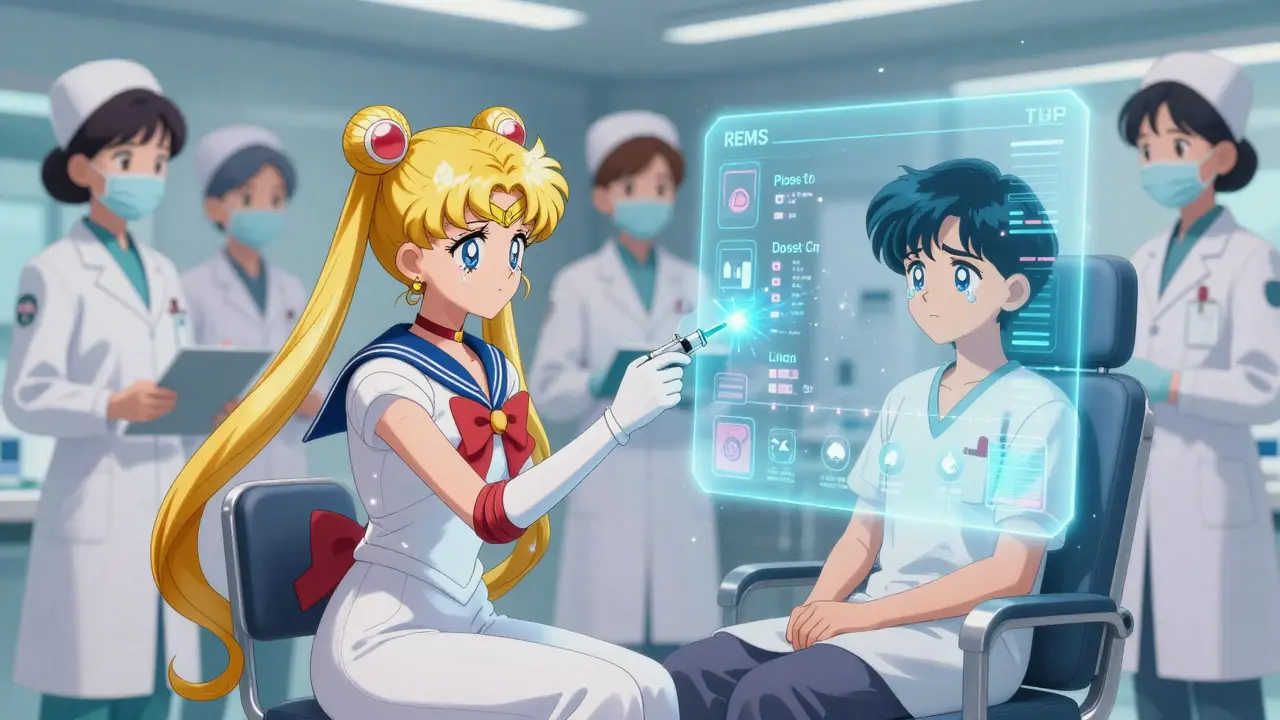
How Providers Use Specialty Pharmacies
Providers - doctors, nurse practitioners, oncologists - play a key role in this system. They don’t just write a prescription. They choose the right pharmacy for the patient’s needs. They understand that switching a patient from a branded drug to a generic version doesn’t mean switching pharmacies. In fact, continuity matters more than ever. A 2024 MyHealthTeams survey found that 68% of patients preferred staying with the same specialty pharmacy when transitioning to a generic. Why? Because the nurse who taught them how to inject their medication knows their history. The pharmacist who followed up after their last lab result remembers their anxiety about side effects. That relationship doesn’t reset just because the drug label changed. Providers also help manage expectations. When a patient sees their copay jump from $15 to $75 after switching to a generic through a specialty pharmacy, they’re confused. Providers have to explain: “This isn’t about the drug. It’s about the support you’re getting.”The Workflow: From Prescription to Delivery
The process isn’t quick. On average, it takes 7.2 days for a specialty drug - brand or generic - to go from prescription to delivery. Oncology drugs take longer: 8.7 days. Hepatitis C meds? 9.1 days. Compare that to retail pharmacies, where a prescription is filled in 1.2 days on average. Here’s how it works:- Prescription intake - The pharmacy receives the e-prescription, often with complex dosing instructions.
- Prior authorization - The pharmacy contacts the insurer to prove medical necessity. This step alone can take 3-5 days.
- Financial assistance - Many patients need help paying. Specialty pharmacies connect them with copay assistance programs or manufacturer grants.
- Clinical review - A pharmacist checks for drug interactions, allergies, and lab requirements.
- Patient education - A nurse calls to walk the patient through administration, storage, and side effects.
- Dispensing and shipping - The drug is packed in temperature-controlled packaging and shipped overnight.
- Follow-up - Within 48 hours, the patient is called again to check on tolerance and adherence.

Challenges and Patient Frustrations
It’s not perfect. Patients report long delays, confusing billing, and inconsistent communication. One Reddit user wrote: “I switched from brand to generic Xeljanz. Copay went from $20 to $75. Delivery took two weeks. No one explained why.” Trustpilot reviews show specialty pharmacies average 3.8 out of 5 stars. Clinical support scores 4.2. Delivery speed? 3.1. That gap tells the story. Another issue: some insurers force patients to use specific specialty pharmacies, even if the provider prefers another. This can break continuity of care. Providers are pushing back, advocating for patient choice and transparency in network contracts.The Future: Biosimilars and Consolidation
The biggest shift coming? Biosimilars. By 2028, they’re expected to make up a growing share of specialty pharmacy volume. CMS rules in 2024 now require Medicare Part D to cover all FDA-approved biosimilars. That means more patients will transition to lower-cost versions - but still through specialty channels. Specialty pharmacies are preparing. They’re upgrading their software to handle 40% more biosimilar prescriptions by 2026. They’re training more pharmacists in immunology and oncology. They’re integrating with electronic health records so providers get real-time updates on patient adherence. Meanwhile, health systems are trying to bring specialty pharmacy services in-house. Sixty-three percent of hospitals plan to expand their own dispensing operations by 2025. That could challenge the traditional model - but only if they can replicate the patient support infrastructure. Most can’t.What Providers Need to Know
If you’re a provider, here’s what matters:- Don’t assume generics mean simpler care. The complexity stays.
- Choose a specialty pharmacy based on patient outcomes, not just cost or convenience.
- Explain to patients why they’re still using a specialty pharmacy - even with a generic.
- Advocate for transparency in insurance networks. Patients deserve choice.
- Use real-time prescription benefit tools. They cut prior auth time by over 3 days.
Can a retail pharmacy dispense a generic specialty drug?
No, not if the manufacturer has mandated specialty distribution. Even if a drug is generic, if it requires special handling, storage, or patient monitoring, federal rules and manufacturer agreements require it to be dispensed only through a specialty pharmacy. Retail pharmacies lack the infrastructure and clinical support systems needed.
Why does my copay go up when I switch to a generic specialty drug?
Because the cost isn’t just for the drug - it’s for the entire service package. Specialty pharmacies charge a dispensing fee ($250-$500) plus a markup, and insurance often applies different copay structures for specialty drugs than for retail generics. Even a $1,000 generic drug might have a $75 copay because the pharmacy is providing nursing support, temperature-controlled shipping, and ongoing monitoring.
Are biosimilars the same as generics?
Not exactly. Biosimilars are highly similar to biologic drugs but not identical, because biologics are made from living cells. Unlike traditional generics, which are exact chemical copies, biosimilars require complex manufacturing and testing. They still need the same specialty pharmacy handling - refrigeration, patient training, REMS compliance - as their brand-name counterparts.
Do I have to use the same specialty pharmacy when switching from brand to generic?
Not legally, but it’s strongly recommended. A 2024 survey found 68% of patients preferred staying with the same pharmacy because they had built trust with the care team. Switching pharmacies means repeating patient education, losing access to your medical history, and potentially delaying care. Providers often recommend continuity to avoid disruptions.
Why does it take so long to get a specialty drug?
The delay comes from prior authorization, insurance negotiations, financial assistance applications, and clinical reviews - not the drug itself. On average, it takes 7.2 days for a specialty drug to be ready for delivery. Oncology and hepatitis C drugs can take over 8 days. Real-time prescription benefit tools have cut this time by 3.2 days on average, but the process remains slower than retail pharmacy.
Teresa Marzo Lostalé
December 29, 2025 AT 08:22ANA MARIE VALENZUELA
December 30, 2025 AT 17:24Sydney Lee
January 1, 2026 AT 11:50Vu L
January 1, 2026 AT 16:17Celia McTighe
January 2, 2026 AT 06:36oluwarotimi w alaka
January 3, 2026 AT 07:37Bradly Draper
January 4, 2026 AT 08:26Samantha Hobbs
January 6, 2026 AT 04:26Hakim Bachiri
January 7, 2026 AT 19:01Gran Badshah
January 9, 2026 AT 01:35Ryan Touhill
January 9, 2026 AT 23:26Ellen-Cathryn Nash
January 11, 2026 AT 07:23Nicole Beasley
January 12, 2026 AT 08:16