
Understanding Pharmacy Warning Icons on Medication Labels
 Dec, 15 2025
Look at your prescription bottle. There’s a small yellow sticker stuck to it. Maybe it says "This medicine may make you sleepy". Or a red symbol with a coffee cup crossed out. You might glance at it, shrug, and toss the bottle in the medicine cabinet. But what if that little sticker could save your life?
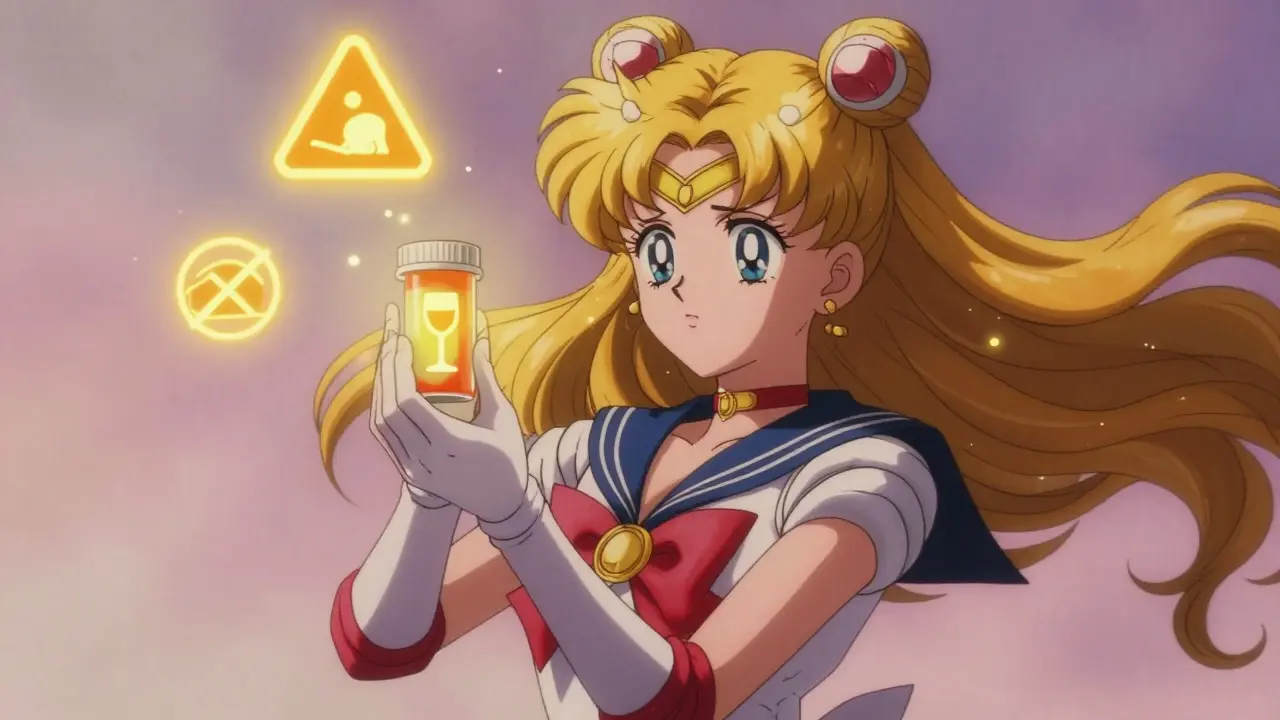
Pharmacy warning icons aren’t just decorations. They’re visual alarms. Designed to cut through language barriers, low health literacy, and busy minds, these symbols tell you what to avoid, when to take your medicine, and what could go wrong. In New Zealand, they’re called Cautionary and Advisory Labels (CALs) - small, bright yellow stickers pharmacists add by hand. In the U.S., you’ll see them too, but the system is messy. Some pharmacies use 14 different icons. Others use 23. And that’s the problem.
What Do the Colors Mean?
Color is your first clue. Yellow usually means caution. In New Zealand, that’s the standard color for all advisory labels. In the U.S., yellow often means beta blockers - but patients don’t know that. Most people assume yellow means "be careful," red means "danger," and blue or green means "this is fine." That’s not how the system was meant to work.
Here’s what real warning icons actually say:
- Yellow triangle with a sleeping person - "This medicine may make you drowsy. Don’t drive or use machinery."
- Red circle with a wine glass crossed out - "Avoid alcohol. This can cause dangerous side effects."
- White square with a food icon - "Take with food."
- Blue diamond with a clock - "Take on an empty stomach."
- Black exclamation mark inside a yellow circle - "May interact with other medications."
But here’s the catch: 49% of patients say these symbols aren’t intuitive. A study from the Journal of Health Communication found that 68% of people with low health literacy thought the "radioactive" symbol meant "this medicine is dangerous," when it actually meant "for external use only." That’s not a mistake - it’s a system failure.
Why Do People Misunderstand Them?
It’s not that people aren’t trying. It’s that the system is overloaded.
One patient in Auckland told her pharmacist she took her eye drops by mouth because the dropper icon looked like a drinking cup. Another thought "take with food" meant "take only when you’re eating," so she skipped doses on days she didn’t eat breakfast. A 2021 Consumer Reports survey found that 52% of Americans misread at least one common warning label.
Text doesn’t help much either. "Do not chew or crush, swallow whole" was misunderstood by 57% of patients in one study. Half of them thought it meant don’t swallow at all. That’s not a patient error. That’s a design flaw.
And it’s not just language. Older adults, non-native speakers, and people with vision problems struggle even more. The FDA requires warnings to be at least 6-point font. But 58% of people over 65 need reading glasses. If the text is too small, the icon becomes useless.
How Do Pharmacists Decide Which Warnings to Use?
It’s not random. Pharmacists are trained to match each prescription with the right warning based on drug type, patient age, other medications, and health conditions. A 78-year-old on blood pressure medicine? They’ll get the "don’t drive" label. Someone taking antibiotics? The "avoid alcohol" sticker goes on.
But here’s the twist: pharmacists often apply too many labels. A 2021 study showed that nearly 40% of prescriptions get 4 or more warning stickers - even when only one or two matter. When there are too many, patients tune out. It’s like yelling in a crowded room. The loudest voice doesn’t get heard.
Big pharmacy chains like CVS and Walgreens are starting to fix this. They now use digital tools that suggest only the top 1-3 most critical warnings per prescription. Independent pharmacies? Many still use paper checklists. That’s why you might see different labels at your local pharmacy versus the big chain down the street.

Why the U.S. System Is Broken - And What’s Changing
The U.S. has no national standard. CVS uses 14 icons. Walgreens uses 17. Independent pharmacies use an average of 23. That means if you move from New York to Florida, your pills might come with completely different symbols.
New Zealand, by contrast, has one national system. Since 2018, every pharmacy uses the same 10 warning labels. Patient comprehension jumped 22% compared to the U.S.
The FDA noticed. In September 2022, they released draft rules to standardize 12 core warning icons across the country by 2026. CVS already cut their labels from 14 to 12 in early 2023. Walgreens is following suit. This isn’t bureaucracy - it’s safety.
Why does this matter? Because medication errors kill 7,000 Americans every year. The FDA tracked over 4,300 errors from label confusion between 2018 and 2022. That’s not a statistic. That’s someone’s parent, sibling, or neighbor.
What’s Next? QR Codes, AR, and AI
Some pharmacies are trying tech fixes. QR codes on labels now link to short videos explaining how to take the medicine. Kaiser Permanente tested augmented reality labels in 2022 - patients pointed their phone at the bottle and saw a 3D animation showing how to swallow a pill safely. Comprehension jumped from 58% to 89%.
But here’s the catch: 24% of seniors don’t use smartphones. If you’re 75 and live alone, a QR code won’t help. That’s why the best solution isn’t tech - it’s human.
Dr. Michael Cohen of the Institute for Safe Medication Practices says: "Standardized labels are necessary but insufficient without proper counseling." When a pharmacist sits down and says, "This one makes you sleepy - don’t drive after taking it," comprehension improves by 63%.

What You Can Do Right Now
You don’t have to wait for the system to fix itself. Here’s what to do every time you get a new prescription:
- Ask: "What does this sticker mean?" Don’t assume. Say it out loud.
- Ask: "Is this the most important warning?" If there are five stickers, which one could hurt you if you ignore it?
- Ask: "Can you show me how to take this?" Even if you think you know, watch the pharmacist hand you the bottle.
- Take a photo of the label. If you forget, you’ve got a backup.
- Call your pharmacist if you’re unsure. They’re paid to answer these questions. No shame in asking.
And if you’re helping an older relative? Don’t let them guess. Sit with them. Read the labels together. Use simple words: "This one makes you tired," not "this medication may induce somnolence."
Why This Matters More Than You Think
Medication errors cost the U.S. healthcare system $21.3 billion a year. That’s money spent on ER visits, hospital stays, and rehab - all because someone misread a sticker.
But beyond the numbers, it’s personal. It’s your mom taking her heart pill with grapefruit juice because the warning said "avoid citrus" and she thought that meant oranges, not grapefruit. It’s your dad driving to the store after taking his painkiller because he didn’t realize "don’t operate machinery" meant "don’t drive."
These icons were meant to protect you. But they only work if you understand them. And understanding them means asking questions - not guessing.
The system is improving. But until every pharmacy uses the same icons, and every patient knows what they mean - your best defense is your voice. Speak up. Ask. Double-check. Your life might depend on it.
What do the colors on pharmacy warning labels mean?
In New Zealand, all cautionary labels are yellow. In the U.S., colors vary by pharmacy and aren’t standardized. Most patients assume yellow means "caution," red means "danger," and blue or green means "general advice." But there’s no official rule. Red might mean "avoid alcohol" on one bottle and "allergy warning" on another. Always read the text - don’t rely on color alone.
Why do some prescriptions have so many warning stickers?
Pharmacists sometimes apply too many warnings out of caution. But too many stickers can overwhelm patients. Research shows that when more than three warnings are used, people start ignoring them all. Large pharmacy chains now use digital tools to limit labels to only the top 1-3 most critical ones. Independent pharmacies may still use more, so ask which warning is most important.
Can I ignore a warning if I’ve taken the medicine before without problems?
No. Medication warnings aren’t about past experience - they’re about current risks. Your body changes. You might start a new drug, drink more alcohol, or get older. A warning like "avoid alcohol" might not have mattered last year, but now it could cause a dangerous reaction. Always follow the label on the bottle you’re holding.
What should I do if I don’t understand a warning icon?
Ask your pharmacist. Don’t guess. Say: "I’m not sure what this symbol means. Can you explain it in simple terms?" Most pharmacists are happy to explain. If you’re still unsure, call back later. You can also ask for a printed handout or a video link if your pharmacy offers one.
Are warning labels the same in every country?
No. New Zealand uses one standardized system with 10 clear warning labels. The U.K. uses 9 standardized icons. The U.S. has no national standard - each pharmacy chain uses different symbols. That’s why traveling with medication can be risky. Always check with a local pharmacist when you’re abroad.
Do warning labels work?
Yes - but only if they’re clear and used correctly. Studies show standardized labels reduce medication errors by up to 28%. But 35% of patients still misinterpret them. The most effective system combines simple, consistent icons with verbal explanation from a pharmacist. The best label is the one you understand - not the one that looks professional.
Jane Wei
December 16, 2025 AT 00:54Radhika M
December 17, 2025 AT 01:18Pawan Chaudhary
December 18, 2025 AT 10:55CAROL MUTISO
December 18, 2025 AT 22:18BETH VON KAUFFMANN
December 19, 2025 AT 05:39Martin Spedding
December 20, 2025 AT 18:19Victoria Rogers
December 21, 2025 AT 02:03Marie Mee
December 22, 2025 AT 09:09Jonathan Morris
December 23, 2025 AT 11:45Meghan O'Shaughnessy
December 24, 2025 AT 22:11Kaylee Esdale
December 25, 2025 AT 07:10Sachin Bhorde
December 25, 2025 AT 13:54Erik J
December 25, 2025 AT 18:22Philippa Skiadopoulou
December 25, 2025 AT 23:09BETH VON KAUFFMANN
December 26, 2025 AT 01:26