
Finding Generic Combinations: When Components Don't Match Brand Formulations
 Mar, 3 2026
When you pick up a prescription for a combination drug-say, a pill that contains both metformin and sitagliptin for type 2 diabetes-you might assume the generic version works exactly like the brand name. After all, the active ingredients are the same. But here’s the catch: generic combination drugs can have very different inactive ingredients, and for some people, that difference matters more than you’d think.
Why Generic Doesn’t Always Mean Identical
The FDA allows generic manufacturers to use different fillers, binders, coatings, and preservatives than the original brand. These are called inactive ingredients, and while they don’t directly treat your condition, they control how the drug is absorbed, released, and tolerated in your body. A generic version of Advair Diskus (fluticasone/salmeterol) might have the same asthma-fighting chemicals, but if the powder formulation or inhaler device behaves differently, you could end up with less medication reaching your lungs. A 2021 study in Pharmacotherapy found that 23% of patients switching from Advair to a generic version reported using their rescue inhaler more often within 90 days. That’s not a small uptick-it’s a sign the drug isn’t working the same way. Even something as simple as a change in lactose or magnesium stearate can trigger reactions. A 2017 review in the Journal of the American Pharmacists Association showed that nearly half of all generic combination drugs had different inactive ingredients than their brand-name counterparts. For people with allergies, sensitivities, or digestive issues, that’s not just a technicality-it’s a health risk.The Narrow Therapeutic Index Problem
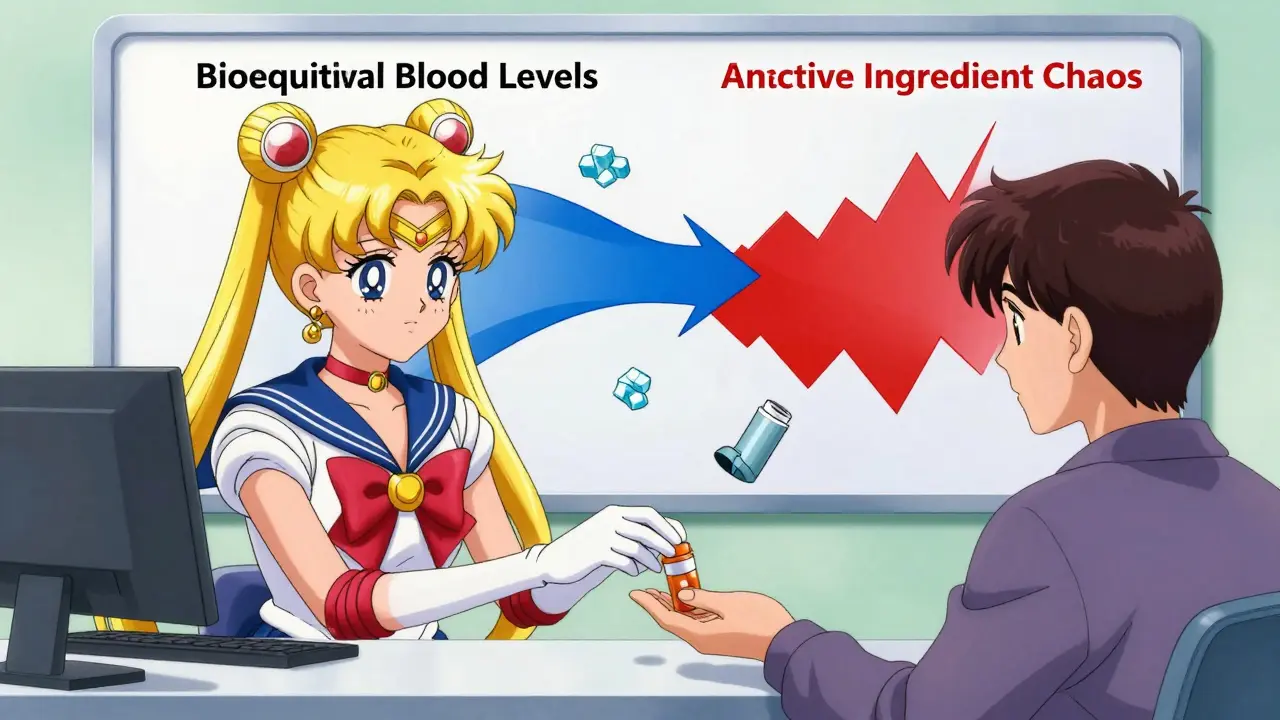
Not all drugs are created equal when it comes to safety margins. The FDA calls some drugs “narrow therapeutic index” (NTI) medications. These are the ones where a tiny change in blood levels can mean the difference between treatment and toxicity. Examples include:- Levothyroxine (for hypothyroidism)
- Warfarin (blood thinner)
- Phenytoin and carbamazepine (anti-seizure drugs)
Cost vs. Control: The Trade-Off
Let’s be clear: generics save money. Huge amounts of it. Medicare saved $1.67 trillion between 2006 and 2019 by using generics. A generic combination drug can cost 85% less than the brand. That’s why insurance companies push them. Pharmacies are paid more to dispense them. And for most people, they work perfectly fine. But that “most” isn’t everyone. Patients with chronic conditions-especially those on multiple medications, older adults, or those with autoimmune disorders-are more likely to notice subtle changes. A 2022 survey by the National Community Pharmacists Association found that 34% of independent pharmacists received patient complaints after switching to generic combinations. The top issues? Gastrointestinal upset (41%), skin rashes (29%), and feeling like the medication just “isn’t working” (22%). On patient forums like PatientsLikeMe and Reddit’s r/pharmacy, stories pile up: “I switched to generic metformin/sitagliptin and started having severe bloating,” or “My blood pressure spiked after the generic version of lisinopril/hydrochlorothiazide.” These aren’t isolated anecdotes. They’re patterns.What’s Being Done About It?
Regulators are starting to pay attention. In 2023, the FDA approved Teva’s generic version of Advair Diskus-but only after requiring the same inhaler device performance as the brand. Why? Because earlier generics had 15-20% lower lung deposition. That’s not bioequivalence. That’s underdosing. The FDA’s 2022 draft guidance now requires additional dissolution testing for 28 high-risk combination products. That’s a step forward. But it’s still reactive, not preventive. Meanwhile, the NIH launched a $12.5 million initiative in January 2023 to build better models for predicting how formulation differences affect drug delivery. And the Generic Pharmaceutical Alliance pledged to start listing all inactive ingredients on labels by 2025-something most manufacturers don’t do today. Pharmacists are also adapting. The 2022 USP Chapter <1099> guidelines recommend a five-point checklist before substituting a generic combination:- Is the drug in a narrow therapeutic index category?
- Has the patient ever had a reaction to a formulation change before?
- Do we have solid bioequivalence data for this specific generic?
- Are there known allergies to any inactive ingredients (like lactose or dyes)?
- Is the patient’s condition currently stable?
What Should You Do?
If you’re on a combination drug-especially one for thyroid, epilepsy, heart disease, or mental health-here’s what you can do:- Ask your pharmacist: “Is this the brand or a generic?” If it’s generic, ask: “What are the inactive ingredients?”
- Keep a log. Note how you feel before and after a switch. Changes in energy, digestion, mood, or symptoms matter.
- If you notice a difference, don’t assume it’s “all in your head.” Tell your doctor. Bring your pill bottle. Ask if you can try the brand again.
- Check the FDA’s Orange Book. Look up your drug. If it has an “A” rating, it’s generally considered equivalent. A “B” rating means there’s concern.
- Some insurers require prior authorization for brand-name combinations if you’ve had issues with generics. Ask your doctor to help with that.
What’s Next?
The generic drug market is growing fast. By 2028, 93% of prescriptions will be for generics. But as combination drugs become more common-especially for diabetes, hypertension, and COPD-the risk of formulation mismatches will rise too. The real question isn’t whether generics are good. They are. For most people, they’re excellent. The real question is: Who gets left behind when we treat all patients the same? We need better labeling. We need more post-market surveillance. We need pharmacists to have the time and tools to ask the right questions. And we need patients to know they have a right to speak up. Because when it comes to your health, identical ingredients don’t always mean identical outcomes.Can generic combination drugs really be less effective than brand-name ones?
Yes, in some cases. While the active ingredients are identical, differences in inactive ingredients-like binders, coatings, or release agents-can alter how quickly or completely the drug is absorbed. This is especially true for narrow therapeutic index drugs (like levothyroxine or warfarin) and inhalers (like Advair). Studies have shown measurable changes in blood levels and symptom control after switching to certain generics.
How do I know if my generic drug has different ingredients than the brand?
Check the drug’s label. The inactive ingredients are listed on the package insert. You can also ask your pharmacist for the manufacturer’s product information sheet. The FDA’s Orange Book lists therapeutic equivalence ratings, but it doesn’t detail inactive ingredients. For precise comparisons, you may need to contact the generic manufacturer directly or use databases like DailyMed (though links aren’t allowed here).
Are authorized generics safer than regular generics?
Yes, because they’re made by the original brand company under a different label. For example, Pfizer’s authorized generic of Lyrica is chemically and physically identical to the brand version. They’re not cheaper than brand, but they’re usually 60-70% less expensive and eliminate formulation differences entirely. They’re a good middle ground if you’ve had problems with standard generics.
Why don’t the FDA’s bioequivalence standards catch these differences?
The FDA tests for bioequivalence by measuring blood concentration over time (AUC and Cmax), requiring results to be within 80-125% of the brand. But this doesn’t capture how the drug is released in the gut or lungs, or how inactive ingredients affect absorption in sensitive individuals. For example, a slow-release tablet might release its drug too quickly if the coating is thinner-even if total absorption looks the same. These subtle differences are missed by current testing.
What should I do if I think my generic medication isn’t working?
Don’t stop taking it suddenly. Contact your doctor and pharmacist. Bring your pill bottle. Describe exactly what changed-symptoms, timing, dosage. Ask if you can temporarily switch back to the brand to see if symptoms improve. If they do, your doctor can request a prior authorization from your insurer. Many insurers will approve it if there’s documented evidence of a reaction.
Chris Beckman
March 3, 2026 AT 11:54Richard Elric5111
March 5, 2026 AT 09:15Betsy Silverman
March 6, 2026 AT 02:43Ivan Viktor
March 7, 2026 AT 15:56Zacharia Reda
March 9, 2026 AT 14:41Jeff Card
March 9, 2026 AT 18:07Matt Alexander
March 11, 2026 AT 05:50Gretchen Rivas
March 11, 2026 AT 15:16